
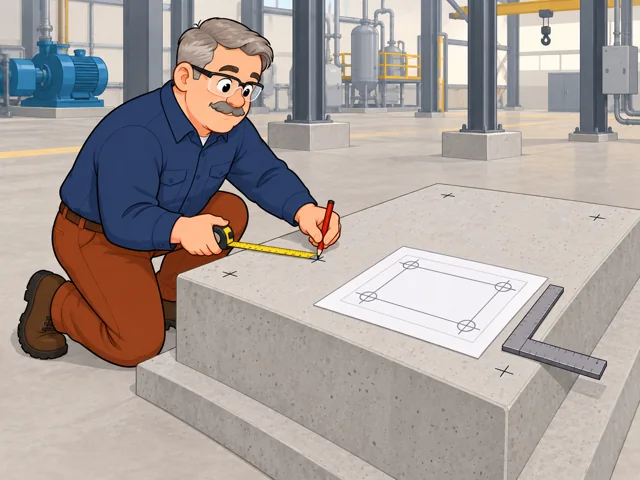
Mark the mounting holes
From the layout drawing, measure the base and mark mounting holes before installation so the machine sits right.
Career profile
Millwrights install, move, and precisely align heavy equipment in industrial plants.
Some days you help set a machine down on its foundation. Then you make tiny adjustments until its moving parts sit in line.
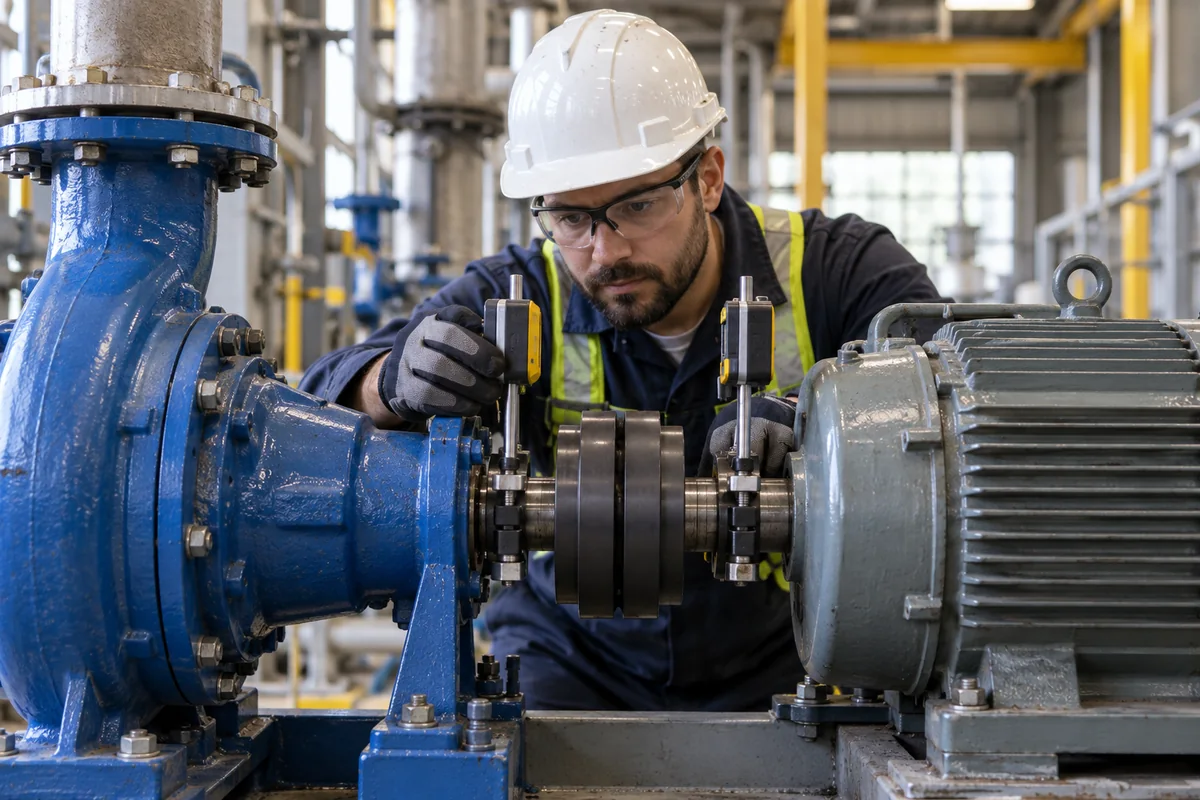
From the layout drawing, measure the base and mark mounting holes before installation so the machine sits right.
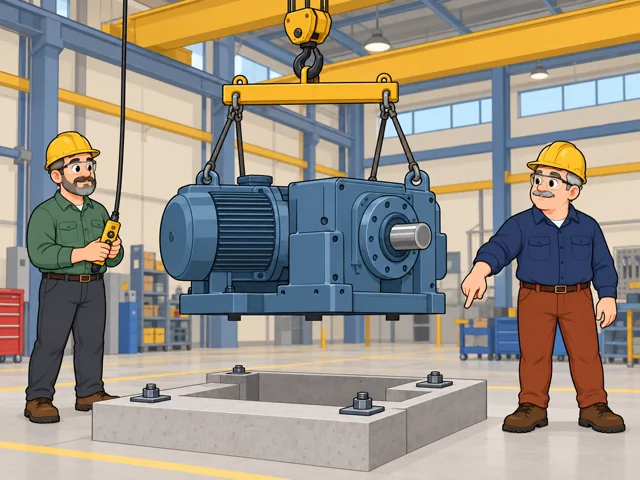
Signal the crane operator to lower equipment safely onto its base, though some moves use rollers or hoists.
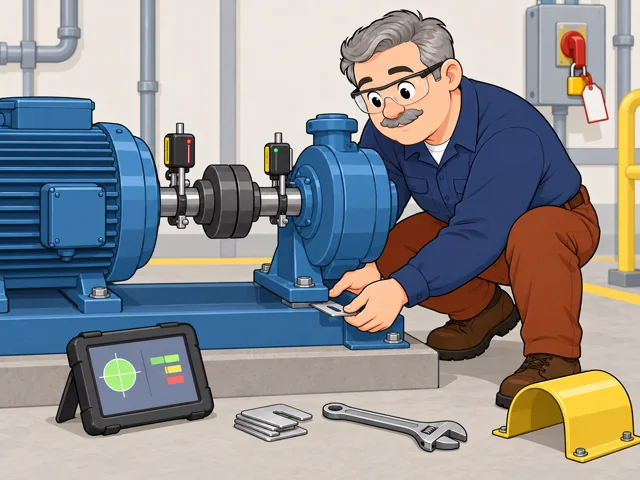
Measure shaft alignment, and if it's outside tolerance, change shims (thin spacers), shift the machine, and recheck.
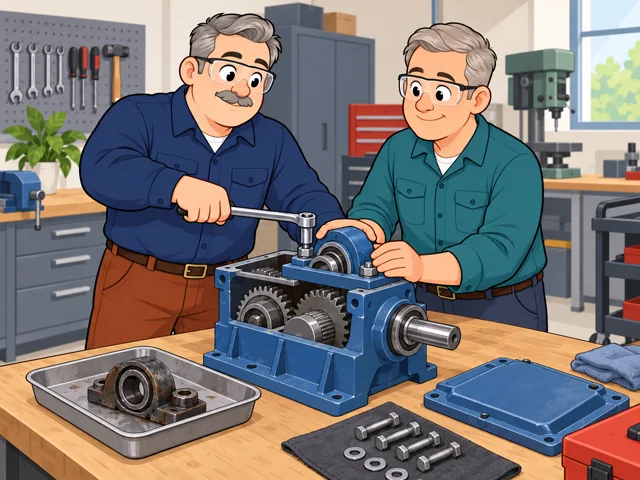
Remove worn components with hand tools, fit new parts, reassemble, then test to confirm the fix.
United States · 2025
United States · May 2025
United States · 2025–2035
Quick orientation
A diploma or equivalent is the usual starting point; apprenticeship develops the trade skills.
National median for millwrights, equivalent to $31.59 an hour.
Projected growth of 0.9%, with about 3,200 openings a year nationwide.
Digital alignment tools can calculate how far to move a machine and generate a report of the measurements.
You still set up the measurement, make physical adjustments, and recheck the result after tightening the machine down.
How much of that adjustment work can become automatic remains uncertain, especially when machines have uneven supports or change shape as they warm up.
Pay in context
The national median was $65,700 a year, or $31.59 an hour, in May 2025. That is the midpoint across millwrights, not a starting salary.
The lowest-paid 10% earned $46,290 or less; the highest-paid 10% earned $93,600 or more. These are wage percentiles, not beginner and experienced pay steps.
In May 2023, millwrights averaged $64,930 in building equipment contracting and $78,370 in motor vehicle manufacturing. These historical industry averages show differences between settings; they are not current offers.
Employment is projected to grow 0.9% from 2025 to 2035, with about 3,200 openings annually. With so little net growth, most openings reflect replacing people who leave the occupation.
Plan around a high school diploma or equivalent. Apprenticeship is the usual route; a school program can also build practical skills before employment.
After entry
This starts where the entry routes leave off: early work, growing capability, and advancement or specialization.
Connect your drawing-reading and tool lessons to real machine setup and repair tasks.
Learn to work out alignment corrections and recognize when uneven machine supports or temperature changes affect your measurements.
Build toward steam-turbine work through additional training in turbine equipment, rigging, controlled bolt tightening, and safety.
Install conveyors, robots, and custom machinery at customer sites with engineers, electricians, and automation technicians. Traveling roles can alternate shop work with extended site visits.
Overhaul pumps and turbines during plant outages. Work packages and technical procedures organize the job; traveling crews may move between projects with changing schedules.
Try it
Draw a machine layout on paper, then use two small cardboard boxes as a motor and pump. Mark their centerlines, position them to match the drawing, and use paper spacers to bring the marks to the same height. Notice whether you enjoy checking and correcting the fit.
Stay safe: Keep this a tabletop model with lightweight objects; do not move or adjust real machinery.