
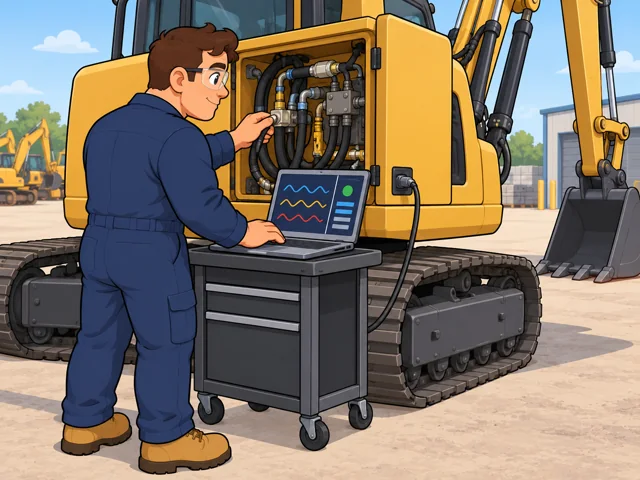
Narrow down a movement fault
You watch an excavator that is moving poorly and run computer diagnostic tests to narrow down the fault.
Career profile
Heavy equipment mechanics keep bulldozers and excavators running by fixing mechanical, hydraulic and electrical systems.
How a machine behaves tells you where the trouble starts. You take it apart, and afterward you test whether the fix really worked.
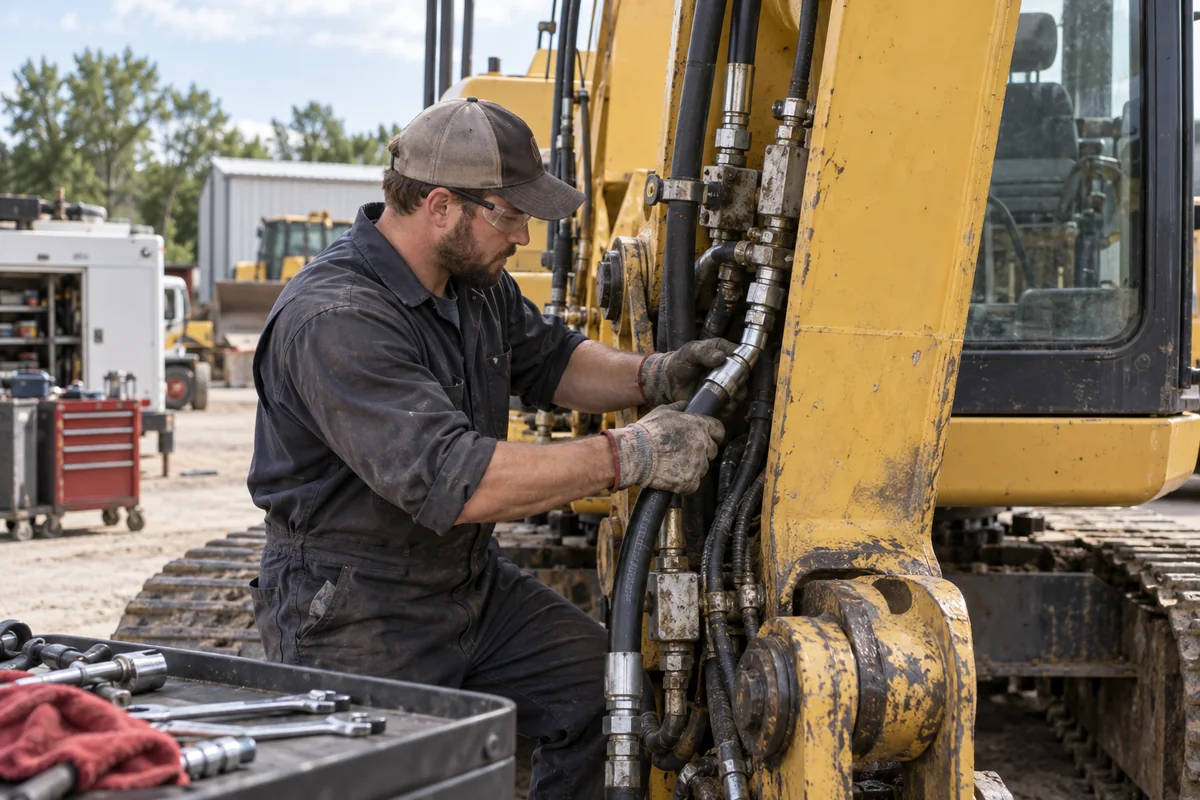
You watch an excavator that is moving poorly and run computer diagnostic tests to narrow down the fault.
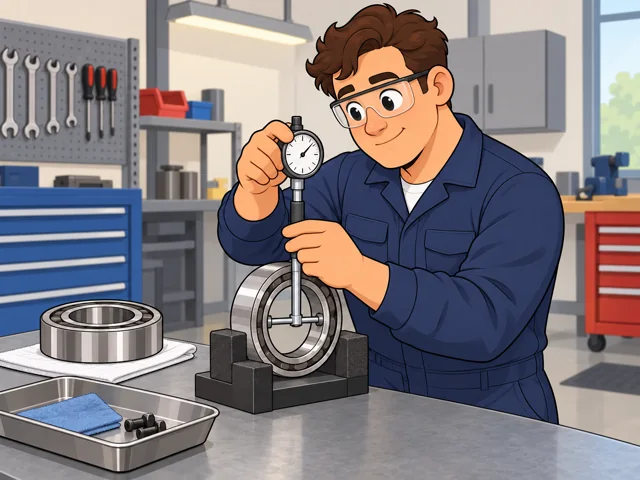
Measure how worn a part is with a gauge first, then replace the damaged bearing or other part.
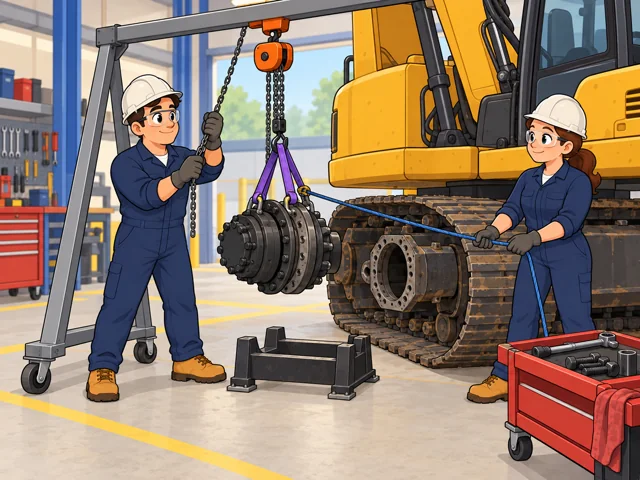
Take the equipment apart with hand tools and hoist heavy assemblies out to reach what needs fixing.
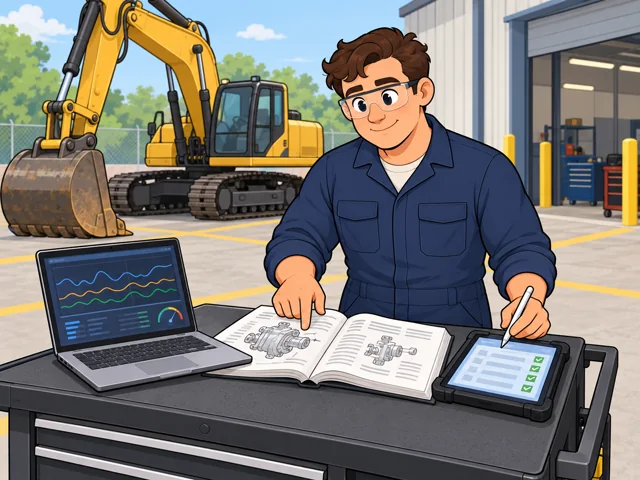
Test the machine's performance against the manual's specs, then log the job in its service record.
United States · 2025
United States · May 2025
United States · 2025–2035
Quick orientation
A diploma or equivalent is typical entry preparation; learning the repairs takes substantial on-the-job training.
National median in May 2025, equivalent to $31.50 an hour.
Employment is projected to grow nationally from 2025 to 2035.
On connected Cat equipment, technicians can run diagnostic tests remotely and prepare parts before traveling to the machine.
You interpret the fault information, decide what repair is needed, and carry out the physical work.
How much troubleshooting can move off-site will depend on the machine’s connection and whether its data can explain the fault.
Pay in context
Use the national median as a reference when comparing an offer.
The median was $65,510 a year, or $31.50 an hour. Half earned more and half less; this is not a starting rate.
About 15,000 openings are projected annually, on average, during 2025–2035. These are projected opportunities across the country, not vacancies available today.
The lowest-paid 10% earned $46,820 a year or less, while the highest-paid 10% earned $94,460 or more. These describe the wage spread, not starting pay and a promised later salary.
For experienced mechanics, advertised pay includes $29–$36 an hour repairing a construction rental fleet in Chichester, New Hampshire, and $33–$40 in a dealership shop in Longview, Washington. These are local examples, not industry averages: location, experience, and qualifications differ, so they do not show that one setting always pays more.
Look for a route that gives you practice on heavy equipment.
After entry
This starts where the entry routes leave off: early work, growing capability, and advancement or specialization.
Become dependable at routine service and minor repairs.
Use manufacturer training to learn particular machines and components.
With experience, specialize in repairing machines at worksites.
Work indoors around noisy repairs and heavy components.
Travel in a truck stocked with tools and parts. Outdoor repairs avoid transporting large machines to a shop.
Try it
Find a labeled excavator diagram. Trace how a hydraulic cylinder moves the boom, then write two questions you would ask if the boom stopped moving. Notice whether following the connections makes you curious.
Stay safe: Keep this a paper exercise; do not operate equipment or loosen hydraulic fittings.