
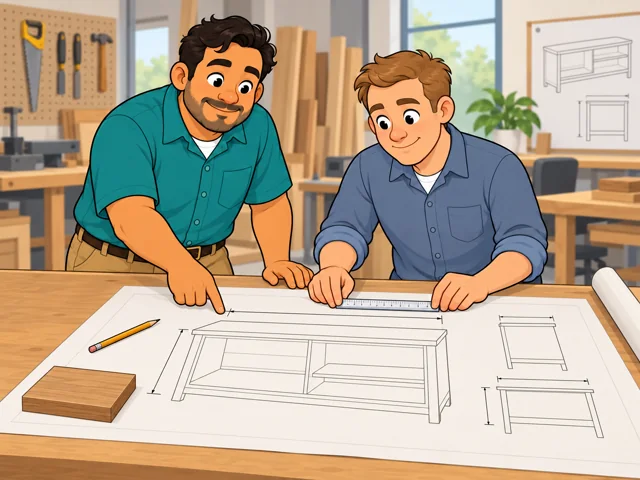
Settle a question on the plans
Sit with the designer and settle a question about the plan measurements before you mark out the model.
Career profile
Wood model makers build wooden models of products, full size or scaled down.
Plans give the measurements. From them, you build something solid that people can pick up, turn over and compare with the design.
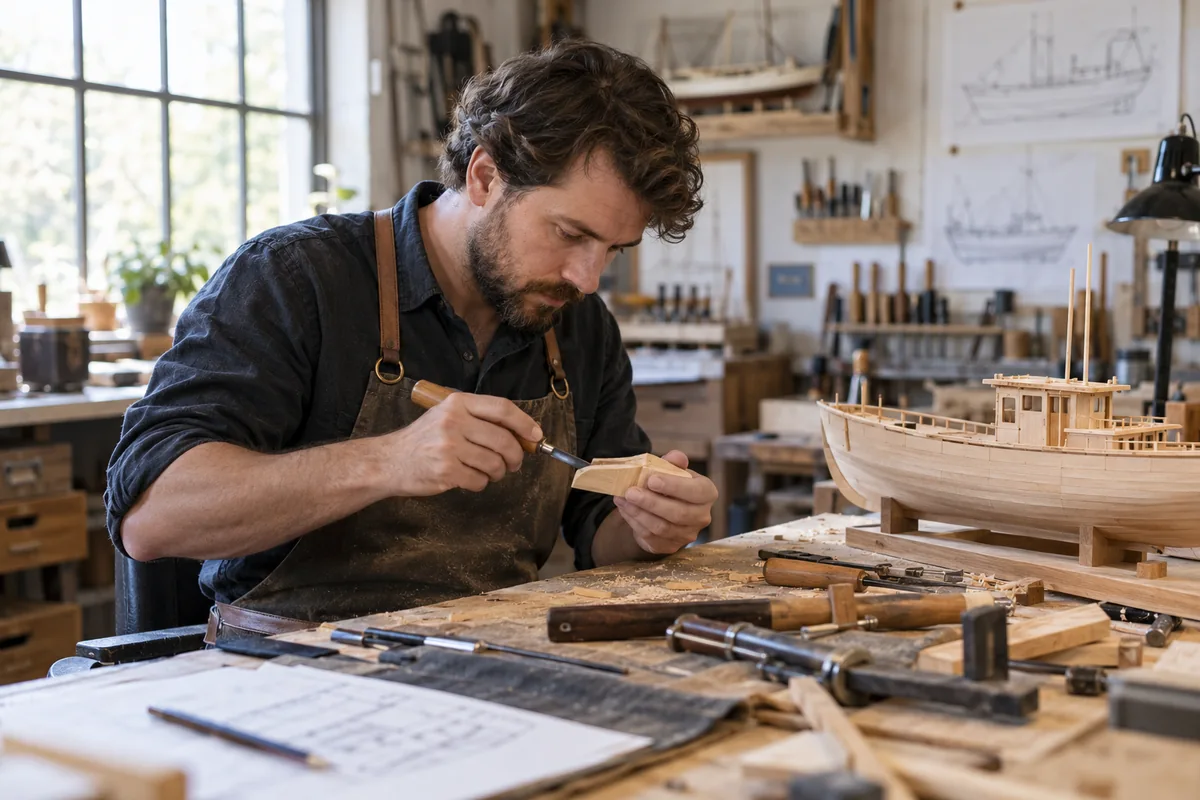
Sit with the designer and settle a question about the plan measurements before you mark out the model.
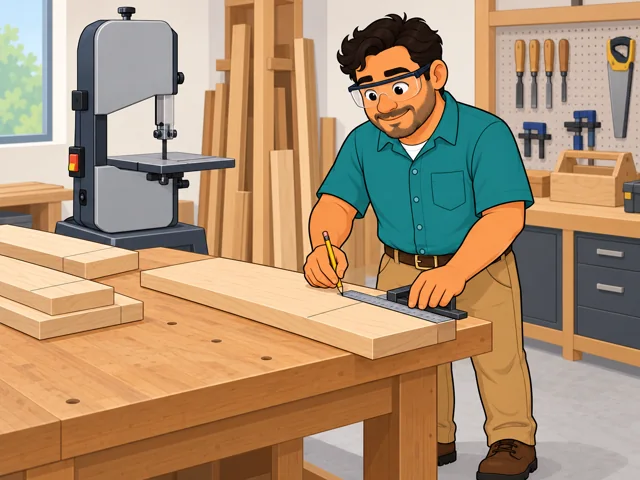
Mark each part on the stock with a square, then set up a bandsaw or planer for shaping.
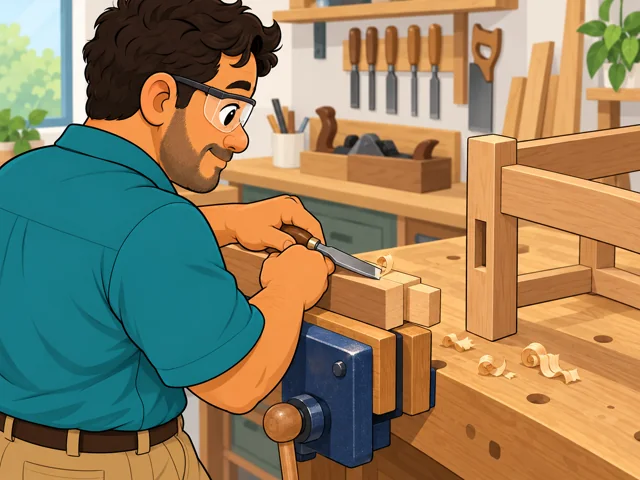
On furniture jobs, assemble the parts into a sample, then rework a joint that keeps it from fitting.
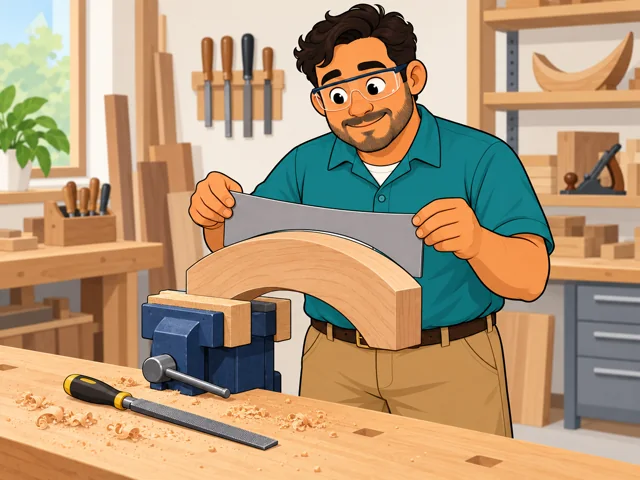
Shaping a curve, hold the wood to the template, file or sand any high spot, then compare again.
United States · 2025–2035 release
United States · May 2025
United States · 2025–2035
Quick orientation
Typical entry education; practical preparation also matters.
National median for wood model makers, equivalent to $27.19 an hour.
Employment is projected to shrink, with about 100 openings annually.
In mixed-material model-building shops, digital drawings can guide computer numerical control (CNC) machines that cut parts. Three-dimensional printing offers another way to build models.
People choose fabrication methods, assemble parts, and finish surfaces so the physical model serves its purpose.
How much cutting moves from the bench to a machine depends on the model’s material and shape. The balance of handwork, machining, and printing can change between projects.
Pay in context
The national median is a useful benchmark, not a starting-pay promise.
Wood model makers had median wages of $56,550 a year, or $27.19 an hour. The 10th–90th percentile range was $34,800–$98,050 annually. These percentiles describe workers across the occupation, not career stages.
Employment is projected to fall 3.3% over 2025–2035. About 100 openings a year are projected, including replacement needs. That is a national annual average, not a count of vacancies near you.
For furniture sample roles, employers may weigh your woodworking experience, skills, location, and job responsibilities.
Build practical woodworking experience or study model fabrication.
After entry
This starts where the entry routes leave off: early work, growing capability, and advancement or specialization.
Make accurate parts and consistently check your own work.
Work through unfamiliar sample designs and resolve construction problems with engineering.
With further education, pursue CNC programming or model-shop supervision.
Work alongside design, engineering, and manufacturing staff to refine samples before production.
Build scale models for water research. In this specialty, wood joins materials such as acrylic and concrete, and some work takes you from the shop to field sites.
Try it
Measure a small box and draw it at half size. Build that model from cardstock using a ruler, scissors, and tape, then compare its dimensions with your drawing. Notice whether translating measurements into a solid object—and correcting mismatches—holds your interest.