
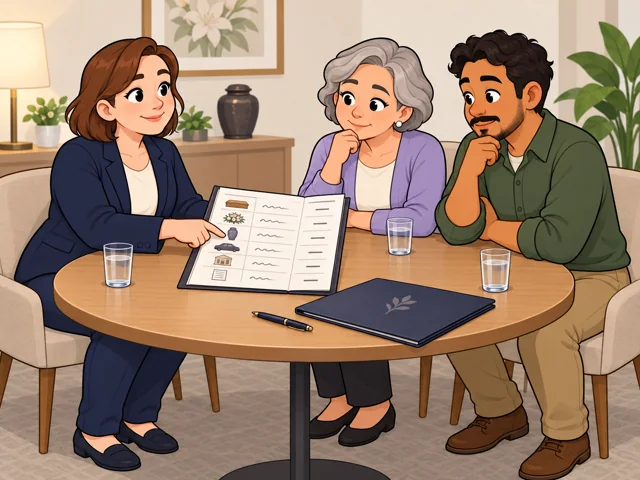
Walk a family through pricing
Explain each separately priced item on the General Price List so the family can match wishes and budget.
Career profile
Funeral directors help grieving families plan, then pull every part of the service together.
Everything from the obituary to the cemetery's timing starts as a family's wishes and ends as a plan you can carry out.
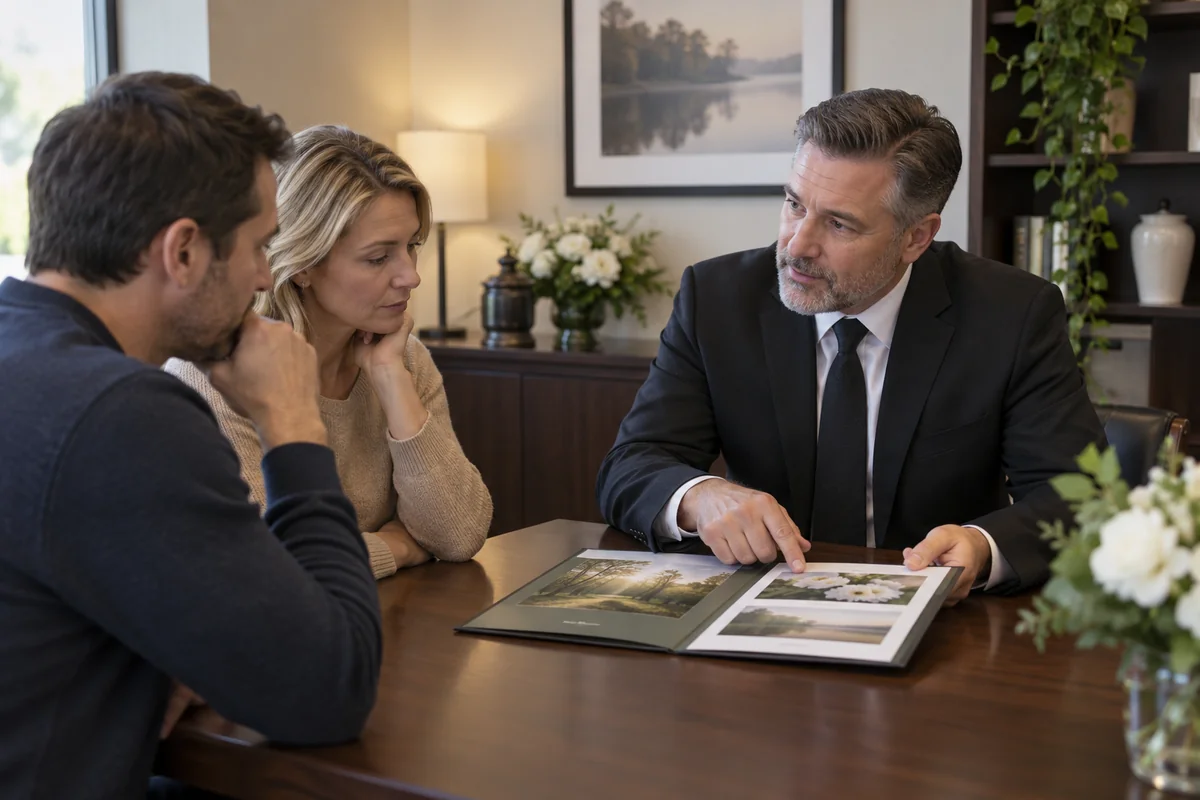
Explain each separately priced item on the General Price List so the family can match wishes and budget.
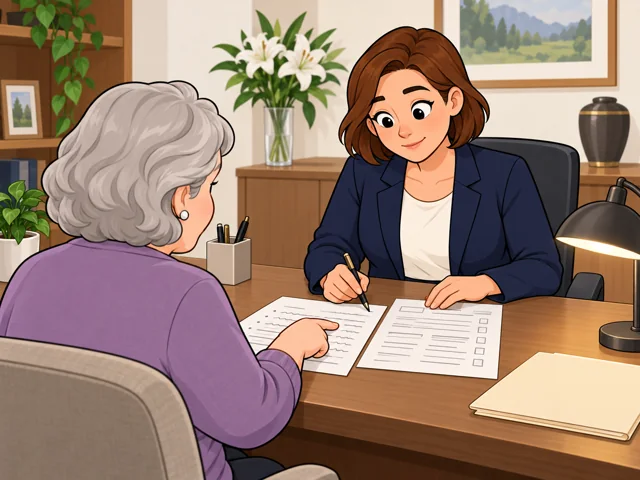
Collect the information a death certificate or burial permit needs, and double-check every name and date.
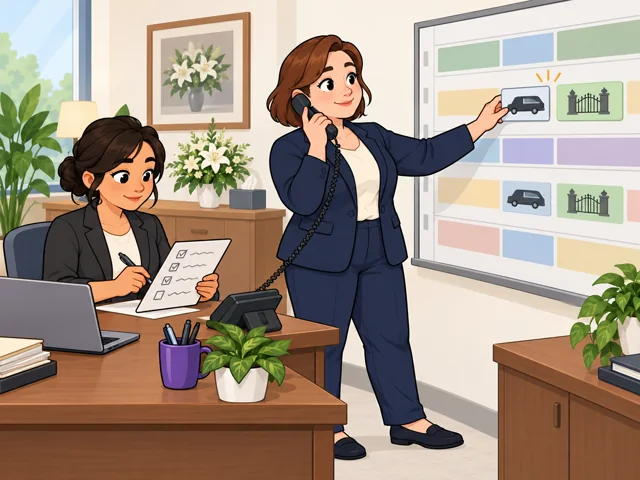
Confirm the cemetery slot and transport, and if times clash, rework the plan before telling the family.
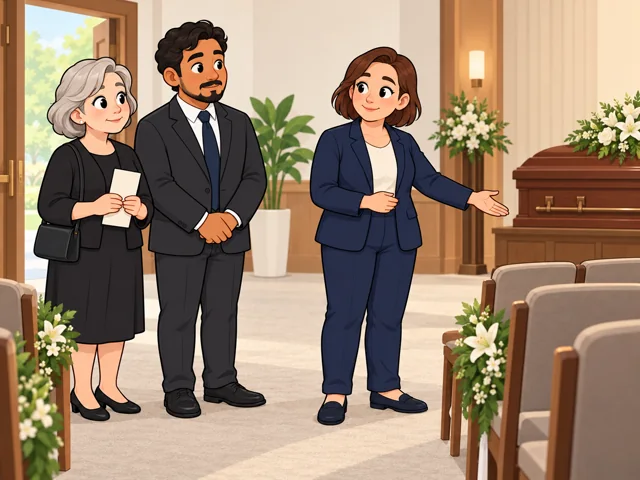
You lead the visitation, funeral or graveside service, telling participants what comes next while honoring the family's wishes.
United States
United States · May 2025
United States · 2025–2035
Quick orientation
Supervised training and state licensing requirements also shape entry.
Median employee pay, equivalent to $26.45 an hour, for morticians, undertakers, and funeral arrangers.
About 3,000 openings annually across this occupation, including replacement needs.
Some funeral software uses artificial intelligence (AI) to draft obituaries from information already entered in a case.
You still check the names, relationships, and wording. A fluent draft can contain altered facts.
How much obituary writing can safely become automatic remains uncertain when accuracy and a family's preferred tone both matter.
Pay in context
The median is a midpoint, not a starting salary.
The lowest-paid 10% earned below $33,350; the highest-paid 10% earned above $88,620. These are wage percentiles, not career stages.
The industry median was $54,530. When comparing offers, ask about on-call pay and the hours covered by the quoted salary.
Employment is projected to grow from 26,700 to 27,500 during 2025–2035. The roughly 3,000 annual openings also include workers leaving the occupation.
Education and supervised practice usually work together. Check your state's age, examination, and licensing rules before enrolling.
After entry
This starts where the entry routes leave off: early work, growing capability, and advancement or specialization. This path also has a credential or licensing boundary; see the requirements and limits.
Learn your funeral home's case records and handoffs so each family's arrangements reach the people carrying them out.
Build confidence coordinating visitations, ceremonies, and graveside services, including requests that change the usual schedule.
With experience, pursue funeral-home management.
Your work moves from arrangement meetings to visitations and graveside services. You coordinate with ceremony participants and colleagues handling cemetery choices.
Dedicated roles focus on people planning future funerals. Community outreach and sales goals can be a substantial part of the work.
Try it
Open the sample General Price List in the Federal Trade Commission's [Funeral Rule guide](https://www.ftc.gov/business-guidance/resources/complying-funeral-rule). Explain the basic services fee and one optional service aloud in everyday language. Notice whether you enjoy making a sensitive, complicated choice easier to understand.
Stay safe: Use the published sample; no real family's information is needed.