
Career profile

Motorboat Operator

Motorboat operators steer small motor-driven boats that carry passengers, from harbor launches to sightseeing boats.

Docking takes small, deliberate nudges of throttle and helm. Anyone drawn to that hands-on focus should also weigh the work between trips.
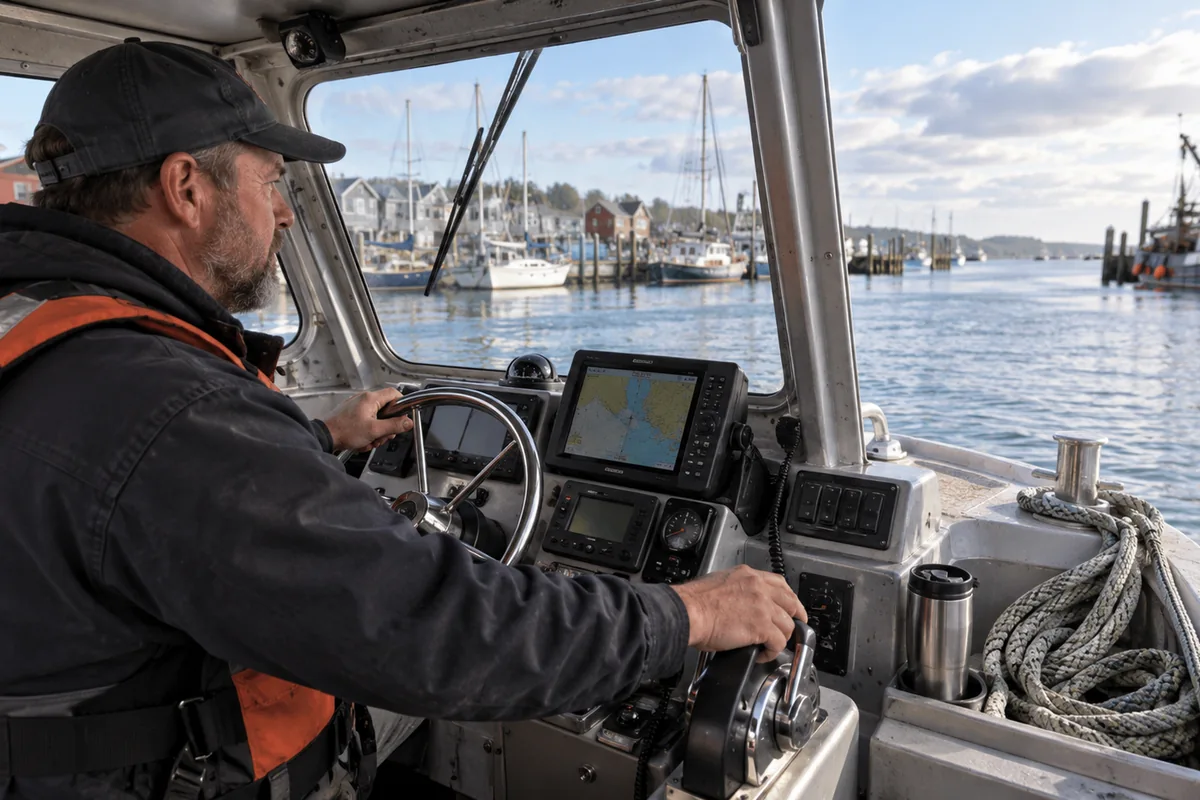
A motorboat operator steering a working harbor launch through a marina, watching navigation and nearby vessels.

A day in the life

1

Inspect safety gear before boarding

Ahead of boarding, inspect life jackets and fire extinguishers, then list any missing gear for the lead operator.

2

Bring the boat into the dock

Use throttle and steering to bring the boat toward the dock, adjusting its motion as you close in.

3

Help riders aboard and settled

On passenger runs, help riders step aboard and get settled before you pull away from the dock.

4

Report a mechanical fault

Note faults in the launch log, telling the lead operator what to fix or check before next shift.

Quick facts

Preparation

Training beyond high school

United States · 2025–2035 source release

Pay

$47,520/year

United States · May 2025

Outlook

4.9% growth

United States · 2025–2035

Quick orientation

Preparation, pay & outlook

Preparation

Training beyond high school

Typical entry preparation is a postsecondary nondegree award. The credential you need depends on the boat and service.

Geography
United States
Period
2025–2035 source release

Pay

$47,520/year

National median for motorboat operators, equivalent to $22.85 an hour.

Geography
United States
Period
May 2025

Outlook

4.9% growth

About 300 openings a year are projected nationally, including replacement openings.

Geography
United States
Period
2025–2035

Fit, tradeoffs & changing tools

Things to weigh

  • Outdoor work brings heat, cold, and changing weather.
  • Seasonal launch jobs can include evenings, weekends, and holidays, with work ending when the boating season closes.

Where AI may help

Electronic charts and position displays help you navigate; some boats also use automatic steering.

What people still lead

You still watch the surroundings, help passengers, and decide when conditions require stopping service.

What we can’t predict yet

How much routine steering automation will take over remains uncertain, especially around docks and changing traffic.

Pay in context

Earnings

Compare the hourly rate with the length of the working season before judging an offer.

The national pay range

The median was $47,520 a year, or $22.85 an hour. The 10th-to-90th-percentile range was $34,510–$84,530 annually, or $16.59–$40.64 hourly. These describe the workforce, not starting and senior pay grades.

Geography
United States
Period
May 2025
Pay basis
National employee wage estimates for motorboat operators, SOC 53-5022

A season changes the total

Some motorboat jobs operate only during the tourist or boating season. Ask how many weeks and hours you can expect; an hourly rate alone does not tell you your yearly income.

Geography
United States
Period
Current occupational context; 2026 employer example
Pay basis
Schedule context, not a workplace wage comparison

A small national job market

Employment is projected to grow 4.9% from 2025 to 2035, with about 300 openings a year on average from growth and worker replacement. That is a national estimate, not a count of nearby vacancies.

Geography
United States
Period
2025–2035
Pay basis
Employment projection for motorboat operators, SOC 53-5022; not compensation

Getting started

Qualify to run a local launch

What the route involves
For Limited Master, you must be at least 18 and document 120 days of vessel-operating experience. Complete safe-boating instruction and the limited examination or an approved substitute course.
What it can lead to
After Coast Guard approval, this credential can qualify you to operate an inspected launch for a marina, yacht club, camp, or educational institution in a limited area.
What to check
Local Coast Guard approval controls the route. Medical certification, drug testing, citizenship, recent service, and application requirements also apply.

Build toward small charter trips

What the route involves
For an inland Operator of Uninspected Passenger Vessels (OUPV) credential, be at least 18 and document 360 service days, including 90 within the past seven years. Pass the examination or an approved substitute course.
What it can lead to
This is a route into small passenger-for-hire operations on uninspected vessels, within the waters and vessel limits on your credential.
What to check
You must also satisfy medical, drug-testing, first-aid, cardiopulmonary resuscitation, and other application requirements. Near-coastal and Great Lakes routes require relevant experience on those waters.

Start with the kind of boat you want to operate. These two passenger-service routes require documented boat experience as well as qualifying instruction or testing.

After entry

Career paths

This starts where the entry routes leave off: early work, growing capability, and advancement or specialization. This path also has a credential or licensing boundary; see the requirements and limits.

  1. Learn your boat and handover

    Get comfortable with the launch's checks, logs, and local operating routines. Read the previous shift's notes before taking over.

  2. Build judgment for difficult days

    Practice emergency drills and learn how the service handles worsening weather, including when to suspend trips.

  3. Qualify for a wider passenger role

    An inland Master endorsement can open work on inspected passenger vessels. Its eligibility and vessel-size limits depend on your documented experience; it is a separate qualification.

Where you can work

Yacht-club launches

You shuttle members and guests between shore and moored boats. Between runs, the work may include dock and clubhouse upkeep; seasonal services can run into the evening.

  • Outdoors
  • Vehicle
  • Shift work
  • Safety-sensitive

Small sightseeing boats

You take visitors out for a tour and may explain what they are seeing as well as handle the boat. Comfort with passengers matters alongside navigation.

  • Outdoors
  • Vehicle
  • Safety-sensitive

Try it

See whether the job clicks before you commit to the path.

From a public waterfront, watch one small passenger boat arrive and depart. Note when the operator uses the controls, looks around, and helps passengers. Would you enjoy repeating that careful sequence throughout a shift?

Stay safe: Stay in public viewing areas and clear of boarding gates and working lines.

Explore more careers

Sources

  1. O*NET OnLine. 53-5022.00 — Motorboat Operators. Accessed 2026-10-10.
  2. U.S. Bureau of Labor Statistics. Water Transportation Workers — motorboat-specific passages. Accessed 2026-10-10.
  3. U.S. Bureau of Labor Statistics. May 2025 OEWS national estimates — SOC 53-5022; supplied pinned binding. Accessed 2026-09-29.
  4. U.S. Bureau of Labor Statistics. 2025–2035 Employment Projections Table 1.2 — SOC 53-5022; supplied pinned binding. Accessed 2026-09-29.
  5. Hull Yacht Club. 2026 Employment Opportunities — Launch Drivers. Accessed 2026-10-10.
  6. Raritan Yacht Club. Launch Driver Job Description — December 23, 2024. Accessed 2026-10-10.
  7. New England Maritime. USCG-Approved Limited Master Launch Tender License. Accessed 2026-10-10.
  8. U.S. Coast Guard National Maritime Center. National Limited and Restricted Master & OUPV checklist. Accessed 2026-10-10.
  9. U.S. Coast Guard National Maritime Center. National Operator of Uninspected Passenger Vessels checklist. Accessed 2026-10-10.
  10. Maritime Institute. What Are the Requirements for Earning a Captain’s License?. Accessed 2026-10-10.

Your message goes to the Great Jobs team. How we use your information