
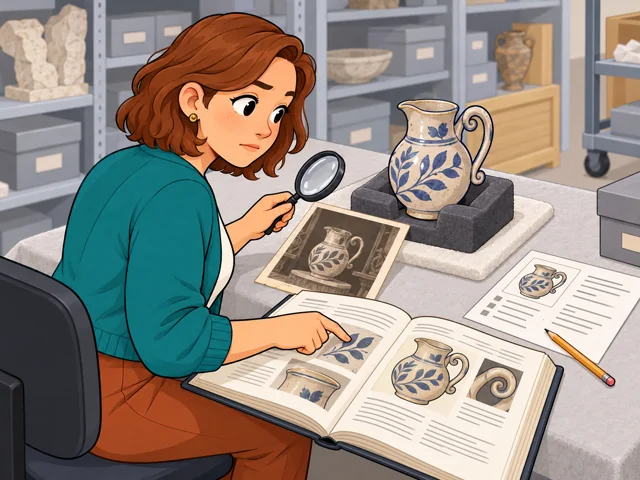
Settle a disputed date
Compare a piece with its catalog record and investigate any clashing date before an exhibition relies on it.
Career profile
Curators study a museum's objects and choose which belong in its collection and its shows.
Your close study of one piece becomes the reason a gallery visitor stops and takes a real look.
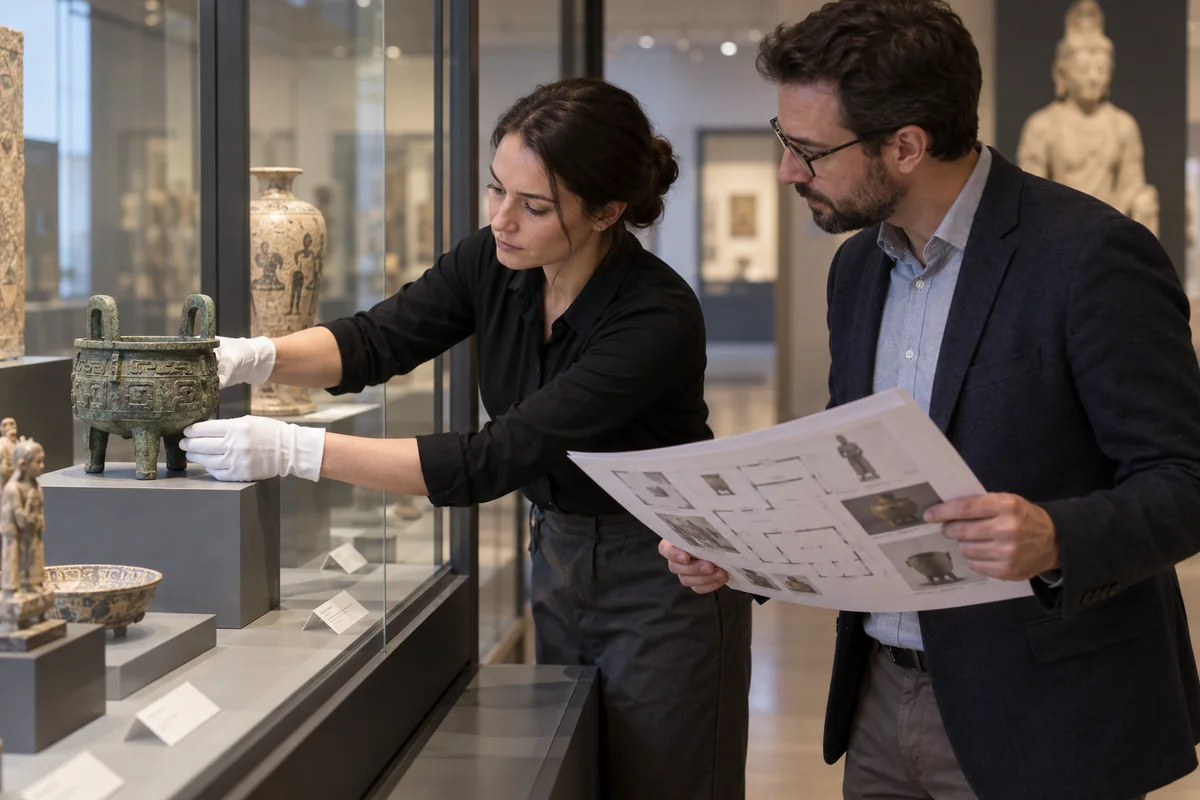
Compare a piece with its catalog record and investigate any clashing date before an exhibition relies on it.
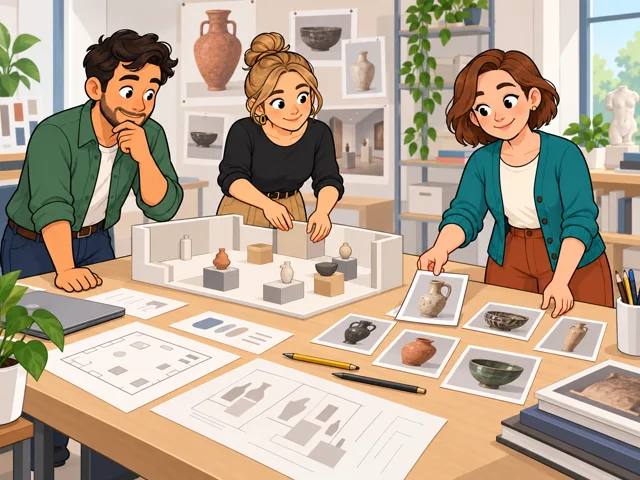
Pick an exhibition's pieces and work with designers and educators so visitors see why they belong together.
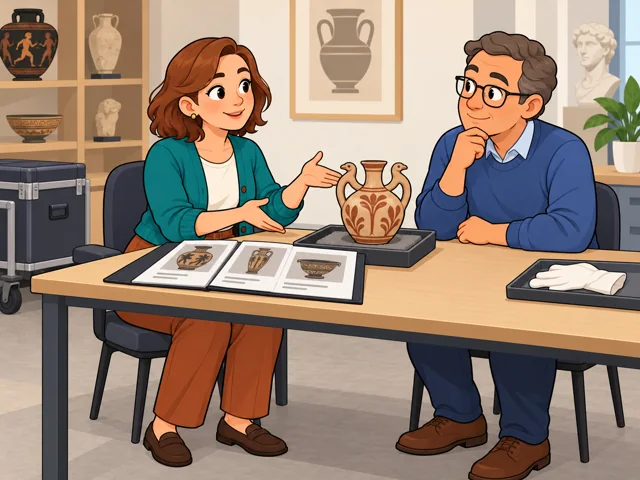
Examine a possible acquisition, explain how it would strengthen the collection, and discuss gifts with donors and collectors.
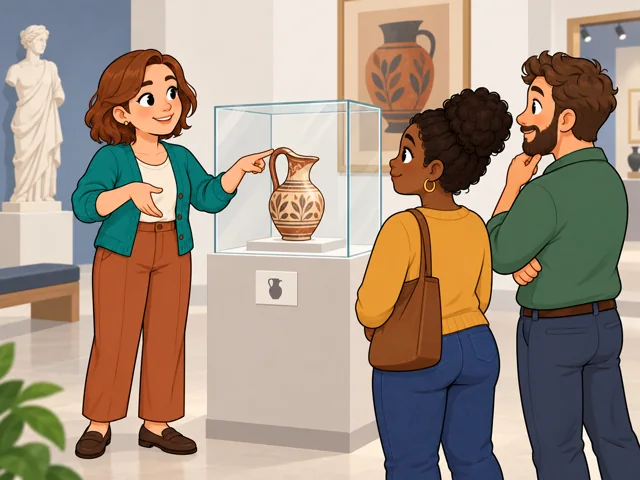
Get a gallery talk or research presentation ready, and explain things differently for scholars, visitors, or schoolchildren.
United States
United States · 2025
United States · 2025–2035
Quick orientation
Some small museums accept a bachelor's degree.
National curator median in 2025; about $30.49 an hour.
Curator employment, 2025–2035; about 1,600 openings annually.
At the Smithsonian, digitization teams use artificial intelligence and other software to extract information from records and make collections easier to search.
Curators still shape exhibition arguments and recommend what the museum should collect.
How much automated record processing can replace close checking remains unsettled, especially when an object's history is incomplete.
Pay in context
Use the national median as a reference when comparing offers, not as a starting-salary promise.
Curators earned a median $63,420 a year in 2025, equivalent to about $30.49 an hour. This covers curators across employer types.
The 10th-percentile annual wage was $40,470; the 90th was $107,140. These describe the wage distribution, not beginner and senior salaries.
In museums, historical sites, and similar institutions, curator median pay was $61,790 a year, or $29.71 an hour—below the all-employer median. An individual offer can differ.
Employment is projected to grow 4.9% from 2025 to 2035, with about 1,600 openings a year from growth and replacement needs. These are projections, not current vacancies.
Build expertise in the kind of collection you want to study.
After entry
This starts where the entry routes leave off: early work, growing capability, and advancement or specialization.
Learn the collection's records and database, then investigate questions about individual objects.
Take an exhibition from object selection through planning with educators and designers.
Pursue supervisory roles or deepen a research specialty. Publications matter in large museums; some advanced roles require a doctorate.
Collection care and running the museum may share your desk. Travel is often limited.
Specialize in a collection and collaborate with exhibition staff. Research and acquisitions may involve substantial travel.
Try it
Choose three ordinary objects you own for a tiny exhibition. Give it a theme and write a 50-word label explaining your selection. Mark what you know and what you would need to research. Notice whether choosing and explaining the objects holds your interest.