
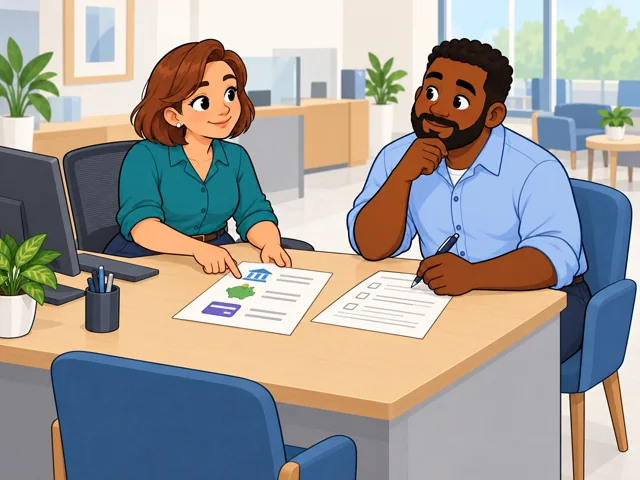
Match a customer to an account
Ask what the account is for, walk through the bank's services, then help complete the application.
Career profile
New accounts clerks help bank customers pick and open accounts, then double-check every detail.
Every account starts as a customer's question and ends as a completed application. Getting there means explaining clearly and spotting gaps or missing items.
Ask what the account is for, walk through the bank's services, then help complete the application.
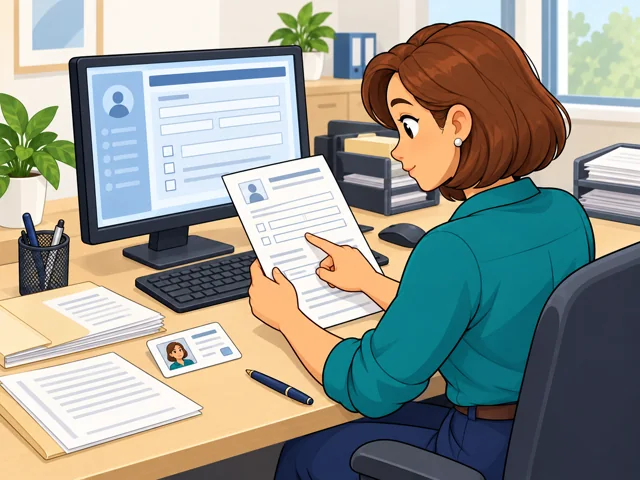
Confirm the customer's information and comb the account paperwork for errors before anything gets processed.
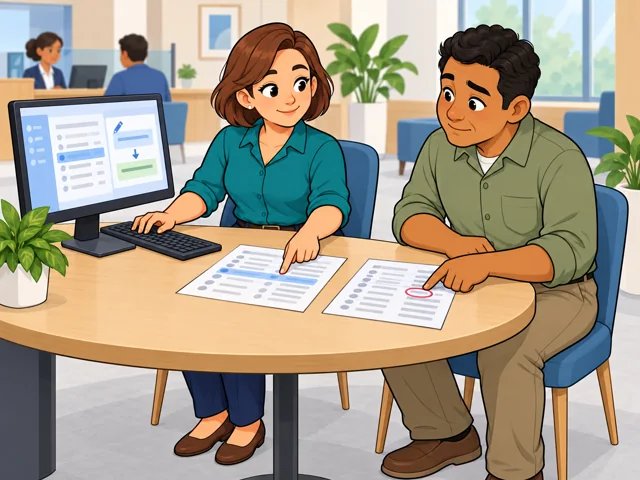
Once a customer spots a mismatch, compare the account records, correct the error, and note what changed.

Walk a customer through direct deposit setup, or send their next question to the right bank staffer.
United States · 2025
United States · 2025
United States · 2025–2035
Quick orientation
A high school diploma or equivalent is typical, followed by training on the job.
National median for new accounts clerks in 2025; $22.92 an hour.
Employment is projected to shrink from 2025 to 2035, with about 2,300 openings a year on average.
Account software stores and retrieves records. Online tools also let customers complete more banking tasks themselves.
You still ask follow-up questions, explain choices, and work through account problems.
How much routine opening moves to self-service—and how much staff time shifts to complicated cases—will vary across institutions.
Pay in context
The national median is a useful comparison point, not a starting-pay offer.
In 2025, median pay was $47,670 a year, or $22.92 an hour. The lowest-paid 10% earned $38,180 or less annually; the highest-paid 10% earned $60,910 or more. These are wage percentiles, not beginner and experienced pay levels.
Some credit-union member-service jobs include performance bonuses. Ask what the guaranteed base pay is and what conditions determine any bonus.
Employment is projected to fall 6.5% from 2025 to 2035. About 2,300 openings per year are projected on average; openings can occur even when total employment falls.
A college degree is not the typical starting requirement. You learn the institution's account procedures on the job.
After entry
This starts where the entry routes leave off: early work, growing capability, and advancement or specialization.
Learn the account forms and product details well enough to complete openings accurately.
Build skill in tracing account discrepancies and documenting how a customer's problem was resolved.
A related next step is deposit operations: review accounts opened by branches or online, track missing documents, and help branch staff resolve problems.
In a dedicated lobby role, your day centers on opening, changing, and closing accounts. Customers come to you for help with the paperwork and account choices.
Some roles combine account openings with deposits, withdrawals, and balancing a cash drawer. You switch between account conversations and transaction service.
Try it
Compare two checking accounts on a bank's public website. Explain their fees and requirements to a friend, then ask what they would use the account for. Notice whether you enjoy turning the details into a clear explanation.
Stay safe: Use public information only; you do not need to open an account or share personal financial details.