
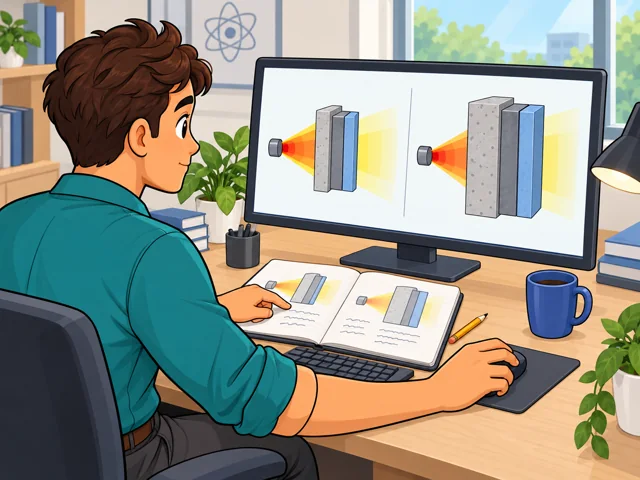
Compare shields in a model
Use a computer model to weigh shielding options against each other, then question the assumptions behind its results.
Career profile
Nuclear engineers apply physics, planning and checking systems that release nuclear energy or contain radiation.
A workday can mean calculating a radiation shield, digging into a fuel test, or explaining why a reactor design has to change.
Use a computer model to weigh shielding options against each other, then question the assumptions behind its results.

In fuel research, you compare measurements with predictions and investigate any mismatch before suggesting changes.

Rewrite an existing method for handling nuclear material as plain numbered steps the handlers can follow clearly.
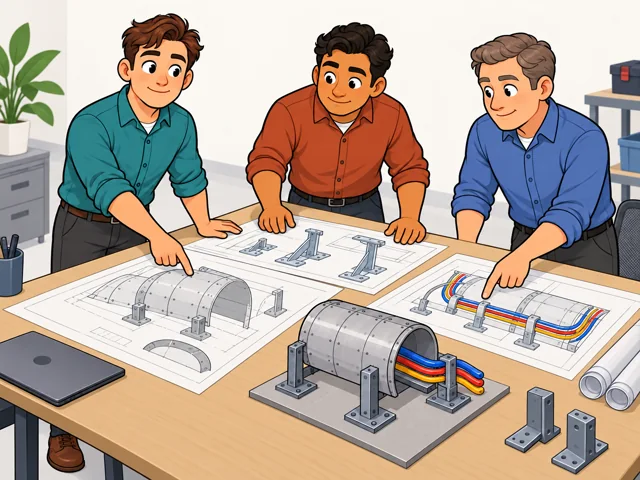
Sit down with mechanical and electrical engineers to review drawings so their systems fit your nuclear design.
United States
United States · May 2025
United States · 2025–2035
Quick orientation
Usually nuclear engineering or a related field.
National median for nuclear engineers; hourly equivalent: $64.41.
Employment projected to grow 0.4%, with about 800 openings annually.
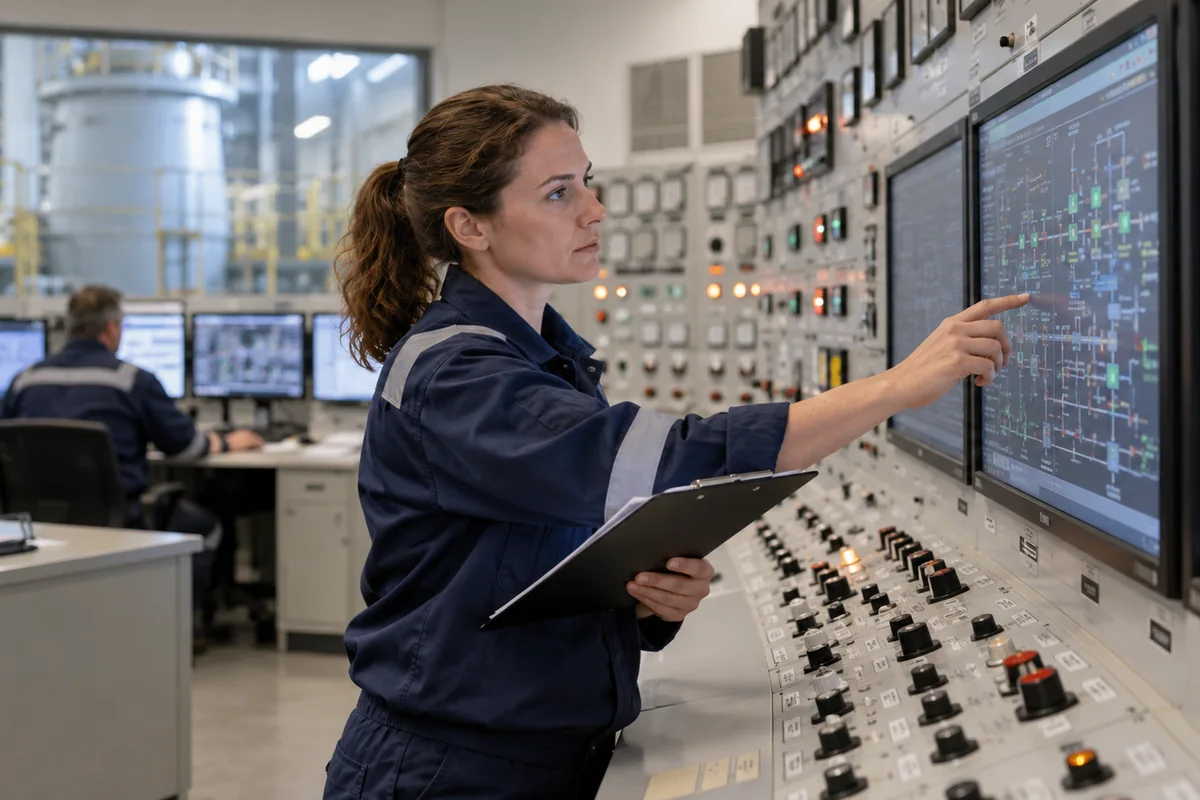
Some research teams connect a computer model to live reactor measurements. This “digital twin” can help predict how the reactor will respond to changes.
Engineers design tests and compare the model with the real reactor before trusting its predictions.
How far these systems will move from helping people monitor reactors to controlling them remains uncertain; a research demonstration does not settle that question for commercial plants.
Pay in context
The national median is a useful benchmark, not a starting-salary promise.
Nuclear engineers had a median annual wage of $133,970, equivalent to $64.41 an hour. Half earned more and half earned less.
The lowest-paid 10% earned below $92,960 a year; the highest-paid 10% earned above $196,290. These describe workers across jobs and experience levels, not beginner and senior salary steps.
Employment is projected to grow 0.4% from 2025 to 2035, with about 800 openings a year on average. Openings include replacement hiring, so they are not all new positions.
A bachelor’s degree is the usual starting point. Nuclear engineering and related engineering degrees offer different ways to prepare.
After entry
This starts where the entry routes leave off: early work, growing capability, and advancement or specialization.
At a power plant, complete site training in safety practices and regulations.
Carry a fuel or shielding analysis through testing and written recommendations.
With experience, you may supervise engineers and technicians or move into engineering management.
Your office is tied to an operating facility. Engineering decisions support plant design, maintenance, and safety.
Projects can bring engineers, researchers, and university students together around experiments. You may collect reactor data and test whether a computer model reproduces what happened.
Try it
On paper, sketch a reactor core, a cooling loop, and a place for heat to leave the system. Imagine the coolant stops moving. List what you would want to measure before judging the consequences. Notice whether tracing the problem and identifying missing evidence interests you.
Stay safe: Keep this a paper exercise; it is not a reactor operating procedure.