

Answer a caller's question
Hear the caller out, find the matching record, and answer yourself or pass a clear note along.
Career profile
Office clerks keep workplaces running smoothly by answering questions, updating records and routing paperwork.
Your day can jump from a phone caller's question to a backlog of filing to outgoing mail, and that variety is what draws people in.
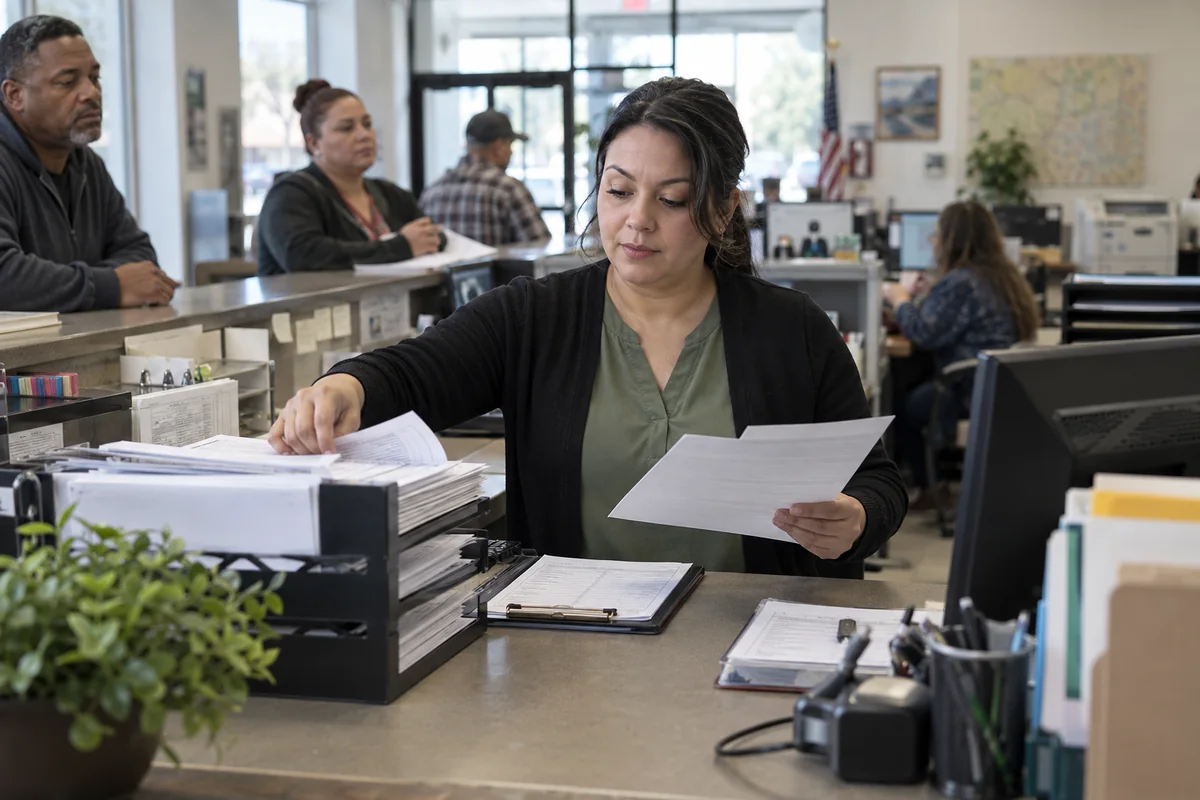
Hear the caller out, find the matching record, and answer yourself or pass a clear note along.

You scan the pages, update the database entry, and file the paper where others can find it later.
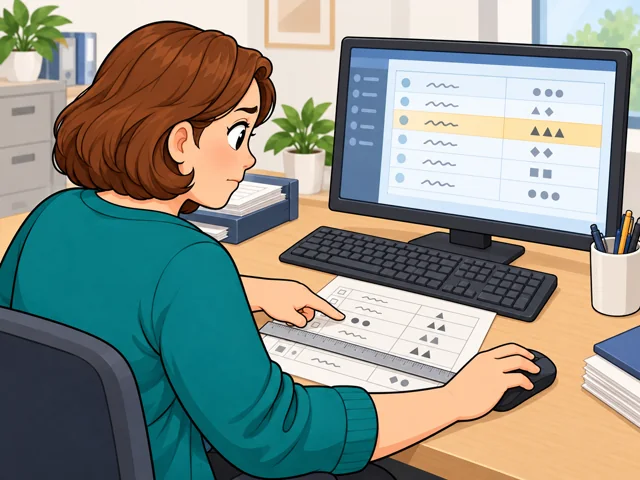
Compare the list against its source forms, and recheck the form before you correct any amount that disagrees.
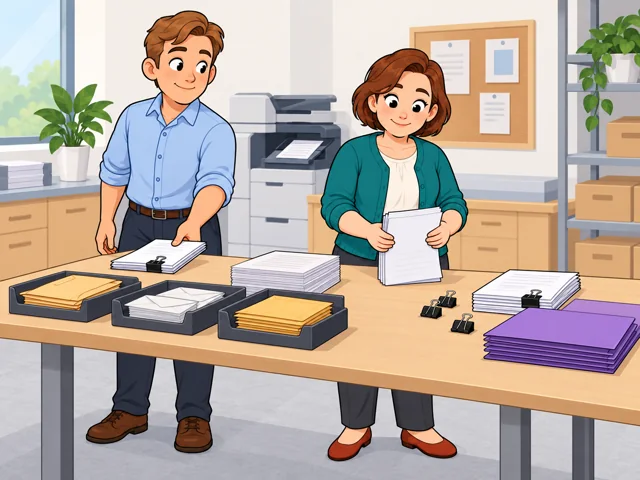
Sort the incoming envelopes by destination, copy documents, and assemble the pages your coworkers need.
United States · 2025–2035
United States · May 2025
United States · 2025–2035
Quick orientation
Typical preparation includes short-term training on the job.
National median; the annual equivalent is $45,010.
About 249,000 openings annually are projected despite fewer jobs overall. Openings include replacing workers who leave.
A spreadsheet can sort a list by name or date, saving you from rearranging entries by hand.
You still clarify requests and investigate confusing records.
Automation and shared files are reducing clerical work. How much of an office’s remaining task mix moves to software or other staff will vary.
Pay in context
The national median was $45,010 a year, or $21.64 an hour, in May 2025. It is not a starting-pay promise.
The lowest-paid 10% earned under $14.57/hour; the highest-paid 10% earned over $31.10/hour. These are wage percentiles, not beginner and experienced pay rates.
Hourly medians were $22.66 in construction, $21.12 in healthcare and social assistance, and $19.17 in educational services, including public and private employers.
A high school diploma or equivalent is the typical starting point. You can learn procedures at work or build office skills first.
After entry
This starts where the entry routes leave off: early work, growing capability, and advancement or specialization.
Learn the office’s filing rules and software until you can finish routine requests without repeated help.
Build confidence with records and department procedures. In a business office, you might learn contract filing or become backup for payroll paperwork.
With experience, you may move into an administrative assistant position.
Some jobs provide temporary or seasonal help during heavy workloads. You may spend more time sorting records for coworkers than serving the public.
You may support payroll and personnel staff, maintain stored documents, and organize department travel. Some roles include meetings outside regular office hours.
Try it
Make a pretend office inbox with a phone message, five forms, and a mailing list. Log each item, catch one deliberately wrong entry, and leave a clear handoff note. Notice whether you enjoy switching tasks while keeping details straight.
Stay safe: Use invented names and information.