

Take the patient's eye history
Ask a patient about changes in their sight and past health, then type the answers into their chart.
Career profile
Ophthalmic technicians test vision, run eye exams and gather details for the eye doctor's exam.
Delicate instruments and face-to-face conversation trade places all day. A good reading starts with a patient who understands the test.
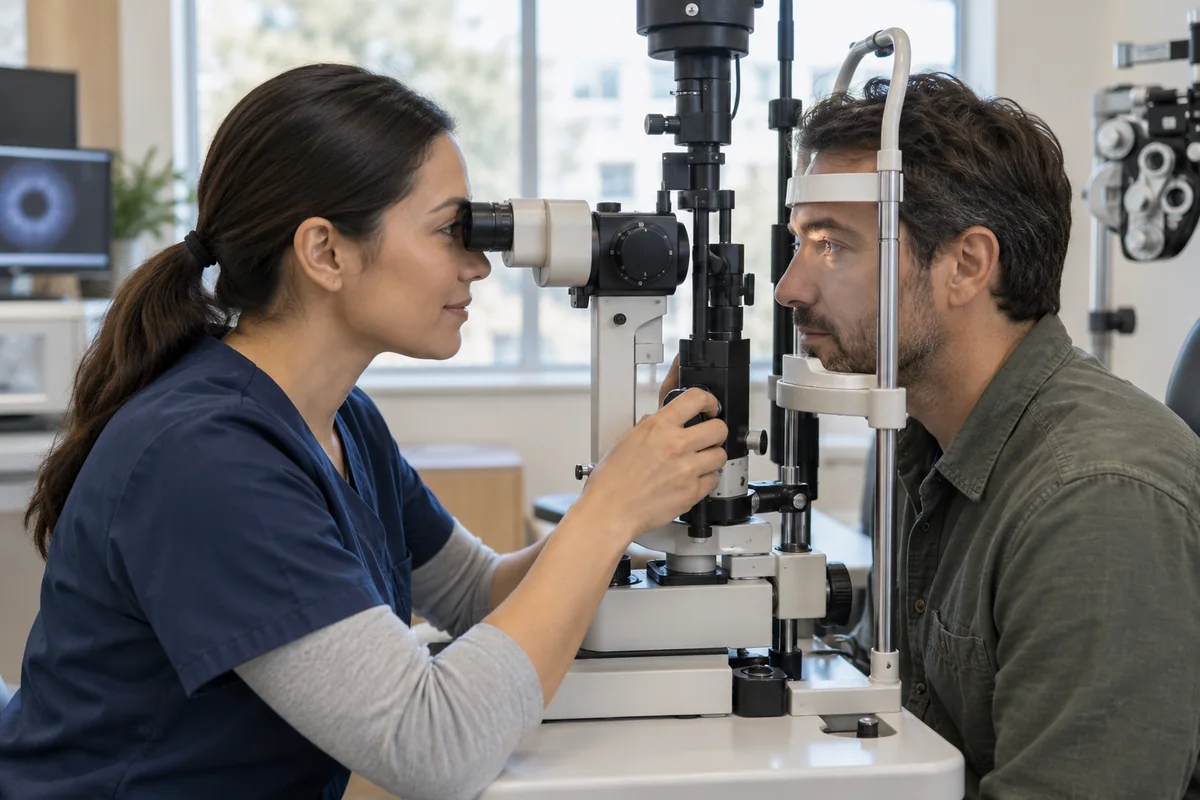
Ask a patient about changes in their sight and past health, then type the answers into their chart.
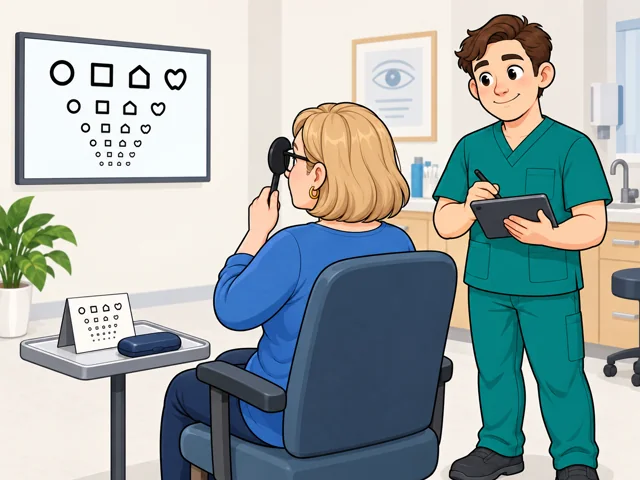
Have the patient read the chart with and without glasses, then record their near and distance results.
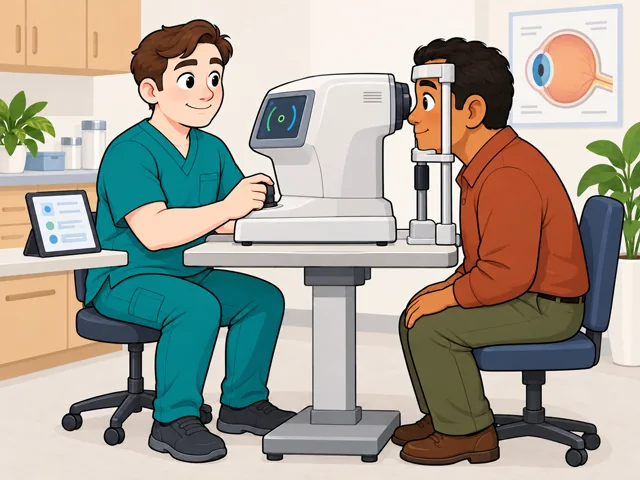
Use a tonometer to measure pressure inside the eye, then log the number for the ophthalmologist.
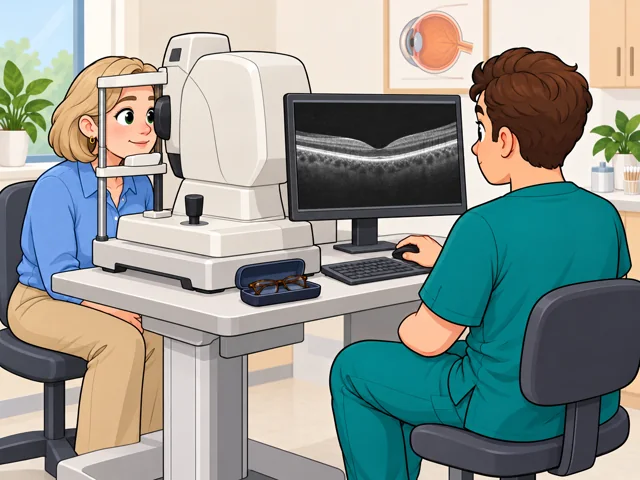
In retina clinics, you take detailed optical coherence tomography (OCT) scans of tissue lining the eye's back.
United States
United States · May 2025
United States · 2025–2035
Quick orientation
You can build qualifying experience while studying or complete an accredited ophthalmic technician program.
National median for ophthalmic medical technicians, equivalent to $21.91 an hour.
About 11,800 openings a year are projected nationally, including replacement openings.
Some software analyzes retinal photographs for signs of diabetic eye disease. These artificial intelligence tools handle a specific screening task.
You still explain tests, collect patient information and help produce the images the eye-care team uses.
Prescription devices can now capture eye scans at home. How much routine imaging shifts out of clinics—and how that changes technicians' work—remains uncertain.
Pay in context
Use the national median as a reference point when comparing offers; it is not a starting salary.
The May 2025 median was $45,570 a year, or $21.91 an hour. Half of workers earned less and half earned more.
In May 2025, the 10th-percentile annual wage was $35,700 and the 90th-percentile wage was $61,940. These are wage percentiles, not starting and senior salaries.
May 2023 annual averages were $56,450 in general medical and surgical hospitals and $46,020 in physicians' offices. These historical averages do not guarantee a raise from changing settings.
National employment is projected to grow 21.4% from 2025 to 2035, with about 11,800 openings annually. Openings include replacing workers who leave the occupation.
Two routes combine eye-care practice with study. Certification eligibility comes before taking the exams.
After entry
This starts where the entry routes leave off: early work, growing capability, and advancement or specialization. This path also has a credential or licensing boundary; see the requirements and limits.
Build a consistent routine for vision testing and charting so the ophthalmologist can use your results without missing information.
If you entered as a COA, one COT route requires 2,000 hours as a COA within 24 months and 12 approved continuing education credits within 12 months. Keep your COA current and pass both COT assessments.
Develop deeper retinal imaging skills, or pursue a team-lead position as your experience grows.
A broad mix of vision tests comes with keeping appointments moving and coordinating further tests or surgery. Some centers offer weekday daytime schedules.
More of your work centers on detailed retinal images and preparing patients for in-office injections or laser procedures. You become familiar with a narrower set of eye conditions and equipment.
Try it
Make a page of letters in different sizes. Ask a friend to read selected lines aloud while you explain the task and record exactly what they say. Notice whether you enjoy giving clear instructions while keeping an accurate record.
Stay safe: This is a communication exercise, not a vision test; do not score eyesight or draw health conclusions.