

Find the source of knee pain
Ask when the pain began, examine the knee by hand and match scans to what the patient feels.
Career profile
Orthopedic surgeons treat bones, joints and the other tissue that lets your body move.
Is surgery worth it? You answer by matching a patient's story to the exam and scans, then either operate or explain why it can wait.
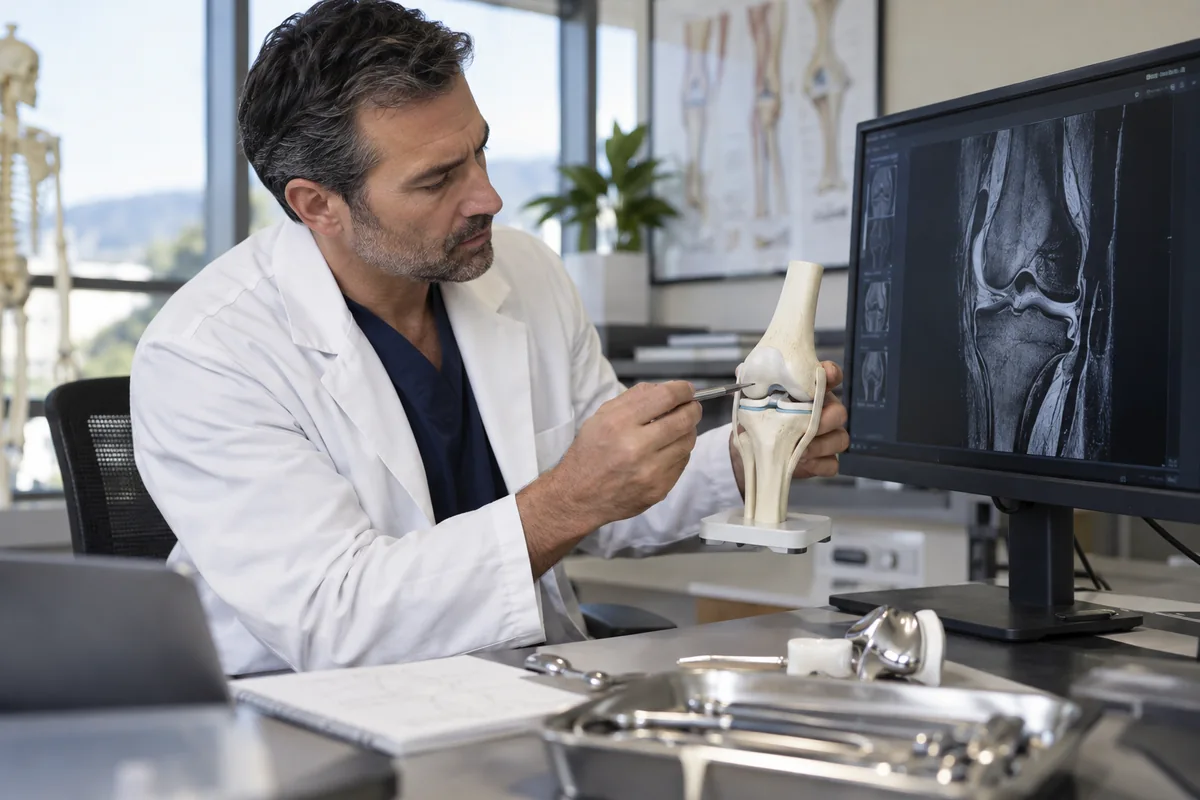
Ask when the pain began, examine the knee by hand and match scans to what the patient feels.
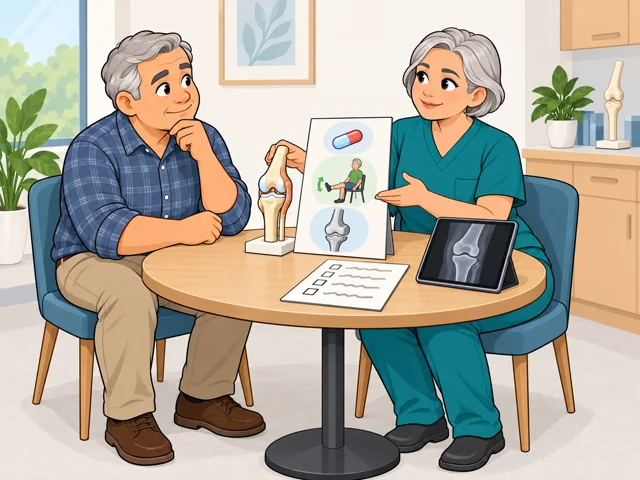
Weigh the exam findings against surgical risks, then lay out options like medicine, physical therapy or an operation.

In joint replacement surgery, prepare worn or damaged bone ends and fit implants using instruments and positioning guides.

At a later check-up, ask about pain and movement, feel the joint and decide if rehab should change.
United States
United States · May 2025
United States · 2025–2035
Quick orientation
A doctoral or professional degree is the entry education level. Orthopedic preparation includes medical school and a five-year orthopedic surgery residency.
Annual employee wage, equivalent to $172.38 an hour; excludes pediatric orthopedic surgeons.
About 400 openings a year on average; excludes pediatric orthopedic surgeons.
For some hip and knee replacements, three-dimensional plans and robotic instruments help guide bone preparation and implant placement.
You choose the treatment with the patient and carry out the operation, including when robotic tools assist.
How widely robotic assistance will spread remains uncertain: equipment costs, extra planning time, and availability affect its place in everyday work.
Pay in context
The national figures below cover orthopedic surgeons except pediatric surgeons.
The median was $358,550 a year, with a reported hourly equivalent of $172.38. The 10th-to-90th-percentile range was $84,170–$659,290 annually. These are positions in the wage distribution, not starting and senior salaries.
Experience, responsibilities, and location can affect earnings. These employee wage estimates exclude self-employed surgeons, so they do not describe the income of every practice owner.
Employment is projected to grow 4% from 2025 to 2035, with about 400 openings each year on average. Openings include replacement needs as well as growth.
The usual path has two linked steps: medical school, then orthopedic residency. Both are needed for this surgical career.
After entry
This starts where the entry routes leave off: early work, growing capability, and advancement or specialization. This path also has a credential or licensing boundary; see the requirements and limits.
Build reliable routines for coordinating operations and follow-up care. Keep clear records of your decisions and patient outcomes.
Follow patients through recovery and review your results. Use those outcomes to refine treatment choices and the expectations you discuss before surgery.
Fellowship training can deepen your work in areas such as hand surgery, joint reconstruction, or orthopedic trauma.
Your work centers on examinations and treatment conversations. Repeat visits let you follow recovery; operating days may take you to a separate surgical facility.
Acute injuries and difficult referrals bring complex decisions. You may teach residents while caring for patients, with hospital call adding interruptions outside scheduled visits.
Joint replacement work involves the operating room and recovery nurses, with patients going home after recovery instead of staying on a hospital ward.
Try it
Read a patient explanation of knee replacement beside a knee diagram. Mark what is replaced, then write two questions you would want answered before recommending surgery. Notice whether both the anatomy and the treatment decision interest you.
Stay safe: Keep this a reading exercise; do not diagnose yourself or someone else.