
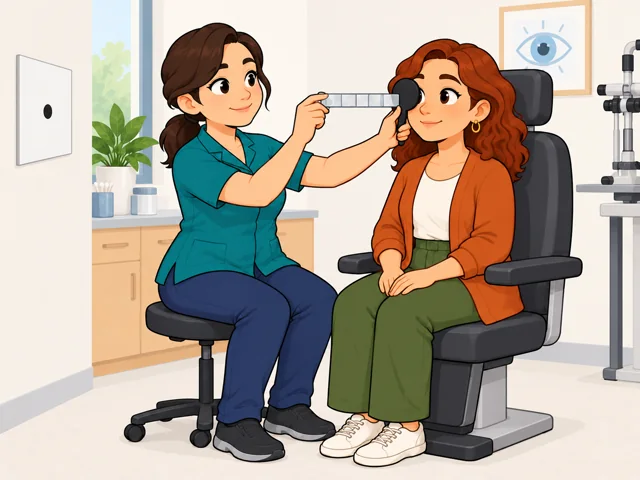
Find where each eye points
While the patient stares at a target, cover one eye and use prisms to measure alignment.
Career profile
Orthoptists test eye movement and how eyes work together, helping treat misalignment and double vision.
A tiny change in eye position can reshape your sense of someone's sight. Precise measuring and patience coax answers from nervous adults or squirmy kids.
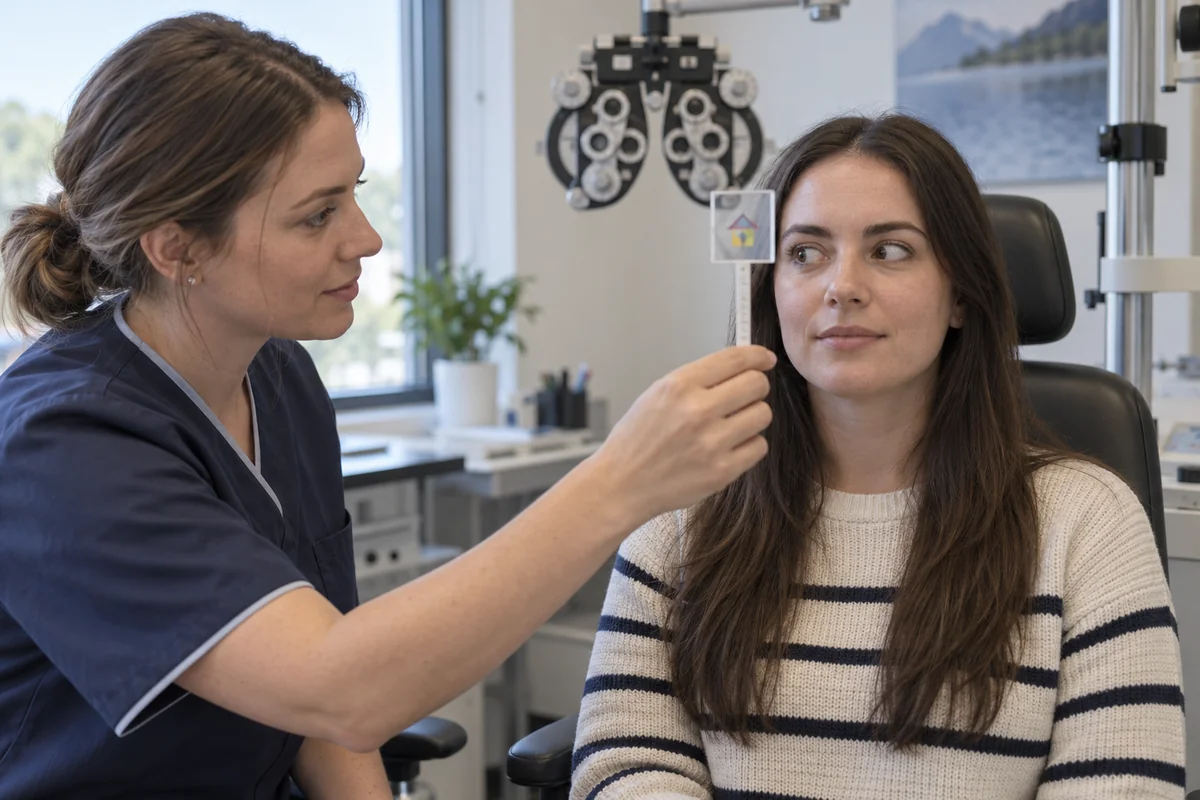
While the patient stares at a target, cover one eye and use prisms to measure alignment.
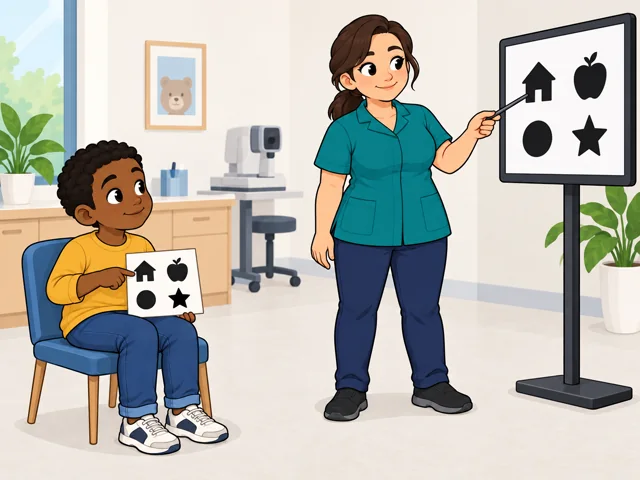
Switch to pictures if letters don't suit a young child, and adjust your directions so they can finish.

If gains stall against the chart, rethink the nonsurgical plan and discuss changes with the ophthalmologist.
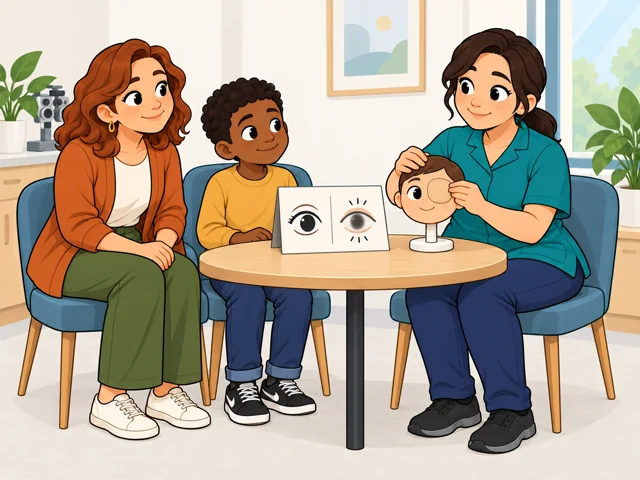
Walk a family through the findings and what treatment involves, like why their child wears an eye patch.
United States · 2026-10-04
Pay varies by position; compare the local salary and hourly ranges below.
Explore openings in the locations where you could realistically work.
Quick orientation
The usual route adds an orthoptic fellowship with clinical training after college.
Pay varies by position; compare the local salary and hourly ranges below.
Explore openings in the locations where you could realistically work.
Experimental virtual reality headsets track eye position and calculate alignment measurements. They could help automate part of the examination.
You still need to judge the patient's responses, interpret findings and explain the treatment plan.
How much hands-on testing these devices can replace depends on their reliability across different patients and kinds of misalignment.
Pay in context
Compare pay together with scheduled hours. A full-time salary and a part-time hourly rate answer different questions about your income.
In Boston, an Orthoptist I role lists $74,090–$118,550 in annual base pay for 40 hours a week—about $35.62–$57.00 an hour using 2,080 hours a year. This is a position's advertised range.
In Daly City, California, an orthoptist role lists $39.51–$51.13 an hour for 24 hours a week. Benefits are separate from this base-pay range.
Experience, skills and location can affect offers. These two ranges do not establish that hospitals pay more or less than medical offices.
Most students enter after a bachelor's degree. Some experienced eye-care personnel qualify for a shorter version of the same training.
After entry
This starts where the entry routes leave off: early work, growing capability, and advancement or specialization. This path also has a credential or licensing boundary; see the requirements and limits.
Get dependable measurements and write records that let the next clinician understand what changed.
Deepen your assessment and treatment skills as you encounter different eye-movement problems. Keep your certification current through continuing education.
Develop toward teaching residents and orthoptic students or coordinating a clinic.
Patient appointments can share your working week with resident teaching and research. You may need to explain your examination methods as well as perform them.
Your role may extend from examining patients and explaining treatment to coordinating the clinic or managing office work.
Try it
Watch an educational demonstration of an orthoptist measuring eye alignment. Make two columns: what the examiner observes and what they must interpret. Notice whether that mix of precise measurement and patient communication interests you.
Stay safe: Observe the demonstration; do not use it to test or diagnose someone.