
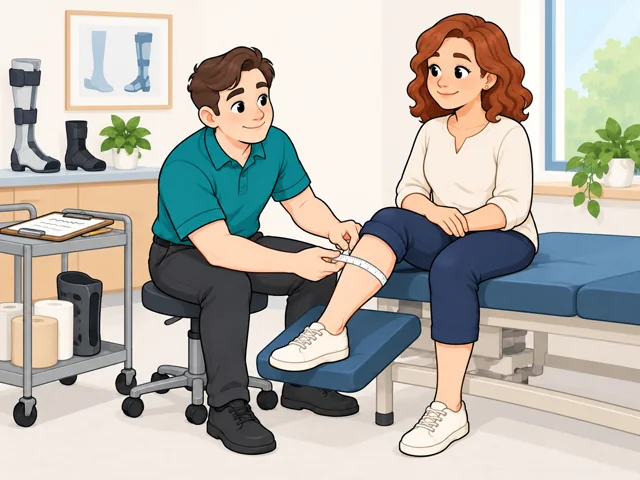
Measure or scan a limb
Measure or scan the arm or leg to prepare a custom brace or choose a ready-made size.
Career profile
Orthotic assistants help make, fit and adjust braces that support arms, legs, backs and spines.
Days can run from shaping a brace at the bench to helping someone into it. Handwork counts, and so does how it feels once worn.
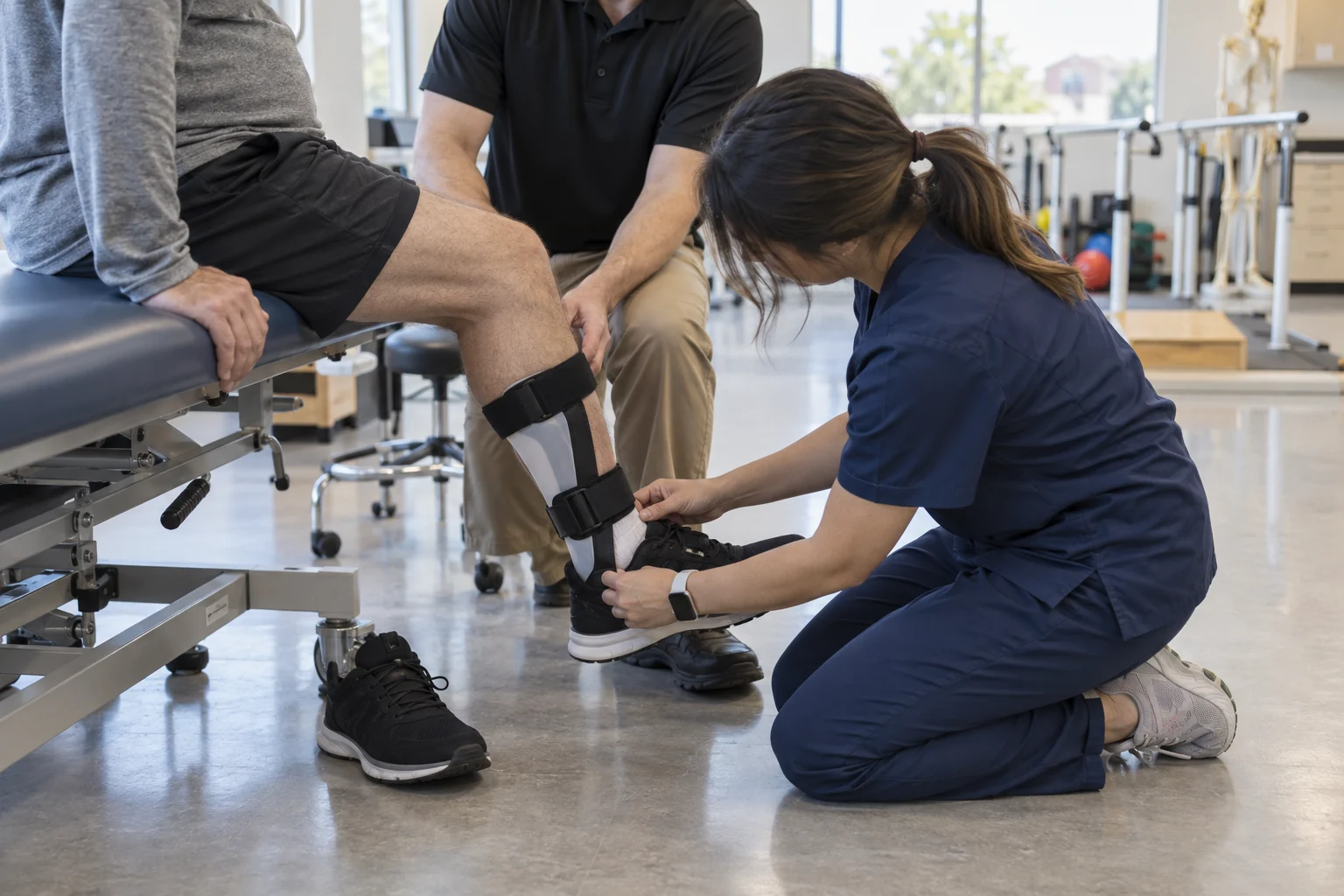
Measure or scan the arm or leg to prepare a custom brace or choose a ready-made size.
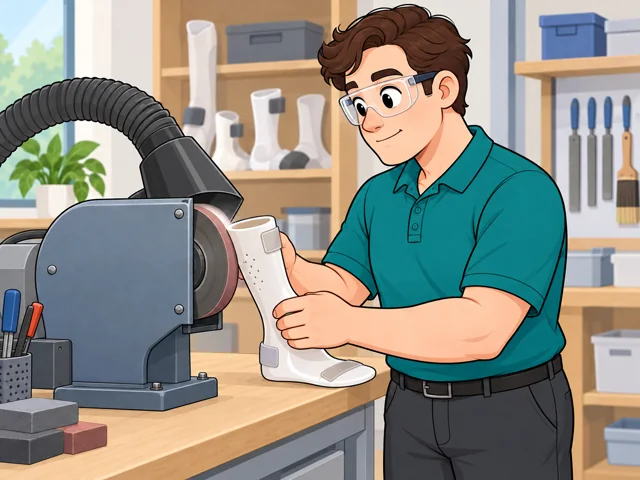
Where the role includes shop work, run machines that trim, grind or buff brace edges smooth.
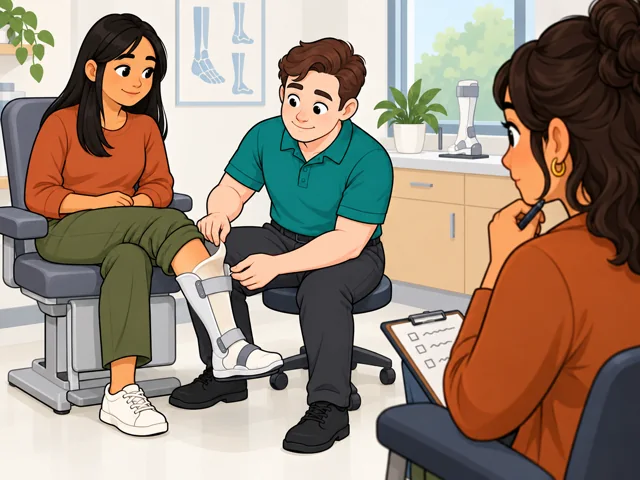
Inspect the fit when a patient reports discomfort, record findings and flag treatment-plan issues for the orthotist.
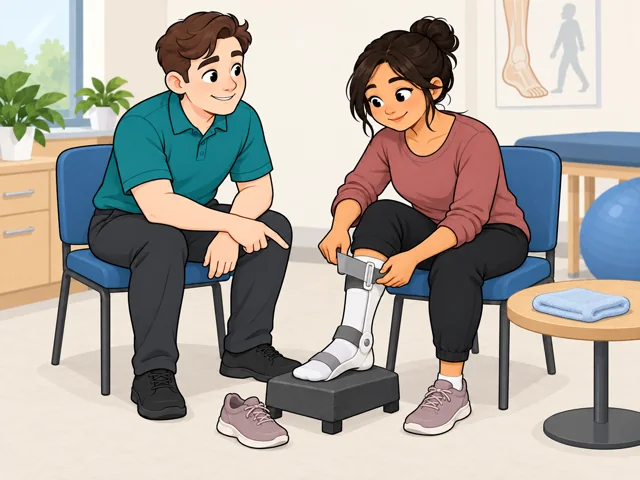
Show the patient or caregiver how the brace goes on and off, then explain care and wearing instructions.
United States
A separate national median for orthotic assistants is not available.
There is no separate national growth forecast for this assistant role.
Quick orientation
Certification routes include supervised experience with college courses or an accredited assistant program.
A separate national median for orthotic assistants is not available.
There is no separate national growth forecast for this assistant role.
Digital measuring tools can capture body shape, and computer-assisted design and manufacturing can help turn those measurements into a brace.
You still check the physical fit, listen to the patient and explain how to use the finished device.
How much digital fabrication will replace hands-on shaping and adjustment remains uncertain; a finished brace still has to work on a moving person.
Pay in context
Pay depends on the position you enter. A clinical training job can provide a starting point, but its rate is not a national wage for certified assistants.
A Springfield, Illinois, clinical-assistant role starts at $19 an hour—$39,520 for 2,080 paid hours. It includes orthotic, prosthetic and footwear support while you train.
That position includes financial assistance for approved courses and certification exams. When comparing offers, ask what education costs the employer covers and whether added responsibilities change your rate.
For certification through the American Board for Certification in Orthotics, Prosthetics & Pedorthics (ABC), you must be at least 18. Check state licensing and supervision rules before arranging training; they can add requirements.
After entry
This starts where the entry routes leave off: early work, growing capability, and advancement or specialization. This path also has a credential or licensing boundary; see the requirements and limits.
Build consistency in measurements and patient records. Make your notes useful to the orthotist who reviews what happened at the visit.
Develop your fabrication skills and learn to check how an adjustment changes comfort and movement.
Build experience with a patient group or device type, such as children’s braces or spinal supports.
You work with children and caregivers, using explanations and demonstrations that families can follow at home. Some clinics combine fitting rooms with machinery for modifying braces.
Some departments bring assistants, practitioners, residents and fabrication technicians together on site. Care may extend from scheduled clinic visits to hospital patients and rural outreach.
Try it
Wrap a paper strip around a bottle, mark its circumference, then use a ruler to record the measurement. Repeat without looking at your first result. Write instructions someone else could repeat. Notice whether careful measuring and clear records appeal to you.
Stay safe: Use an object, not a person; this is a measurement exercise, not a wearable brace.