
Career profile

Construction Painter

Painters first prepare walls, buildings and other structures, then apply finishes people see daily.

Behind a smooth painted wall sits work most people never see: patching holes, protecting the trim and carefully preparing the surface beforehand.
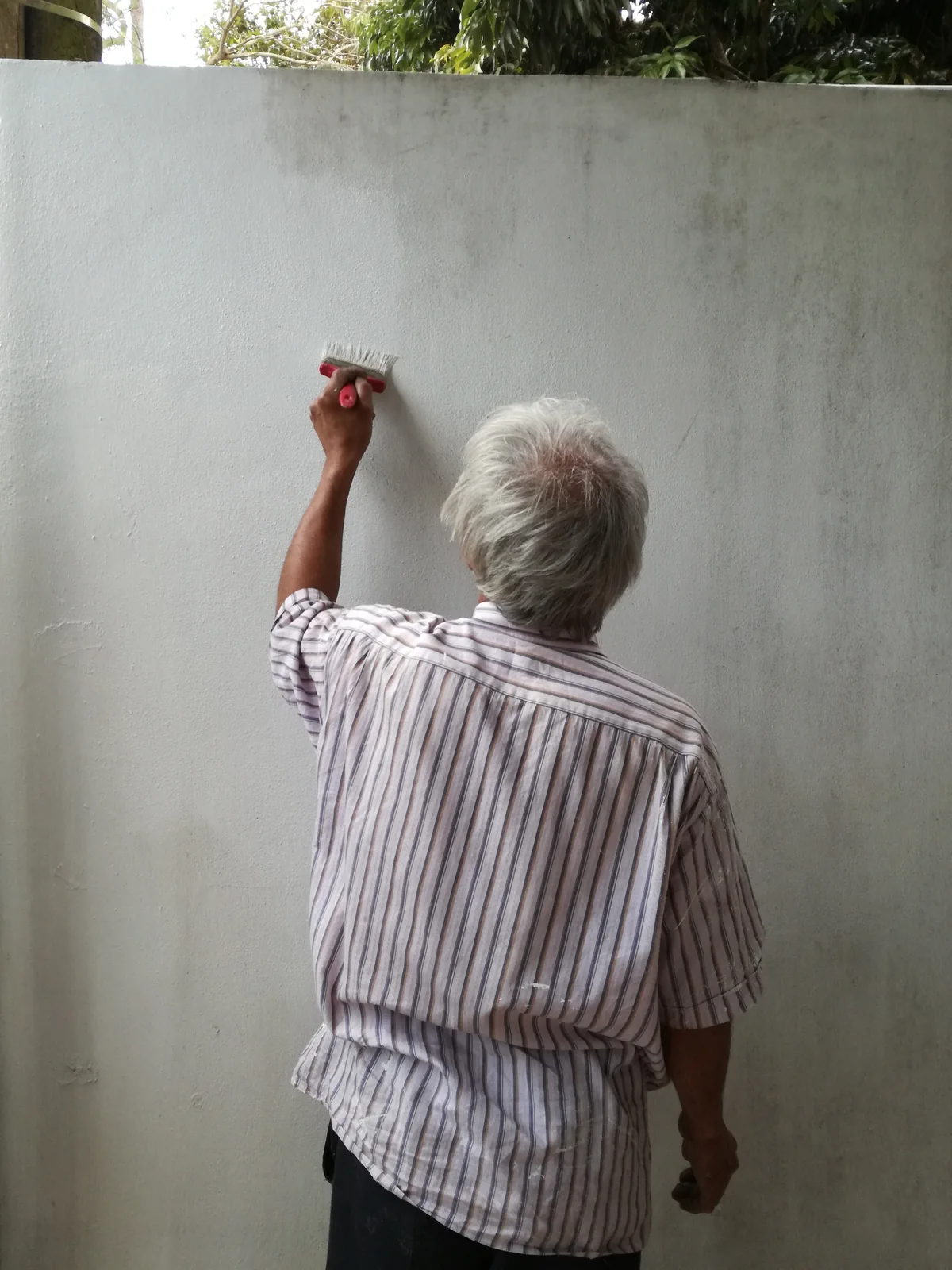
A painter brushes a coat of paint onto an exterior wall.
ALTposes / CC BY-SA 4.0

A day in the life

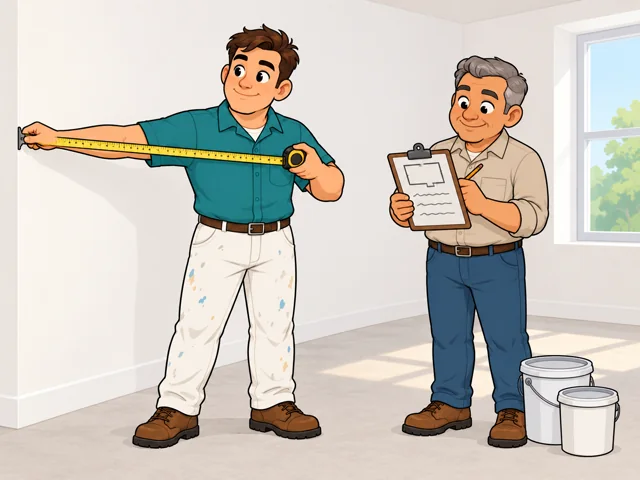
1A painter measures an empty room's wall while an older coworker checks a work order to estimate materials.

Measure surfaces and estimate supplies

Go through the job's work order and measure every surface you'll paint to estimate paint and other supplies.

2The painter kneels to tape a baseboard beside a canvas drop cloth protecting the wood floor.

Cover what must stay clean

Spread drop cloths and tape nearby surfaces that need to stay paint-free before you open any paint can.

3The painter levels filler in a wall hole with a putty knife, with a sanding sponge nearby for smoothing dried repairs.

Fill holes and sand smooth

Patch holes with a putty knife and even out rough spots with sanding tools for a uniform coat.
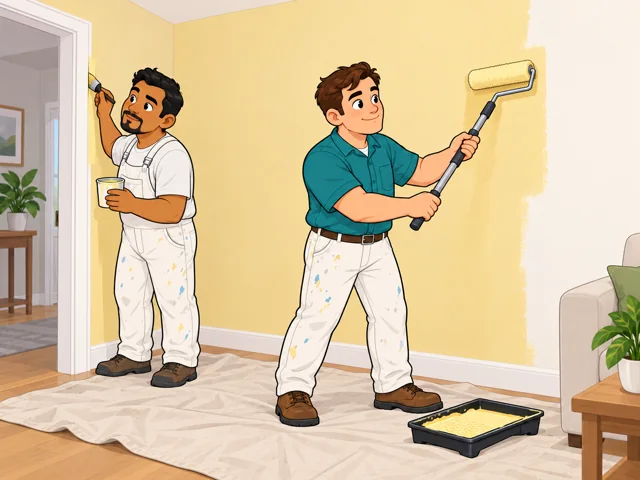
4The painter rolls a broad wall while a coworker brushes a precise edge beside the doorway.

Brush edges and roll walls

Brush the edges and roll the wall, picking brush, roller or sprayer to suit the surface and coating.
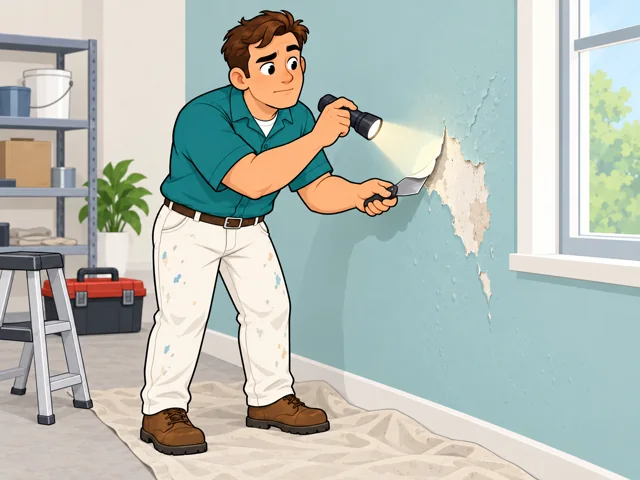
5The painter examines a peeling paint edge and the surface beneath it to investigate why the finish failed.

Trace why paint is peeling

If a coat peels or looks patchy, check the prep and application before you pick a fix.

Quick facts

Preparation

Learn on the job

United States · 2025–2035 projections

Pay

$49,400 a year

United States · May 2025

Outlook

3% projected growth

United States · 2025–2035

Quick orientation

Preparation, pay & outlook

Preparation

Learn on the job

Typically, no formal educational credential is required; you develop the trade through workplace training.

Geography
United States
Period
2025–2035 projections

Pay

$49,400 a year

National median employee pay, equivalent to $23.75 an hour.

Geography
United States
Period
May 2025

Outlook

3% projected growth

About 24,900 openings annually, averaged across 2025–2035.

Geography
United States
Period
2025–2035

Fit, tradeoffs & changing tools

Things to weigh

  • Standing, bending and reaching take stamina; some jobs also involve working at heights.
  • Falls, strains and dust exposure are real hazards. Outdoor jobs can be seasonal.

Where AI may help

Estimating software can help price work. Robots that scan and coat walls are also emerging on construction sites.

What people still lead

You still assess surface problems, choose a repair and judge the finish.

What we can’t predict yet

How much painting shifts to robots will depend on the site and the work involved; the future balance between application and setup remains uncertain.

Pay in context

Earnings

The U.S. median was $49,400 a year, or $23.75 an hour, in May 2025—not a starting-pay promise.

The national spread

The lowest-paid tenth earned under $37,440; the highest-paid tenth exceeded $78,810. These are wage groups, not career stages.

Geography
United States
Period
May 2025
Pay basis
Annual employee wages

Employer type matters

Annual medians: painting and wall covering contractors, $48,830; residential construction, $52,000; government excluding state and local education and hospitals, $69,660. Self-employed earnings are excluded.

Geography
United States
Period
May 2025
Pay basis
Industry-specific median annual employee wages

Openings beyond new jobs

Employment is projected to grow 3% during 2025–2035. The 24,900 average annual openings include replacement needs, so they are not all newly created jobs.

Geography
United States
Period
2025–2035
Pay basis
Employment projections, not compensation

Getting started

Train with a painting employer

What the route involves
Learn preparation and coating application from experienced painters.
What it can lead to
Build practical painting skills while working.
What to check
No formal educational credential is typically required.

Enter a painting apprenticeship

Typically 3–4 years.Paid
What the route involves
Combine technical classes with paid workplace training.
What it can lead to
Complete the program to become a journey worker.
What to check
Typically requires age 18 and a high school diploma or equivalent; program requirements vary.

Workplace training is the usual starting point.

After entry

Career paths

This starts where the entry routes leave off: early work, growing capability, and advancement or specialization.

  1. Build reliable habits

    Practice masking, surface preparation and brush control until your work is consistent.

  2. Handle more demanding finishes

    Learn spray equipment and how to recognize and correct coating failures.

  3. Lead work or specialize

    Develop estimating and supervision skills to plan jobs and guide other painters.

    • Build a specialty in decorative finishes such as simulated wood grain.

Where you can work

Occupied homes

You may adjust the day's work around residents and their schedules.

  • Indoors
  • Outdoors
  • Physical demands

Commercial buildings

Larger surfaces and checks against technical specifications shape the work.

  • Indoors
  • Outdoors
  • Physical demands

Industrial coating sites

Containment, protective coatings and inspections add responsibilities beyond appearance.

  • Field work
  • Physical demands
  • Safety-sensitive

Try it

See whether the job clicks before you commit to the path.

On cardboard, tape off a rectangle and use washable craft paint to brush an even coat up to its edges. Remove the tape after drying and inspect the result. Did you enjoy the careful setup and repeated strokes?

Stay safe: Use a covered tabletop and follow the paint label; this exercise needs no ladders or work on existing painted surfaces.

Explore more careers

Sources

  1. O*NET OnLine. 47-2141.00 — Painters, Construction and Maintenance. Accessed 2026-10-02.
  2. U.S. Bureau of Labor Statistics. Painters, Construction and Maintenance — Occupational Outlook Handbook. Accessed 2026-10-02.
  3. U.S. Bureau of Labor Statistics. Occupational projections and worker characteristics. Accessed 2026-10-02.
  4. National Center for Construction Education and Research. Painting. Accessed 2026-10-02.
  5. Finishing Trades Institute — Ohio Region. Painter-Decorator. Accessed 2026-10-02.
  6. Okibo. Autonomous finishing robot. Accessed 2026-10-02.

Your message goes to the Great Jobs team. How we use your information