
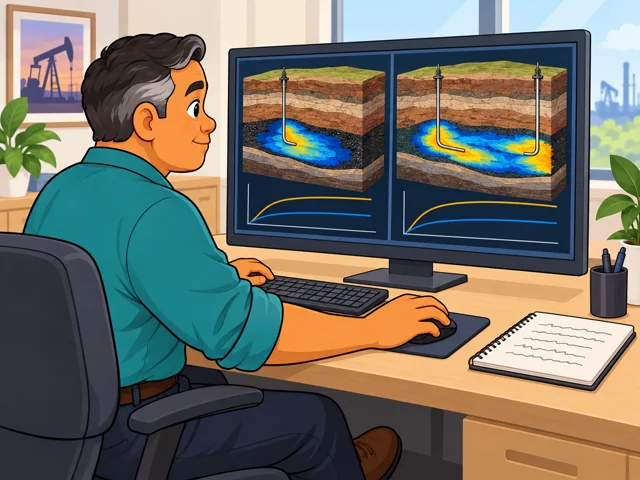
Weigh recovery options in a model
Compare ways of getting oil out in a computer model of the reservoir to see which recovers most.
Career profile
Petroleum engineers plan ways to bring oil and natural gas up from rock underground.
Geology, fluid flow and engineering design meet in one problem: connecting what lies deep underground to decisions made at the surface.

Compare ways of getting oil out in a computer model of the reservoir to see which recovers most.
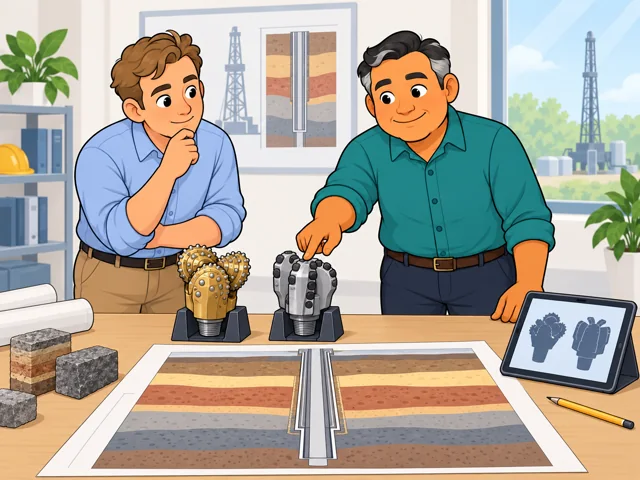
In drilling jobs, you pick the techniques and equipment that set how a well gets drilled.

Match production history against well tests to see why output fell, then discuss fixes with engineers and technicians.

Weigh expected production against the costs, then write a report saying what you recommend and why.
United States
United States · May 2025
United States · 2025–2035
Quick orientation
The typical education for entering petroleum engineering.
National median for petroleum engineers, equivalent to $69.67 an hour.
Employment is projected to grow slowly, with about 1,000 openings a year on average.
Some drilling systems interpret measurements underground and adjust the drill's direction automatically, reducing repeated steering commands.
Engineers still choose recovery plans and weigh costs when recommending changes.
How much steering and monitoring will shift to automation across different wells remains unsettled; a system handling one drilling task does not settle the whole well plan.
Pay in context
The national pay range is wide. Use it to understand the occupation, not to predict your first offer.
The median was $144,910 a year, or $69.67 an hour. Half of petroleum engineers earned more and half earned less.
The 10th-percentile wage was $81,440 and the 90th-percentile wage was $253,200 annually. These mark the lower and upper ends of the middle 80%, not beginner and senior salaries.
Employment is projected to grow 2% over the decade. About 1,000 annual openings include replacing people who leave the occupation, as well as growth.
A bachelor's degree is the usual starting point. Internships can add practical experience before graduation.
After entry
This starts where the entry routes leave off: early work, growing capability, and advancement or specialization.
Learn the well records and calculation methods your team uses.
Take on recovery comparisons and explain why one plan is preferable.
With experience, you may move into managing engineers and technicians.
Spend more of your day with reservoir models and production records, comparing plans with other engineers. Site visits may still be part of the job.
Work closer to operations and oilfield crews. Assignments may take you offshore or to remote areas, with extended shifts during troubleshooting.
Try it
Make two fictional five-year oil-production forecasts in a spreadsheet: one starts high and declines quickly; the other starts lower and declines slowly. Compare total output, then change one assumption. Notice whether you enjoy explaining why the preferred plan changes.