
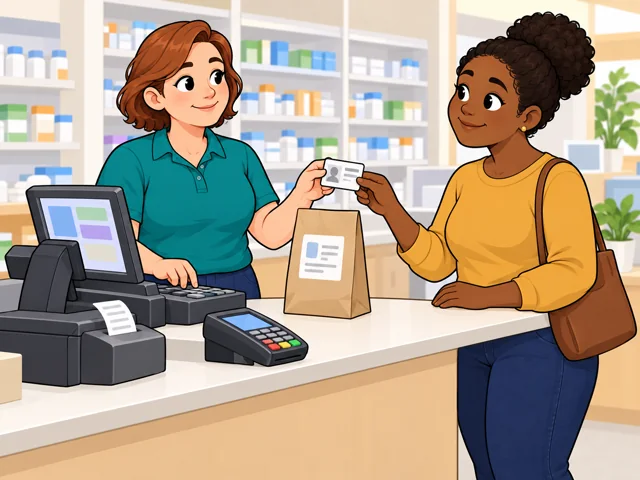
Hand over a finished order
Compare the shopper's identification with the finished order, ring up the payment, and hand over a receipt.
Career profile
Pharmacy aides work the pharmacy front, serving shoppers, taking payments, and organizing stock and paperwork.
Enjoy serving people and also like putting shelves and files in order? A single workday here gives you both.

Compare the shopper's identification with the finished order, ring up the payment, and hand over a receipt.
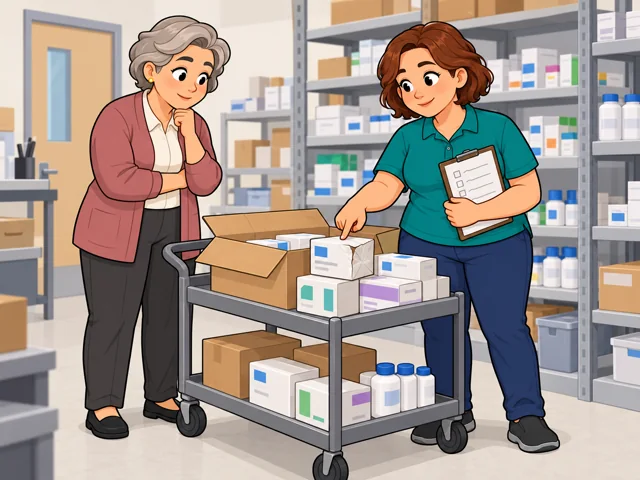
Check cartons against the packing slip and report missing or broken items to the supervisor before shelving anything.

Answer each call, learn what the caller needs, and hand any drug question to the pharmacist.
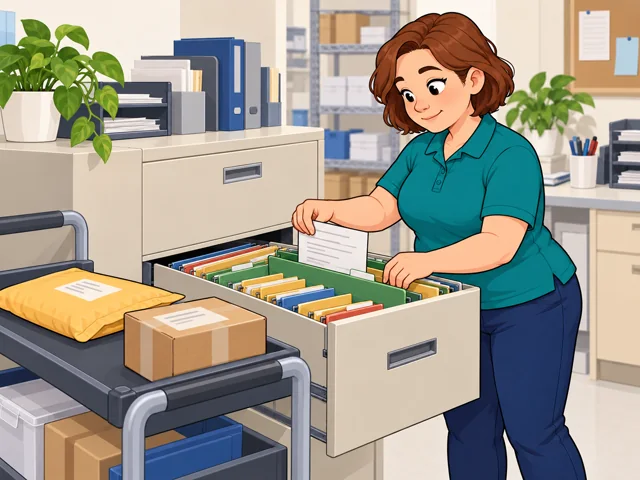
File prescription paperwork for coworkers to find, and in some roles ready finished orders for courier or mail.
United States · 2025
United States · May 2025
United States · 2025–2035
Quick orientation
Typical entry preparation is a high school diploma or equivalent, followed by short-term training on the job.
National median for pharmacy aides, equivalent to $18.12 an hour.
Employment is projected to decline 0.7% from 2025 to 2035, with about 5,100 openings a year on average.
Computer records and checkout systems help you retrieve orders and record transactions without rewriting everything.
You still speak with the person at the counter and alert the pharmacist when information is missing.
How much more record entry and checkout become automatic—and how that changes the balance of your shift—remains uncertain.
Pay in context
Use the national midpoint for orientation, then compare the hourly rate and scheduled hours of an actual job.
The May 2025 median was $37,680 a year, or $18.12 an hour. Half of pharmacy aides earned more and half earned less; this is not a starting-pay promise.
In May 2025, the 10th-percentile annual wage was $29,820 and the 90th-percentile wage was $56,010. These are wage percentiles, not starting and senior salaries.
May 2023 average annual pay was $49,550 in general medical and surgical hospitals and $35,460 in health and personal care retailers. These older averages describe settings, not what a particular employer will offer today.
About 5,100 openings a year are projected for 2025–35 even as total employment edges down. Openings can exist when workers leave an occupation; they do not all represent newly created jobs.
Look for pharmacy aide, clerk, or assistant jobs focused on clerical support. You work with pharmacist supervision; preparing medicines as a pharmacy technician requires a separate training path.
After entry
This starts where the entry routes leave off: early work, growing capability, and advancement or specialization.
Learn the checkout sequence and filing system until you can retrieve the right order or record without losing your place.
Build confidence checking deliveries and inventory records. Learn which discrepancies need the supervisor’s attention.
If you want to help prepare prescriptions, explore pharmacy technician training through an employer or college. Most states regulate technicians, so check the required training, exams, and registration before choosing a program.
Your shift revolves around people arriving for pickups, telephone reception, and sales. Some medical-office pharmacy jobs rotate across shifts or nearby locations.
Some clerk jobs combine stock and records with delivering completed orders within the health system and preparing packages for patients at home. Moving inventory adds carrying and stacking to the desk work.
Try it
Make a pretend packing slip for ten household items, then have someone remove or swap one item. Check the delivery, record the mismatch, and explain it clearly. Notice whether careful checking feels satisfying or frustrating.
Stay safe: Use ordinary objects, not medicines or real patient information.