
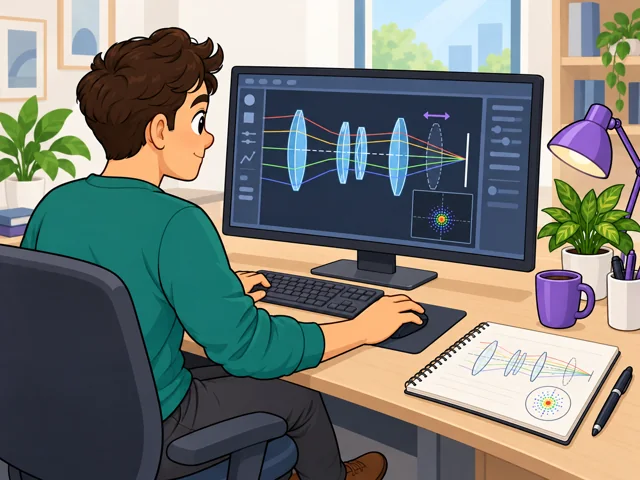
Model light through a draft design
Use light-modeling software to trace paths through a proposed design and see how small part shifts change results.
Career profile
Photonics engineers create light-based hardware that detects things, carries signals or data, or supplies power.
When a light-based sensor loses a large share of its light, find where the light escapes, then rework the layout so more reaches the detector.
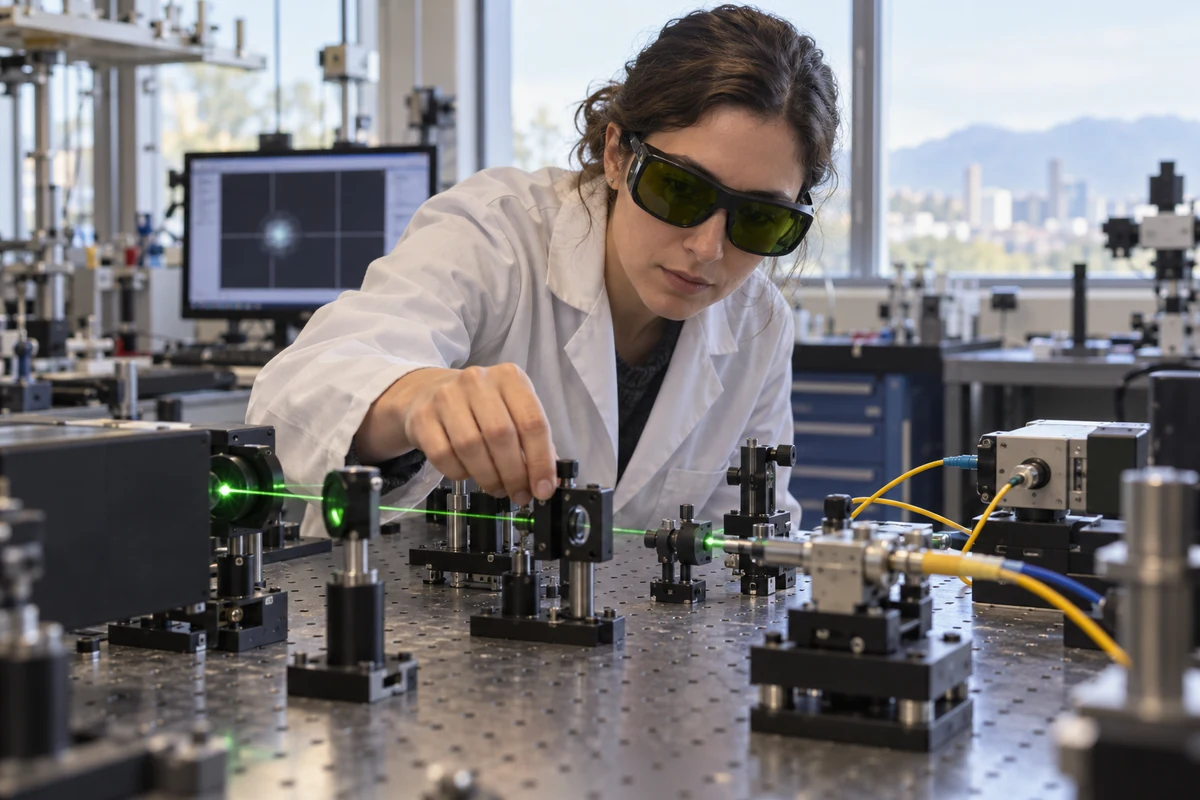
Use light-modeling software to trace paths through a proposed design and see how small part shifts change results.
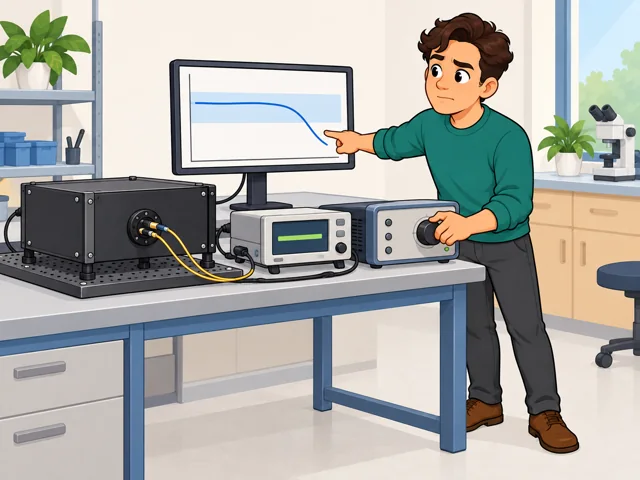
Test the prototype against its specs, and where it falls short, use the measured data to pick changes.
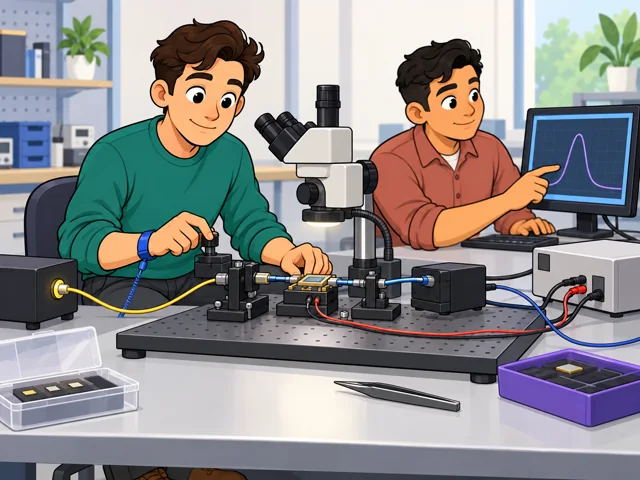
In integrated photonics, connect a light-steering chip to its light source, detector and controls, then test everything together.
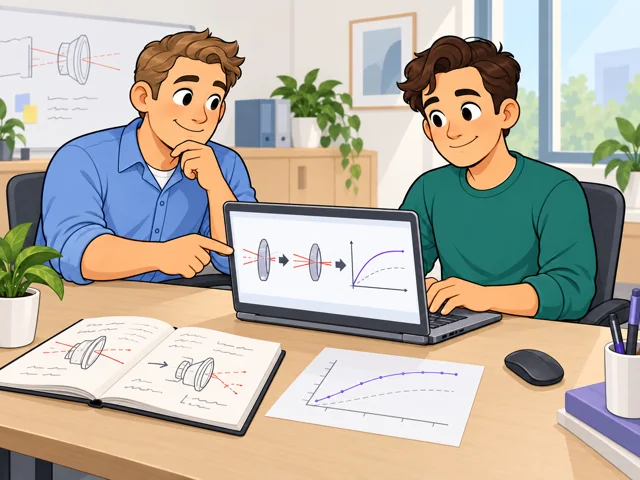
Note the problem, fix and test results in the design log so another engineer can follow your reasoning.
United States · 2026
Compare salaries for the location and experience level you would enter.
Search by specialty as well as title: optical systems, lasers, and fiber optics.
Quick orientation
Some positions call for graduate study.
Compare salaries for the location and experience level you would enter.
Search by specialty as well as title: optical systems, lasers, and fiber optics.
In some photonic-chip teams, artificial intelligence helps generate layouts and improve designs.
Engineers still connect the design to fabrication limits and measured device behavior.
How much of the design-to-test cycle can run reliably without an engineer's intervention remains unsettled.
Pay in context
Location, experience, and specialized skills affect an offer. These advertised ranges describe particular roles, not a national pay scale.
An on-site Integrated Photonics Engineer I role in Rome, New York, lists $75,000–$95,000 annually.
A Boston photonics role covering chip design through testing lists $128,000–$208,000 in annual base salary, with equity separate.
Build a foundation in mathematics and physics, then get practice designing and testing optical systems.
After entry
This starts where the entry routes leave off: early work, growing capability, and advancement or specialization.
Learn the team's simulation and chip-layout tools, then use them on a small part of a working design.
Take an optical subsystem from an early test build toward production, resolving performance and manufacturing problems along the way.
Develop deep chip-design expertise and lead a design's release to fabrication.
You move between computer models and laboratory hardware. Product work adds a practical constraint: the optical parts must be manufacturable.
You work with quantum scientists and chip-fabrication partners. Progress follows repeated rounds of design, fabrication, and experiments.
Try it
Use a flashlight, a small mirror, and a paper target to redirect light around an obstacle. Sketch the path first, then adjust the mirror and record what changes. Notice whether predicting, testing, and refining the light path holds your attention.
Stay safe: Use a flashlight rather than a laser, and keep the beam away from eyes.