
Career profile

Physical Therapist Assistant

Physical therapist assistants teach and steady patients through movement, watching reactions, under a therapist's plan.

The physical therapist assesses the patient and owns the plan. You give the treatments it assigns and report any change to the therapist.
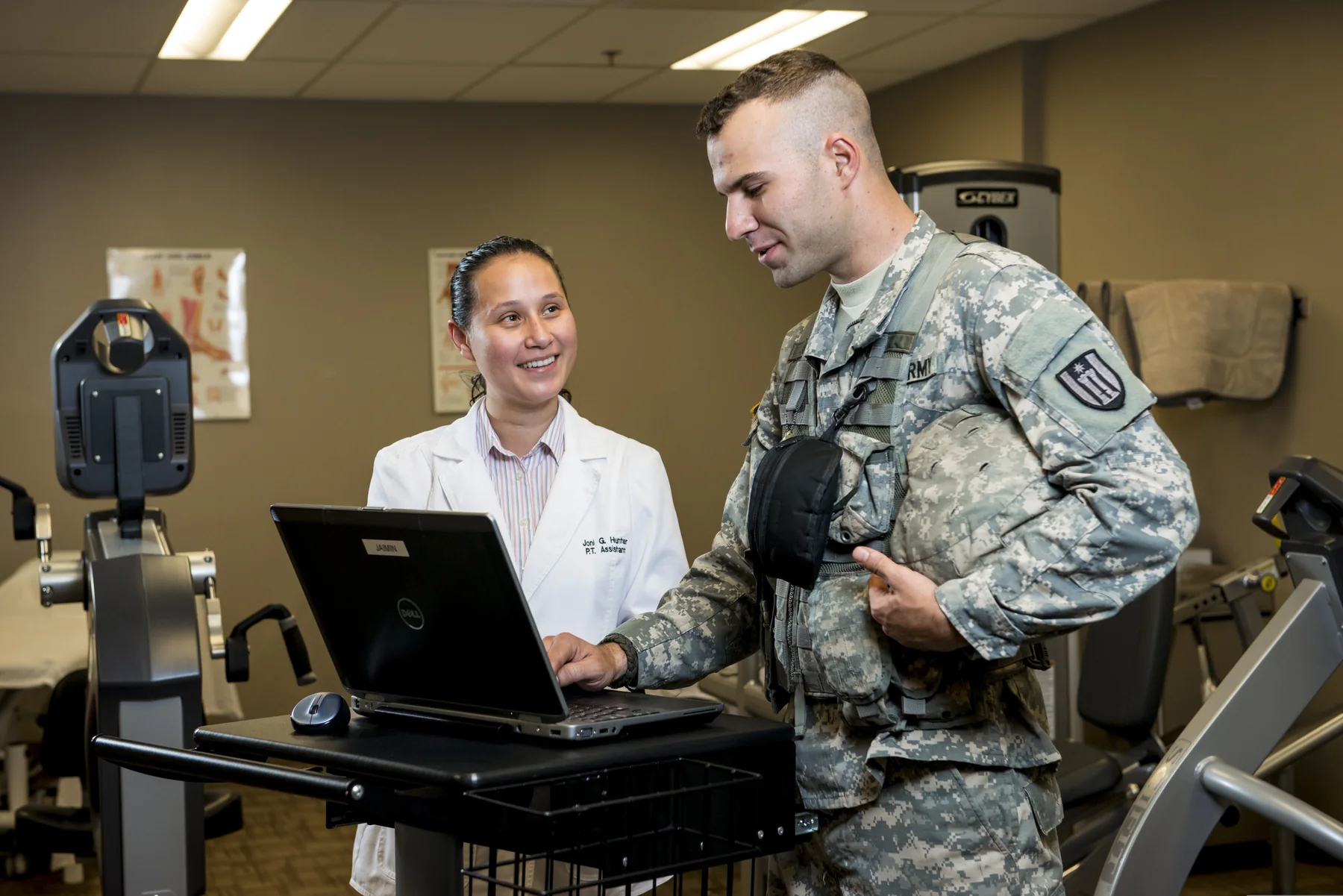
A physical therapist assistant speaks with a service member beside rehabilitation exercise equipment.
Sgt. 1st Class Michel Sauret / Wikimedia Commons, Public domain

A day in the life

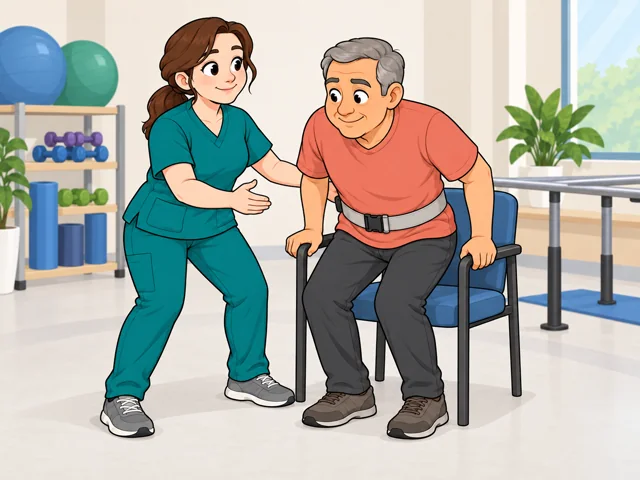
1A physical therapist assistant guards an older man as he rises from a chair, gesturing to help him shift his weight forward.

Steady a patient through exercise

Demonstrate the therapist's planned movement, steady the patient against a fall, and change your instructions if they struggle.

2An assistant records an older patient's fatigue and discusses his response with the supervising physical therapist while he rests nearby.

Flag changes to the therapist

Note pain, fatigue, unsteadiness, or other changes mid-session, and alert the therapist if the plan may need rethinking.
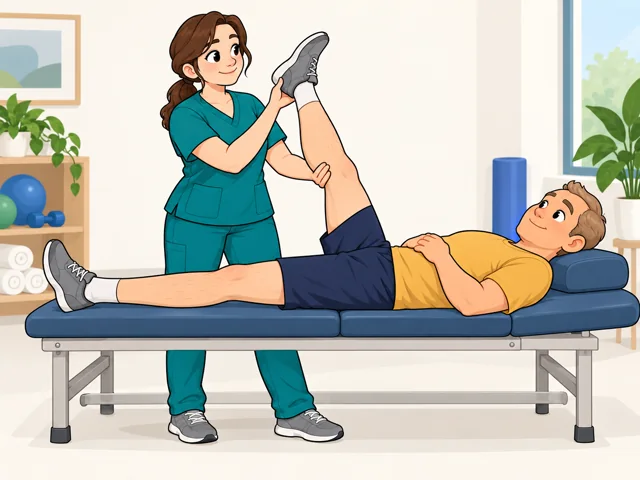
3An assistant supports a reclining man's calf and heel while gently stretching his raised leg.

Work within the therapist's plan

Depending on employer and local rules, you give stretches, massage, walking practice, balance drills, or approved device treatments.
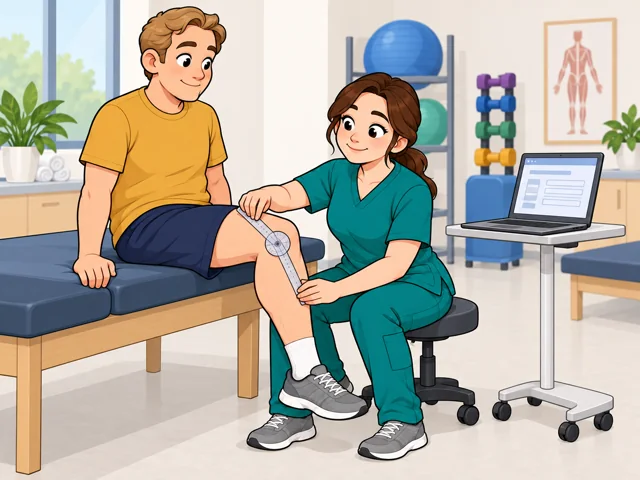
4An assistant measures a seated man's knee movement with a goniometer beside an open documentation laptop.

Measure, then chart the session

Take the assigned measurement, like joint motion or vitals, then chart the treatment and the patient's response.

5An older man practices rising from an armchair toward his walker while an assistant guards his balance and checks his technique.

Show safer ways to move

Teach a patient or caregiver to use a walker or brace, then watch them do it back correctly.

Quick facts

Preparation

Associate degree + state credential

United States

Pay

$68,380 median

United States · May 2025

Outlook

23% projected growth

United States · 2025–2035

Quick orientation

Preparation, pay & outlook

Preparation

Associate degree + state credential

PTA programs are accredited at the associate-degree level, usually take about two years, and include supervised clinical work. Practice also requires the credential issued by your jurisdiction.

Geography
United States
Period
Not applicable

Pay

$68,380 median

National median annual wage for physical therapist assistants—not physical therapist aides—in May 2025.

Geography
United States
Period
May 2025

Outlook

23% projected growth

Projected employment growth for physical therapist assistants—not aides—from 2025 to 2035. This national projection does not guarantee local openings.

Geography
United States
Period
2025–2035

Fit, tradeoffs & changing tools

Things to weigh

  • Expect close contact with patients and substantial time standing or walking.
  • Some jobs require lifting or transferring patients, which can strain your back if safe techniques are not used.
  • Evening or weekend hours occur in some clinics and other settings, although schedules vary.

Where AI may help

Electronic health records, scheduling tools, and other medical software can organize appointments, measurements, and treatment notes.

What people still lead

The PTA still guards movement, delivers hands-on care, notices a patient’s immediate response, and communicates changes to the supervising physical therapist.

What we can’t predict yet

Software may reduce some typing or add movement measurements, but how much of that work it will automate is uncertain; live treatment still creates changes a worker must interpret and report.

Pay in context

Earnings

Use the national median as a midpoint, not as a first-job promise. Setting, location, experience, schedule, and employer all affect an offer.

National midpoint

The median annual wage for physical therapist assistants was $68,380. Half earned more and half earned less. The median hourly wage was $32.88.

Geography
United States
Period
May 2025
Pay basis
Median annual wage for employed physical therapist assistants

Wage spread

The lowest-paid 10 percent earned under $47,750, while the highest-paid 10 percent earned over $89,510. These percentiles are not career stages.

Geography
United States
Period
May 2025
Pay basis
Annual wage percentiles for employed physical therapist assistants

Setting can matter

Industry medians were $80,050 in home healthcare services and $63,080 in offices of physical, occupational and speech therapists, and audiologists.

Geography
United States
Period
May 2025
Pay basis
Median annual wages by industry for employed physical therapist assistants

Getting started

Complete accredited PTA education

Typically about two years, including supervised clinical educationPart of a program
What the route involves
Graduate from a CAPTE-accredited associate-level physical therapist assistant program and complete its classroom, lab, and clinical requirements.
What it can lead to
Completes the standard U.S. education step used to move toward the PTA exam and jurisdiction credential.
What to check
Check CAPTE’s current program directory and the licensing authority where you intend to work before committing.

Pass the exam and meet local rules

What the route involves
Follow your licensing authority’s eligibility process, take the PTA version of the National Physical Therapy Examination, and complete any additional jurisdiction requirements.
What it can lead to
Passing the exam and satisfying the remaining requirements allows the jurisdiction to issue the authorization needed to work as a PTA.
What to check
The NPTE is only one part of licensure. A jurisdiction may add a law exam, background check, fees, or other requirements.

This is one regulated path with two major parts: qualifying education, then examination and authorization from the jurisdiction where you plan to work.

After entry

Career paths

This starts where the entry routes leave off: early work, growing capability, and advancement or specialization. This path also has a credential or licensing boundary; see the requirements and limits.

  1. Get established

    Learn the employer’s workflow, deliver treatments from the established plan, write usable notes, and report patient responses reliably to the supervising physical therapist.

  2. Build capability

    Develop skill with the patient groups, gait and balance work, assistive devices, manual techniques, and permitted equipment used in your setting—while escalating changes that may require a new plan.

  3. Advance or redirect

    A licensed PTA can pursue voluntary advanced proficiency in areas such as orthopedics, neurology, geriatrics, pediatrics, acute care, or wound management without becoming an independent practitioner.

    • Becoming a physical therapist requires additional prerequisites and a Doctor of Physical Therapy education path; PTA experience does not convert the role automatically.

Where you can work

Outpatient therapy office

This is the largest employer group for PTAs. Work centers on scheduled, face-to-face visits, and some clinics offer evening or weekend appointments.

  • Indoors
  • Physical demands
  • Shift work

Hospital or inpatient rehabilitation

Treat patients rebuilding mobility while coordinating with supervising PTs, nurses, aides, and other care-team members. A current inpatient-rehab example uses per-diem shifts lasting 8 to 10 hours.

  • Indoors
  • Shift work
  • Physical demands
  • Safety-sensitive

Home health

Travel between homes for one-to-one visits, deliver delegated treatments in the patient’s everyday environment, document electronically, and communicate changes to the supervising PT.

  • Indoors
  • Travel
  • Physical demands

Try it

See whether the job clicks before you commit to the path.

Watch one public clinical demonstration led by a physical therapist assistant. Make three columns: the instruction given, the patient response you can observe, and what should be reported to the supervising PT. Notice whether coaching within an existing plan holds your attention.

Stay safe: Use observation only; do not practice transfers, manual treatments, or balance challenges on another person.

Explore more careers

Sources

  1. U.S. Bureau of Labor Statistics. Physical Therapist Assistants and Aides. Accessed 2026-09-28.
  2. O*NET OnLine. 31-2021.00 — Physical Therapist Assistants. Accessed 2026-09-28.
  3. Federation of State Boards of Physical Therapy. National Exam (NPTE). Accessed 2026-09-28.
  4. Commission on Accreditation in Physical Therapy Education. CAPTE Mission, Scope & Vision. Accessed 2026-09-28.
  5. Federation of State Boards of Physical Therapy. Model Practice Act. Accessed 2026-09-28.
  6. American Physical Therapy Association. PTA Advanced Proficiency Pathways. Accessed 2026-09-28.
  7. American Physical Therapy Association. PTA to PT Career Transition. Accessed 2026-09-28.
  8. HCA Healthcare. Physical Therapy Assistant Inpatient Rehab PRN. Accessed 2026-09-28.
  9. BAYADA Home Health Care. Physical Therapy Assistant — Home Health Visits. Accessed 2026-09-28.

Your message goes to the Great Jobs team. How we use your information