
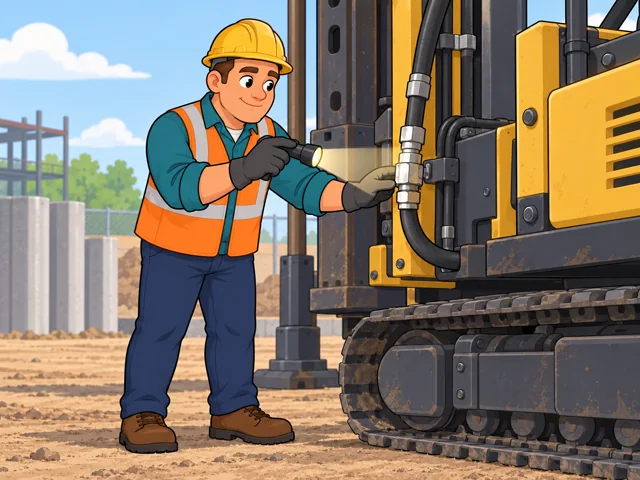
Inspect the rig before starting
Inspect the rig's gear for faults before you start using it, so you catch problems early.
Career profile
Pile driver operators run rigs that pound supports for buildings and other structures deep underground.
Whether a pile is timber, concrete or steel, you help make it part of a foundation by setting it and controlling the hammer.
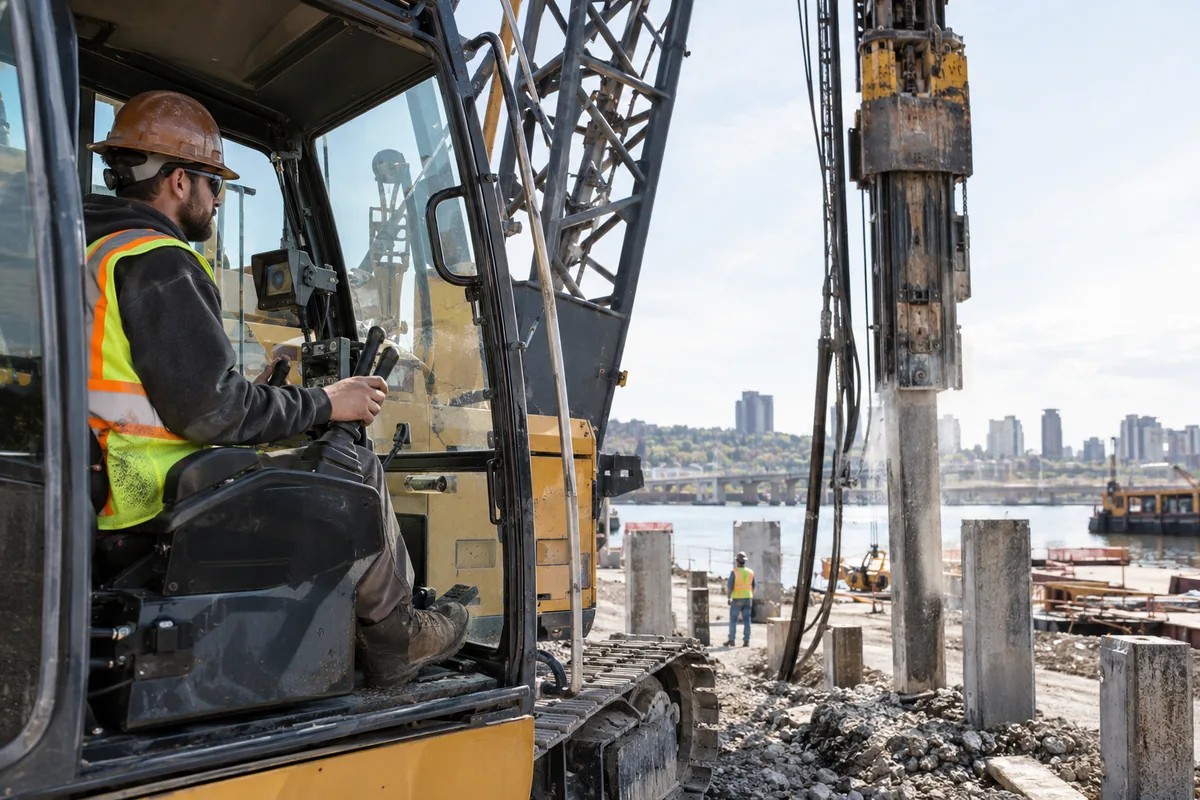
Inspect the rig's gear for faults before you start using it, so you catch problems early.
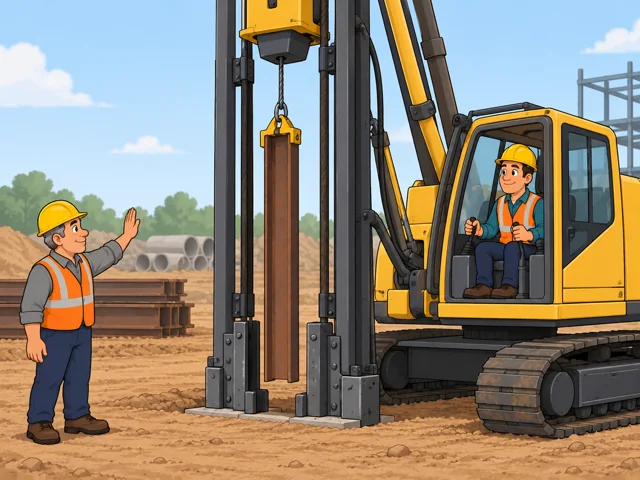
Work the hoist controls to lift a pile into the guides, then set the hammer over it.
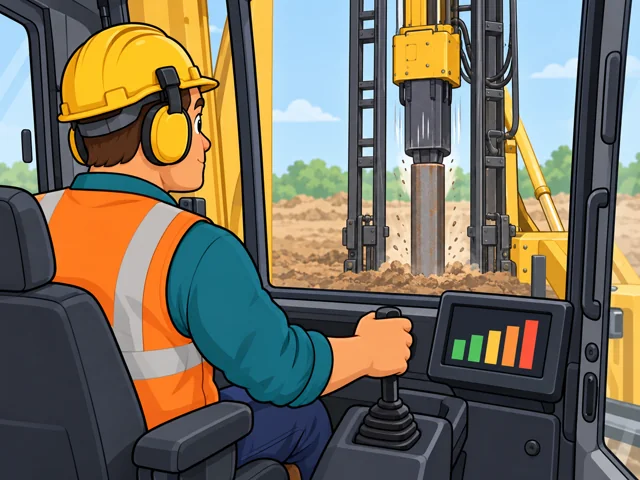
Keep the hammer going until the pile reaches the depth or soil resistance it has to meet.
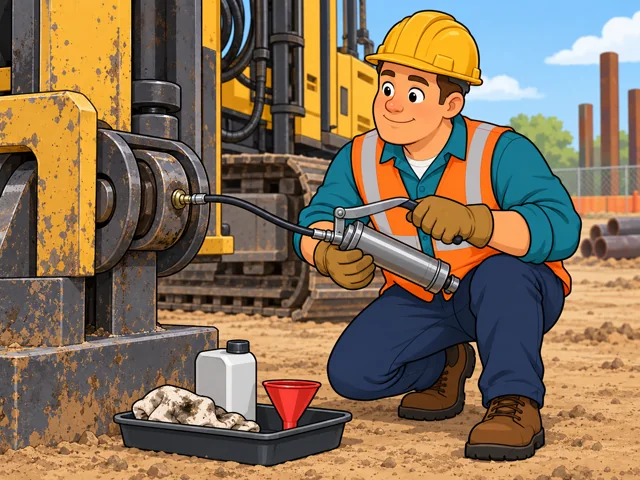
Wipe off built-up dirt and grease, oil the moving parts and top up the fluids.
United States · 2025–2035 source release
United States · May 2025
United States · 2025–2035
Quick orientation
Typical education at entry; learning to operate the equipment comes next.
National median for pile driver operators, equivalent to $35.24 an hour.
Employment is projected to shrink, with about 200 openings a year on average.
Some newer rigs can return the tall pile guide to a saved angle, display ground pressure, and record machine activity automatically.
You still coordinate movements with the crew and watch what is happening around the machine, beyond what its screen shows.
How much of the driving cycle becomes automatic will depend on the rig and site conditions; repetitive alignment is easier to automate than a whole changing worksite.
Pay in context
The national median was $73,300 a year, or $35.24 an hour, in May 2025. That is the midpoint for employed pile driver operators, not a starting offer.
The 10th–90th percentile range was $48,790–$124,600 a year, or $23.46–$59.91 an hour. These are wage percentiles, not beginner and experienced-worker rates.
Long workweeks can alternate with weather delays or seasonal gaps. Ask about expected working months and overtime when comparing offers.
Employment is projected to fall 5.7% from 2025 to 2035, with about 200 openings annually on average. A shrinking occupation can still need workers to replace people who leave.
A high school diploma or equivalent is the usual starting point. Look for a route that includes actual pile-driver training.
After entry
This starts where the entry routes leave off: early work, growing capability, and advancement or specialization. This path also has a credential or licensing boundary; see the requirements and limits.
Make equipment checks and controlled pile positioning dependable habits.
Build experience with different pile materials and impact or vibration hammers, including jobs where long piles need splicing.
Develop toward waterfront work, where pile installation must fit barge access, water conditions, and the work of other marine crews.
You may work through groups of piles that will support one foundation. Deep installations can require joined pile sections, while dense ground may require drilling before driving can continue.
Barge access and changing water levels can shape the workday. Piling may be part of a larger operation involving concrete crews and divers, and high water can change the work sequence.
Try it
Watch a pile-driving demonstration video. Pause when the pile is lifted, aligned, and driven; sketch where the pile, guide, and hammer sit at each step. Notice whether tracking those movements interests you.
Stay safe: Use video for this exercise; do not enter a construction site or try operating machinery.