

Spot shortages in tomorrow's orders
Match tomorrow's work orders against inventory records to catch any missing materials before the production run starts.
Career profile
Production planning clerks keep a plant's work orders and parts moving on schedule.
A missing part could stall tomorrow's production, so you find out when it will arrive and help rework the schedule.
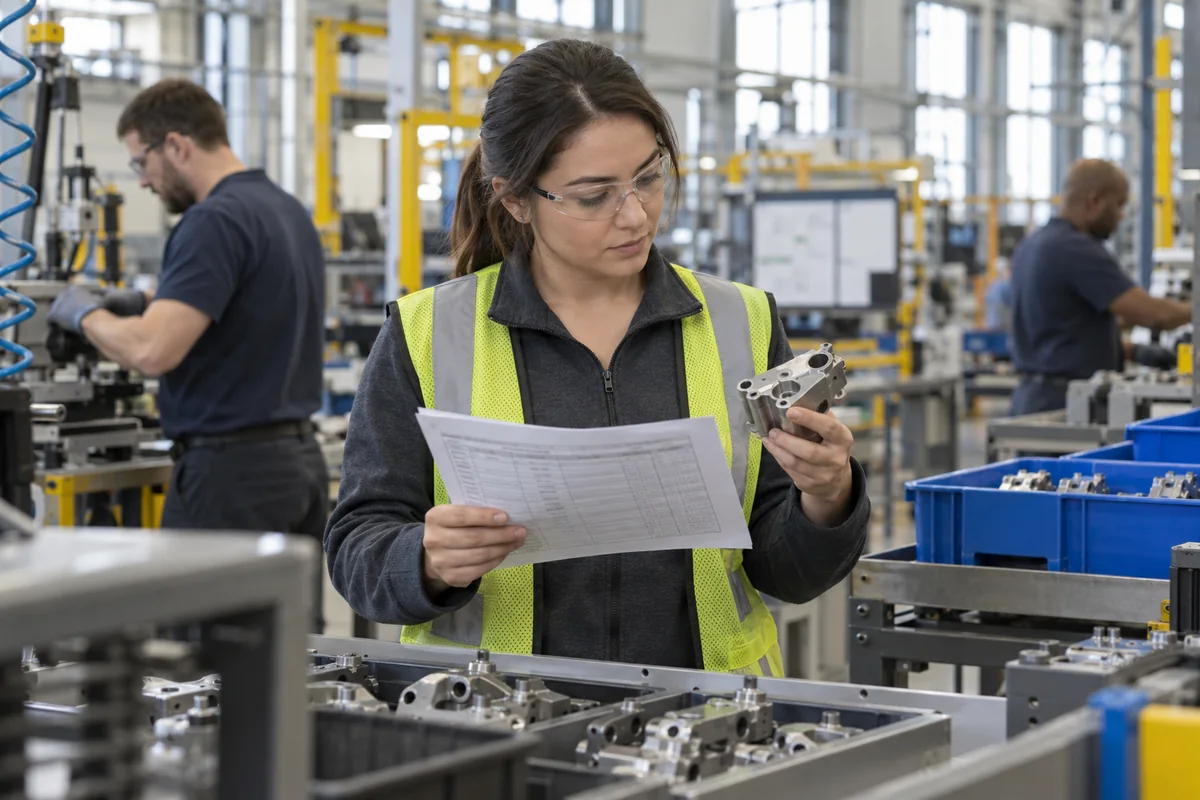
Match tomorrow's work orders against inventory records to catch any missing materials before the production run starts.

Contact the vendor to find out when the shipment you need is due to arrive.

If materials fall short, reschedule the held-up job with production supervisors, then send out the new timetable.

Log finished work and production problems in the progress report, so whoever takes over knows what's stalling orders.
United States · 2025
United States · May 2025
United States · 2025–2035
Quick orientation
A high school diploma or equivalent is typical. Prior related experience is not typically required; employers provide training.
National median for production, planning, and expediting clerks; the hourly median is $28.68.
About 32,600 openings per year are projected nationally despite a small decline in total employment.
Sensors and electronic tags can update inventory records automatically, reducing manual counting and data entry.
You still resolve conflicting updates with suppliers and production supervisors.
How much routine tracking disappears will depend on automation at your workplace; the balance between entering records and handling exceptions may shift.
Pay in context
The U.S. median was $59,650 a year in May 2025, with an hourly median of $28.68. That is a midpoint across workers, not a starting offer.
The lowest-paid 10% earned $40,080 or less annually; the highest-paid 10% earned $86,000 or more. These cutoffs describe the workforce, not a beginner-to-expert pay ladder.
In May 2023, these clerks averaged $65,670 annually in management of companies and enterprises, compared with $50,490 in warehousing and storage. These older industry averages are means, not the 2025 national median or current job offers.
Employment is projected to fall 1.3% from 2025 to 2035, while averaging 32,600 openings each year. Openings are projected hiring opportunities across the decade, not vacancies available today.
You can enter through a clerk job that trains new hires or bring manufacturing experience to a scheduling role.
After entry
This starts where the entry routes leave off: early work, growing capability, and advancement or specialization.
After hiring, learn how the company works before writing its production schedules.
Get comfortable reconciling production tickets and learning shipping functions so your schedules reflect completed work and delivery needs.
With experience, you can pursue master scheduler roles that coordinate several projects and guide scheduling staff. Some require an associate degree and several years of planning experience.
You may move between an office and the production floor, checking tickets and working with shipping staff. Remakes and department capacity affect which orders can go next.
Some plants make many different products in small runs. Scheduling work connects with engineering and purchasing because several projects compete for materials, equipment, and worker time.
Try it
Make a spreadsheet for three imaginary work orders, listing parts needed, parts available, and due dates. Delay one parts delivery by two days. Reorder the jobs and write a short update to a production supervisor. Notice whether you enjoy tracking the details and explaining the change.