
Prep before the fitting visit
Go over the patient's records and past devices, then discuss this visit's goals with the prosthetist.
Career profile
Prosthetic assistants help make, fit, and maintain artificial limbs on a prosthetist-led care team.
The job covers both the artificial limb and its wearer. You ready a device for try-on, hear out discomfort, and help with the next adjustment.
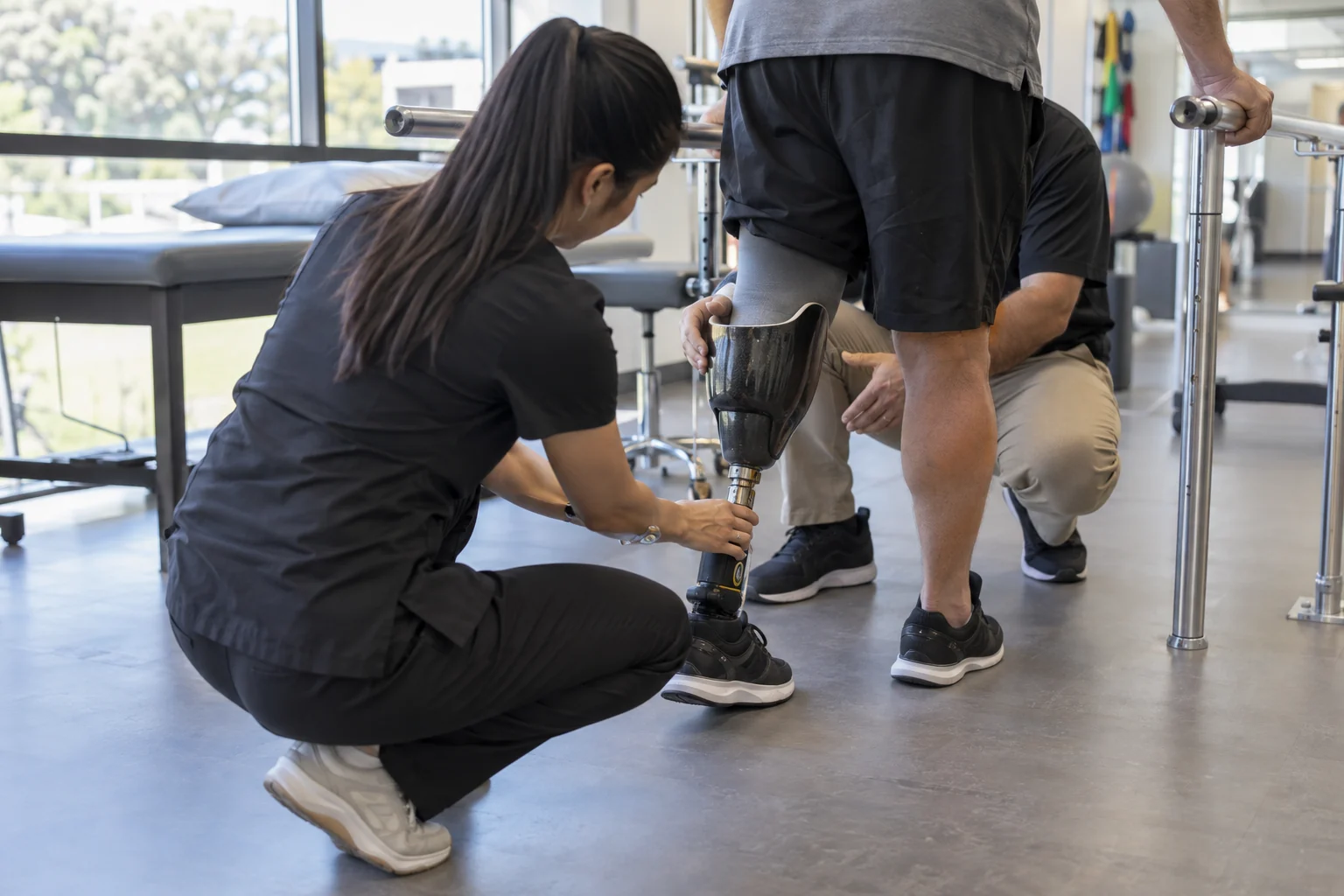
Go over the patient's records and past devices, then discuss this visit's goals with the prosthetist.
Take measurements or an impression of the patient's limb, then prepare the model the prosthesis is built on.
Put parts together for a test fit, check alignment, then compare the finished device to maker safety rules.
Ask which spots feel sore, examine fit and skin, relay changes to the prosthetist, and chart the visit.
United States
No separate national assistant median; local clinical-support pay appears below.
National growth and openings are not reported separately for prosthetic assistants.
Quick orientation
Assistant certification offers an accredited-program route or coursework plus supervised experience.
No separate national assistant median; local clinical-support pay appears below.
National growth and openings are not reported separately for prosthetic assistants.
Computer-based measuring tools and software for designing and making devices can support model preparation.
You still need to hear the patient’s concerns and check how the actual limb fits and works.
How much model work moves from hand tools to digital systems will vary with the clinic and the devices it makes.
Pay in context
Pay depends on the actual job: a clinical aide opening and a certified assistant position can carry different responsibilities.
In Emeryville, California, a full-time orthotic and prosthetic clinical assistant role advertises $23–$27 an hour plus bonus and benefits. That is about $47,840–$56,160 for 2,080 paid hours. This is a local support-role range, not a national certified-assistant median.
Location, skills, and knowledge can affect the offered rate. Ask about guaranteed hours, benefits, and whether the duties and pay change after certification.
For certification through the American Board for Certification in Orthotics, Prosthetics & Pedorthics (ABC), you must be at least 18 and meet an eligibility route before taking the exam.
After entry
This starts where the entry routes leave off: early work, growing capability, and advancement or specialization. This path also has a credential or licensing boundary; see the requirements and limits.
Make safety checks, accurate notes, and clear handoffs to the prosthetist dependable habits.
Get better at recognizing fit problems, making adjustments, and comparing what changed at follow-up.
With experience, you can help train students. Becoming a prosthetist is a separate path that typically requires a master’s degree and residency.
Patient appointments and mold or device work happen at the same location. Your day can move between the fitting room and the workbench.
Some licensed assistant jobs include hospital care after surgery, following additional employer training. That adds bedside patient care to the clinic’s fitting and follow-up work.
Try it
Trace an irregular household object on paper, mark three measurements, and write instructions for someone else to reproduce the outline. Compare the result with the original. Notice whether you enjoy the precise measuring and clear handoff involved in preparing a model.
Stay safe: Use an ordinary object, not a person’s limb or a medical device. This explores work habits, not clinical technique.