
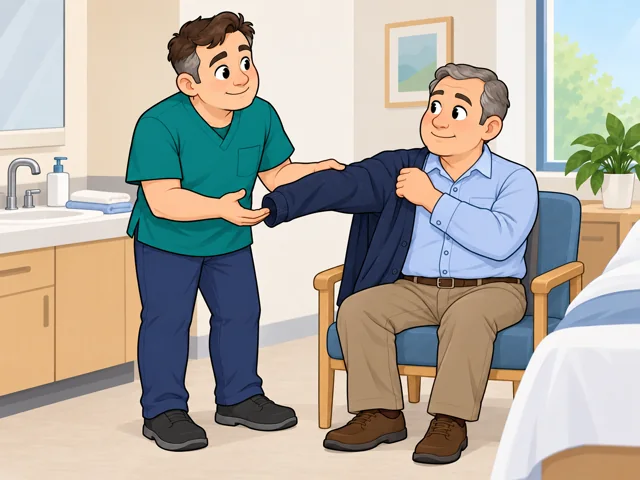
Help a patient get ready
Help a patient bathe and dress, talking them through any step they forget along the way.
Career profile
Psychiatric aides help patients in psychiatric treatment with meals, hygiene, grooming and daily routines.
Staying near patients for much of the day lets you spot who needs encouragement and whose behavior has changed enough to tell a nurse.
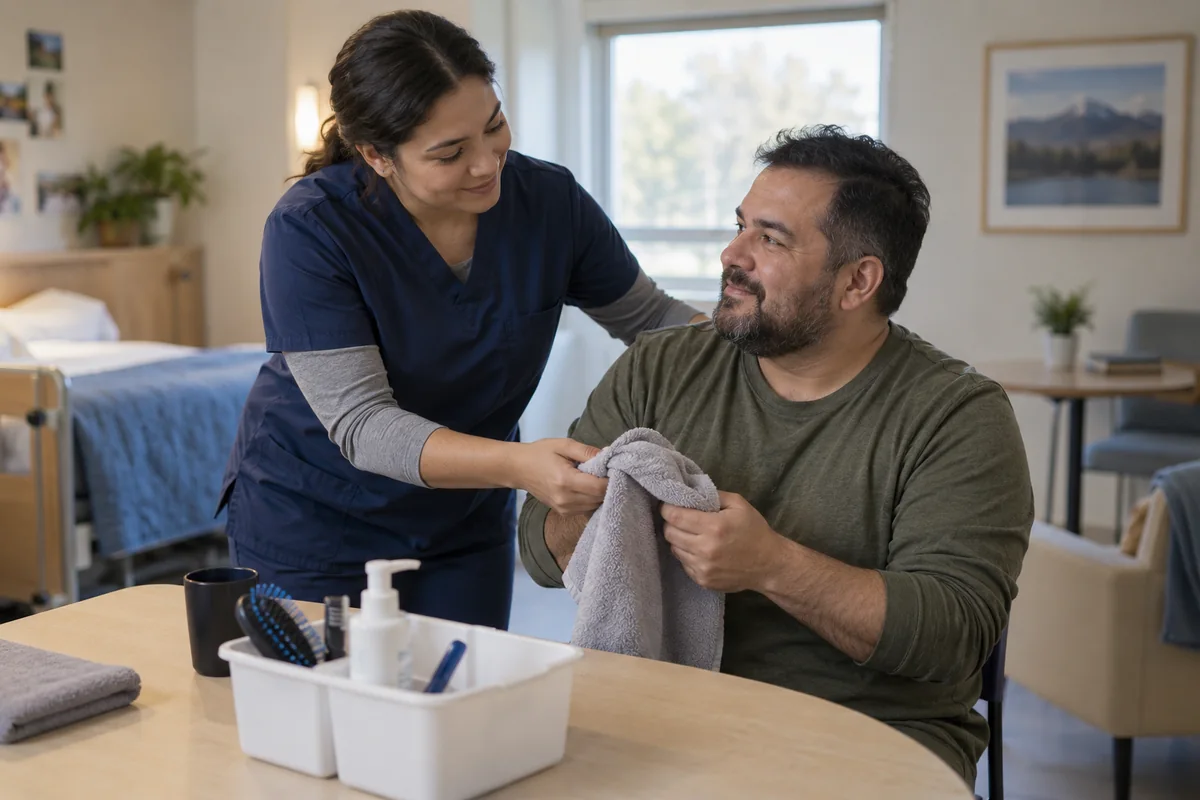
Help a patient bathe and dress, talking them through any step they forget along the way.
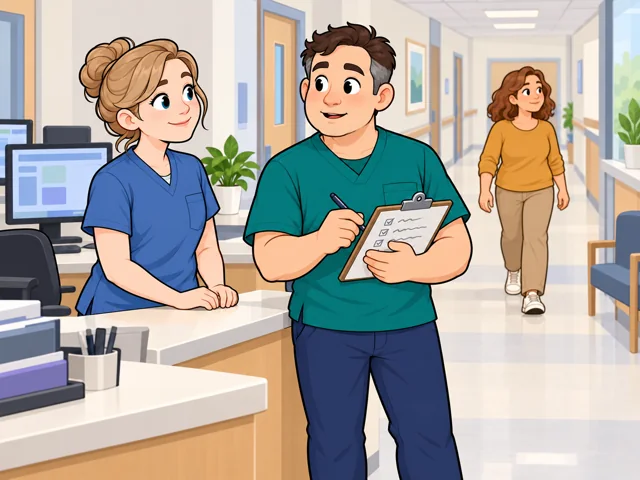
You tell the nurse what you saw when a patient starts pacing, and you write the change down.
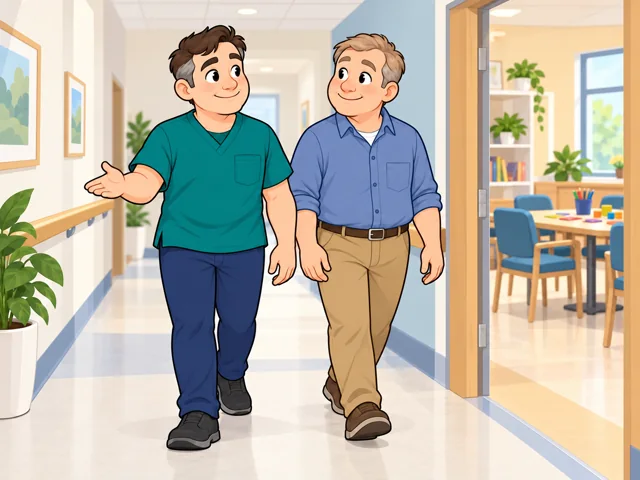
Walk with a patient to a treatment session or an activity so they get there safely.

Join a card game or other leisure activity and encourage a hesitant patient to join in.
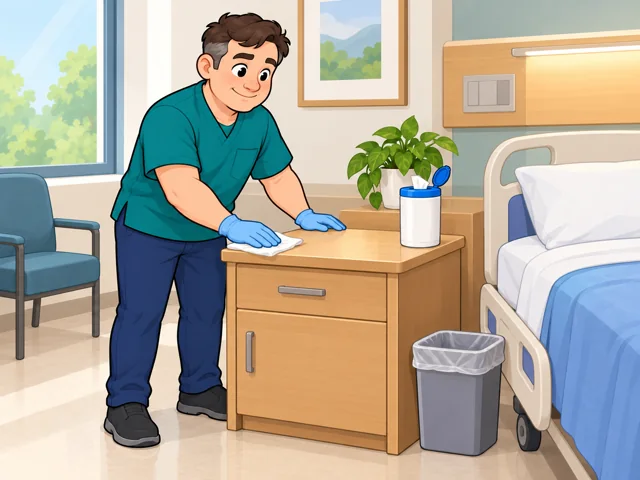
Wipe down and sanitize the furniture so patients have a clean, safe space to use.
United States · 2025
United States · May 2025
United States · 2025–2035
Quick orientation
A diploma or equivalent and short-term on-the-job training are typical.
National median for psychiatric aides, equivalent to $21.59/hour.
About 4,900 openings annually nationwide, including replacement openings.
Computer records help you store and pass along observations.
You still have to notice what is happening, listen, and provide physical help.
How much future software will reduce recordkeeping—or add screen time between patient interactions—remains uncertain.
Pay in context
The national median is $44,910 a year, or $21.59 an hour. That is a midpoint, not a starting offer.
The lowest-paid 10% earned below $32,090; the highest-paid 10% earned above $60,440. These are wage groups, not career stages.
Median annual pay was $48,480 in state psychiatric and substance abuse hospitals, $46,300 in private general hospitals, and $39,180 in private psychiatric and substance abuse hospitals.
Employment is projected to grow 1.9%, with about 4,900 openings a year. Openings include replacing people who leave the occupation, not just newly created jobs.
Aides work under nursing or medical direction. Entry requirements vary by employer.
After entry
This starts where the entry routes leave off: early work, growing capability, and advancement or specialization.
Learn the unit’s routines, safety procedures, and reporting habits.
Get better at coaching daily living skills and writing notes that show a patient’s progress toward care goals.
A psychiatric aide supervisor may schedule coworkers, check that care tasks are completed, and prepare shift reports. These roles have additional employer-specific qualifications.
You work closely with nurses, combining patient checks and escorts with readiness to help during emergencies.
Some mental health systems employ aides in group homes. Daily living skills and trips to community appointments bring the work into residents’ everyday routines.
Try it
Try writing an observation note from this fictional scene: a patient leaves a card game, walks across the room several times, and says, “I want somewhere quieter.” Write two sentences telling a nurse what happened without guessing a diagnosis. Notice whether you enjoy this kind of precise attention.
Stay safe: Use only the fictional scene; do not observe or record real patients.