
Career profile

Quality Control Analyst

Quality control analysts test incoming materials and finished products, then compare results with required limits.

A reading outside the allowed range is something to chase. It fits anyone who enjoys precise lab work and finding why numbers look wrong.
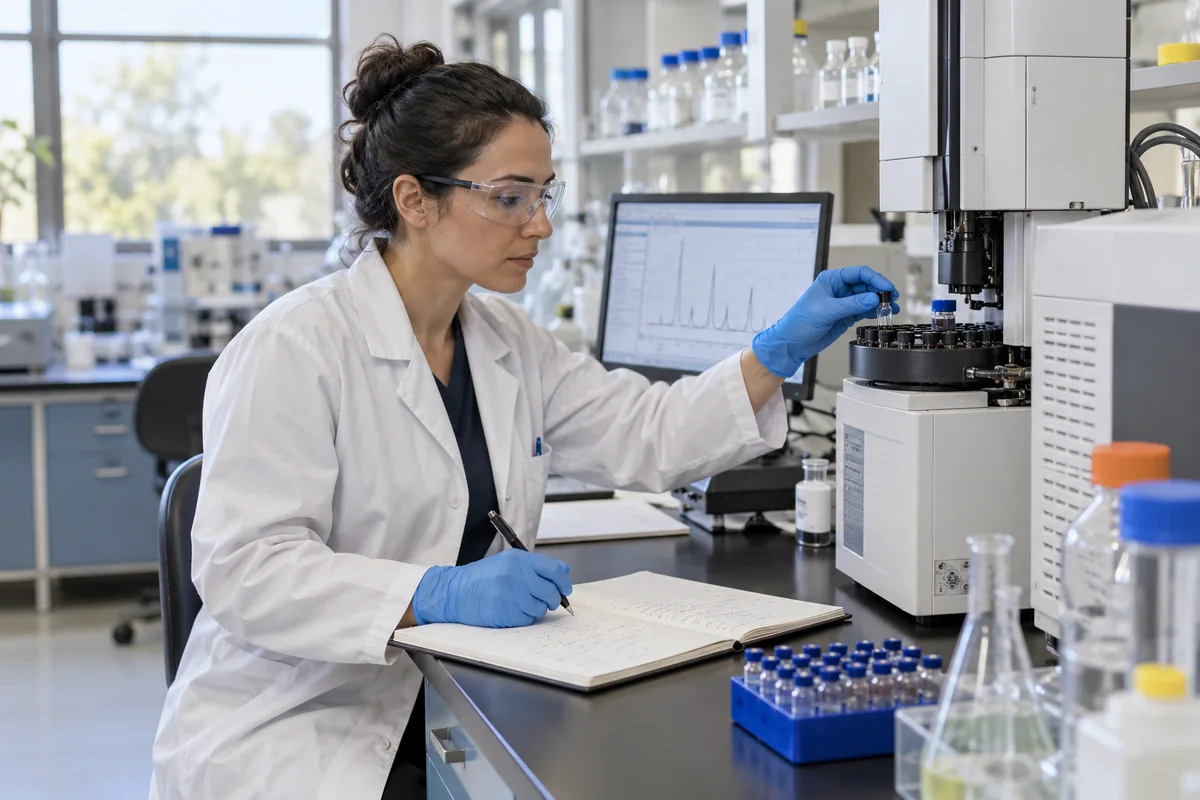
An adult quality control analyst using a laboratory instrument to test a sample and recording results at a chemical laboratory bench.

A day in the life

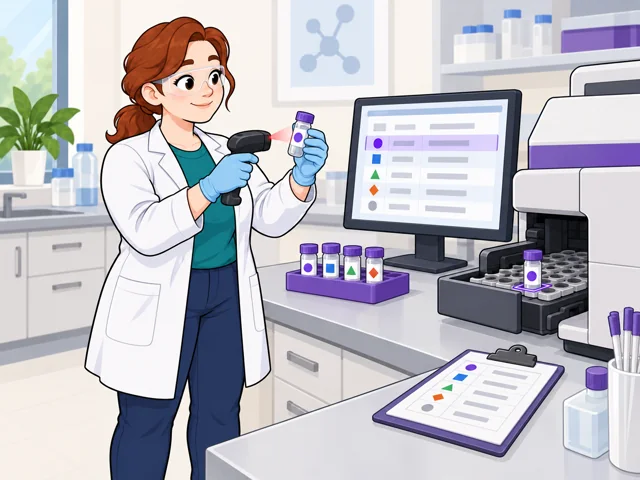
1A quality control analyst scans a sample vial beside an instrument tray, keeping its identification connected to the electronic testing entry.

Log a sample and test it

Receive a sample, log it in inventory, then run its required test, keeping results tied to that sample.
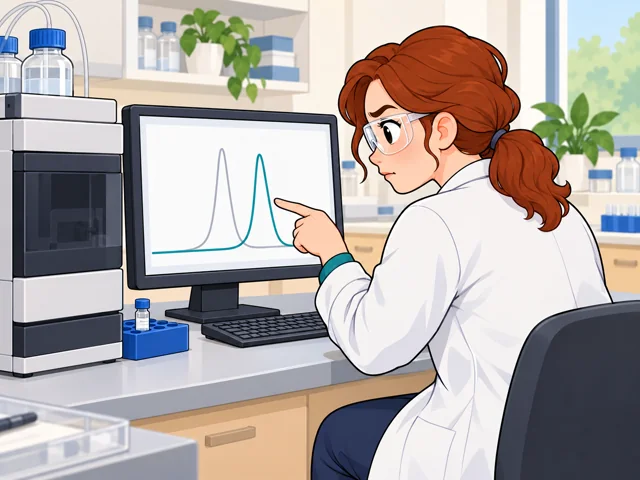
2The analyst compares a reference sample's measured response with an expected curve and notices that the peaks are offset.

Catch instrument drift

In labs doing chemistry for medicines, you measure a reference sample and compare it to the expected response.
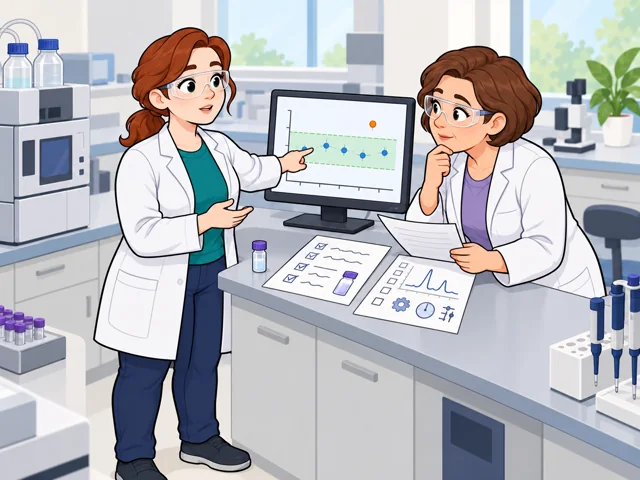
3The analyst points out a result beyond the specification band to her supervisor, who checks the associated records to help investigate.

Raise a surprising result

Compare each result to the product's spec and help a supervisor trace the cause of any surprising reading.

4At a computer, the analyst preserves the raw readings, instrument settings, and change history together so another reviewer can retrace the test.

Leave a trail others can follow

In computer-based drug testing labs, keep raw readings, instrument settings and edit logs a chart does not show.

Quick facts

Preparation

Science study and lab skills

United States

Pay

Not displayed

Compare pay for the specific laboratory, location, and analyst level.

Outlook

Not displayed

A national growth rate is not available separately for this job.

Quick orientation

Preparation, pay & outlook

Preparation

Science study and lab skills

Some jobs accept an associate degree; others require a bachelor's degree and specific testing experience.

Geography
United States
Period
Not applicable

Pay

Not displayed

Compare pay for the specific laboratory, location, and analyst level.

Geography
United States
Period
2025

Outlook

Not displayed

A national growth rate is not available separately for this job.

Geography
United States
Period
2025–2035

Fit, tradeoffs & changing tools

Things to weigh

  • Routine tests and detailed records take patience, even when production is waiting for results.
  • Some manufacturing labs need overnight coverage. Cleanroom work can also add physical tasks to the time spent at a bench.

Where AI may help

Computerized instruments produce readings and calculations; electronic records keep the settings and history behind each result.

What people still lead

People still investigate unexpected results, check the method and equipment, and decide what the evidence supports.

What we can’t predict yet

In drug manufacturing, monitoring during production can change reliance on separate lab tests. How much this shifts your day toward reviewing data will depend on the product and process.

Pay in context

Earnings

Pay depends on the position's level, required skills, and location. These advertised ranges give you concrete comparison points.

Analyst I in Maryland

A pharmaceutical manufacturing laboratory in Walkersville advertises $61,200–$71,400 in annual base pay, roughly $29.42–$34.33 an hour using 2,080 hours. This position requires two years of relevant laboratory experience.

Geography
Walkersville, Maryland, United States
Period
Posting retrieved for the October 2026 profile
Pay basis
Advertised full-time annual base salary; calculated hourly equivalent, excluding bonus and benefits

A role with more responsibility

An Analyst II role at the same site advertises $70,200–$81,900 in annual base pay and requires three years of relevant experience. Its work includes investigations and training colleagues; moving up is not automatic.

Geography
Walkersville, Maryland, United States
Period
Posting retrieved for the October 2026 profile
Pay basis
Advertised full-time annual base salary, excluding bonus and benefits

Check the shift premium

A cell-therapy laboratory role in Pearland includes extra pay for nights and weekends. Ask whether a quoted offer includes that premium and when it applies.

Geography
Pearland, Texas, United States
Period
Posting retrieved for the October 2026 profile
Pay basis
Hourly role with shift differentials; amounts unspecified

Getting started

Build laboratory skills through an associate degree

What the route involves
Study microbiology, biochemistry, or a related science and develop careful sample handling and recordkeeping.
What it can lead to
You can meet the education requirement for some microbial-control analyst roles; regulated-lab experience may be preferred.
What to check
Check experience requirements separately: some Analyst I positions still require two years in a relevant laboratory.

Combine a bachelor's degree with specialized testing skills

What the route involves
Complete a relevant science degree and build hands-on skill with the tests used in your intended specialty.
What it can lead to
This prepares you for degree-requiring roles such as cell-therapy testing.
What to check
A degree alone is insufficient for roles that also require demonstrated cell-based testing and instrument skills.

Match your education to the laboratory work you want. Job titles alone do not tell you whether prior lab experience is required.

After entry

Career paths

This starts where the entry routes leave off: early work, growing capability, and advancement or specialization.

  1. Get reliable at the routine

    Learn the lab's test procedures, sample handling, and records. Build consistency before taking on more complex work.

  2. Explain unexpected results

    Develop your troubleshooting skills and help investigate results that fall outside the expected range.

  3. Become a technical resource

    An Analyst II role can add training colleagues, helping prove that a test method works reliably, and transferring methods between laboratories.

Where you can work

Microbial-control labs at drug plants

Your work can take you between the bench and cleanrooms to check products and the manufacturing environment. Testing must fit production timelines, and some teams cover nights.

  • Indoors
  • Lab
  • Shift work
  • Physical demands

Cell-therapy laboratories

You work with cell-based tests and specialized instruments such as flow cytometers, which measure characteristics of cells. These teams test material for release and check how products hold up during storage.

  • Indoors
  • Lab

Try it

See whether the job clicks before you commit to the path.

Make a mock quality record: measure the length of five paper strips, label each one, and record the results. Set an acceptable range before checking them. Remeasure one strip and investigate any difference. Notice whether you enjoy keeping the evidence clear as much as taking the measurements.

Explore more careers

Sources

  1. O*NET OnLine. Quality Control Analysts, 19-4099.01. Accessed 2026-10-03.
  2. O*NET OnLine / Bureau of Labor Statistics. National Wages: Quality Control Analysts. Accessed 2026-10-03.
  3. Bureau of Labor Statistics. Occupational projections and worker characteristics. Accessed 2026-10-03.
  4. Lonza. Quality Control Analyst I — R79453. Accessed 2026-10-03.
  5. Lonza. Quality Control Analyst II — R77619. Accessed 2026-10-03.
  6. Lonza. QC Analyst II—Microbial Control — R77478. Accessed 2026-10-03.
  7. Lonza. Quality Control Analyst II, Cell Therapy (PM Shift) — R73745. Accessed 2026-10-03.
  8. Food and Drug Administration. Investigating Out-of-Specification Test Results for Pharmaceutical Production. Accessed 2026-10-03.
  9. Food and Drug Administration. Questions and Answers on Current Good Manufacturing Practice Requirements—Records and Reports. Accessed 2026-10-03.

Your message goes to the Great Jobs team. How we use your information