
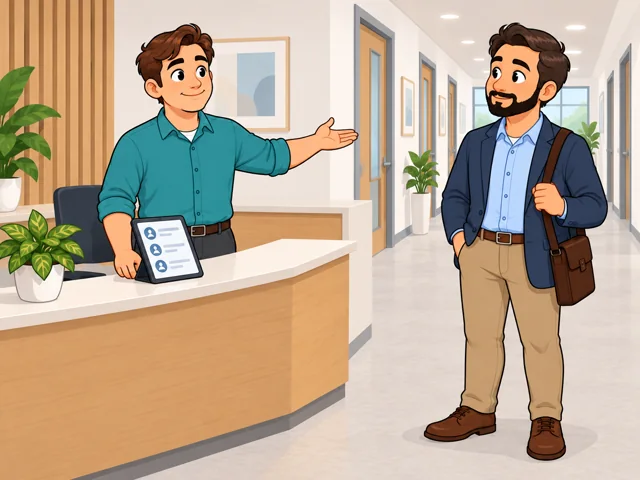
Point a visitor to an office
Ask why they came, search the staff directory, and give plain directions to the office they need.
Career profile
Receptionists greet visitors, answer calls, and connect each person with the right staff member.
Like helping people and keeping information accurate and organized? A visitor unsure which office they want gets a few questions, then a name and directions.

Ask why they came, search the staff directory, and give plain directions to the office they need.
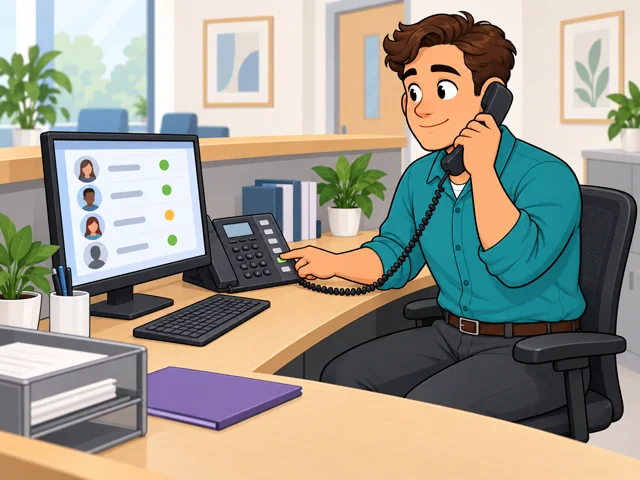
If the employee is free, transfer the call, and if not, write a message with a callback number.

When someone cancels or changes plans, edit the calendar and then tell the employee whose schedule changed.
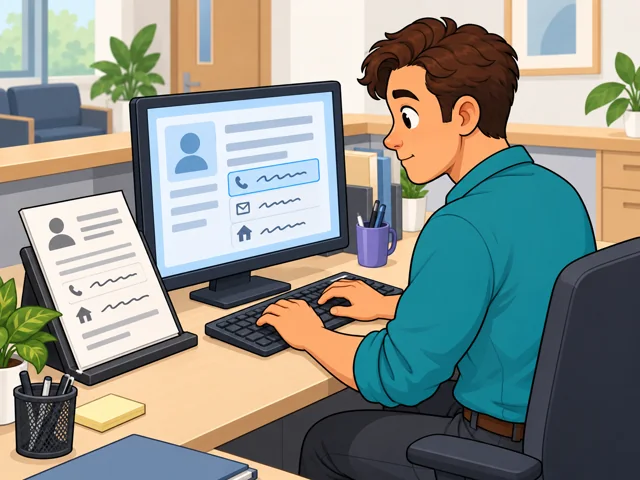
Type the new phone number or address into the database so anyone opening that entry sees current details.
United States
United States · May 2025
United States · 2025–2035
Quick orientation
You typically learn the employer’s phone, visitor, and computer procedures on the job.
The national median was $38,010 annually for receptionists and information clerks.
About 105,100 openings a year are projected as workers change occupations or leave the workforce.
Digital calendars and contact databases help you keep appointments and visitor information organized. Websites and apps also handle some customer interactions.
You work through unclear requests and difficult conversations, then connect the person with someone who can help.
How much reception moves to self-service will vary by workplace. As routine interactions become automated, some employers may combine reception with other office duties.
Pay in context
The national median was $18.27 an hour, or $38,010 annually, in May 2025. These figures cover receptionists and information clerks; they are not a starting-pay promise.
The lowest-paid 10% earned under $13.83 an hour; the highest-paid 10% earned over $24.01. These thresholds describe the workforce, not beginner and experienced pay grades.
Hourly medians were $19.00 in healthcare and social assistance, $18.56 in professional, scientific, and technical services, and $16.57 in personal care services. Individual employers may pay differently.
Employment is projected to decline 2% over 2025–2035. About 105,100 openings annually are expected from workers moving to other occupations or leaving the workforce, rather than job growth.
A high school diploma or equivalent is typical. Employers differ in the software experience they expect, so you can apply directly or build those skills first.
After entry
This starts where the entry routes leave off: early work, growing capability, and advancement or specialization.
Learn who handles which questions, practice the phone system, and become familiar with visitor check-in.
Build speed without losing message details or calendar accuracy. Learn how to protect private information while helping people at the counter.
Reception experience can lead toward secretary or administrative assistant roles with more responsibility for office organization and support.
Patient information and appointment records shape the work; some desks also handle billing. Hospitals and nursing homes may need reception coverage during evenings and weekends.
In larger offices, reception may include issuing visitor passes and escorting guests. You need to know where visitors can go and which employee they are meeting.
Try it
Make a fictional directory of four employees and their responsibilities. Ask a friend to play a visitor while handing you a pretend phone message. Route the visitor and record who should return the call. Notice whether you enjoy staying welcoming while keeping both requests straight.
Stay safe: Use made-up names and contact information.