
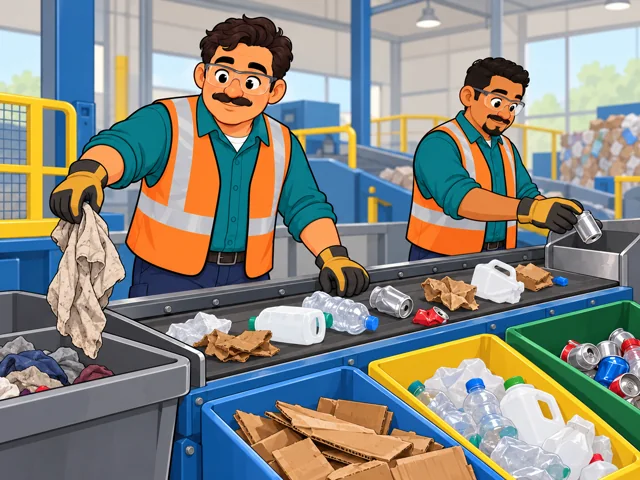
Split cardboard, plastic and aluminum
Separate cardboard, plastic and aluminum onto their own lines, and pull out items that do not belong.
Career profile
Recycling workers sort and prepare discards as raw material, from separating metals to baling paper.
Jumbled loads come in and leave as separate, usable materials for other makers. Your sorting is part of how that happens.
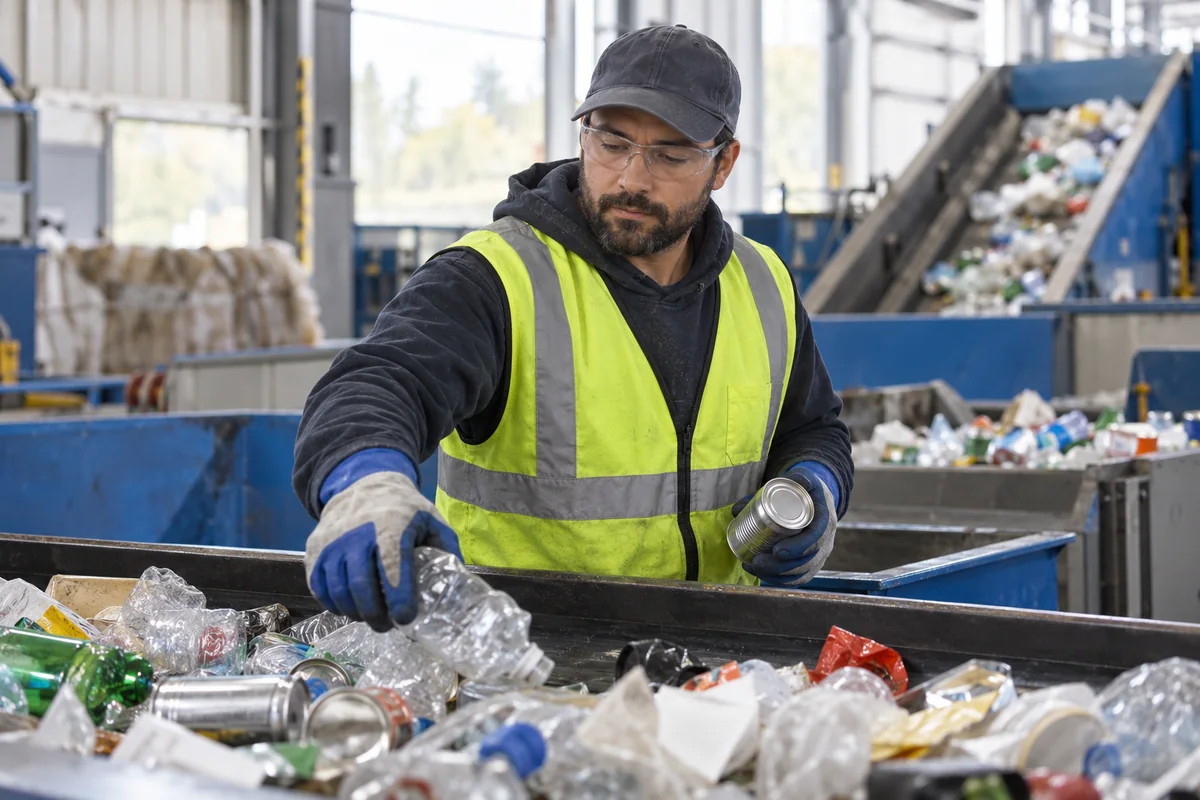
Separate cardboard, plastic and aluminum onto their own lines, and pull out items that do not belong.
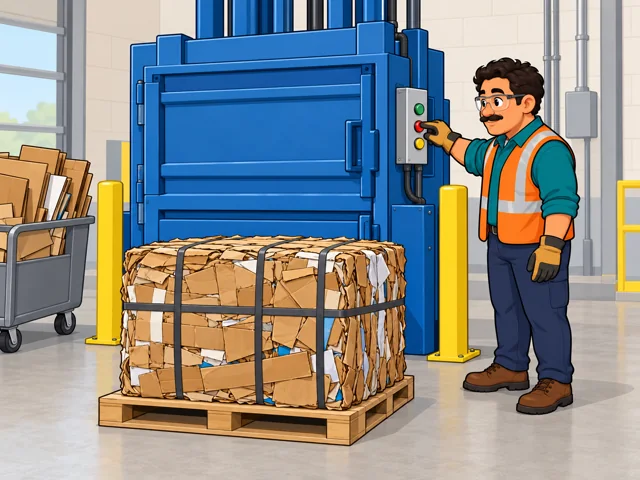
In jobs that involve operating equipment, you run a baler that packs loose material into bundles for shipping.
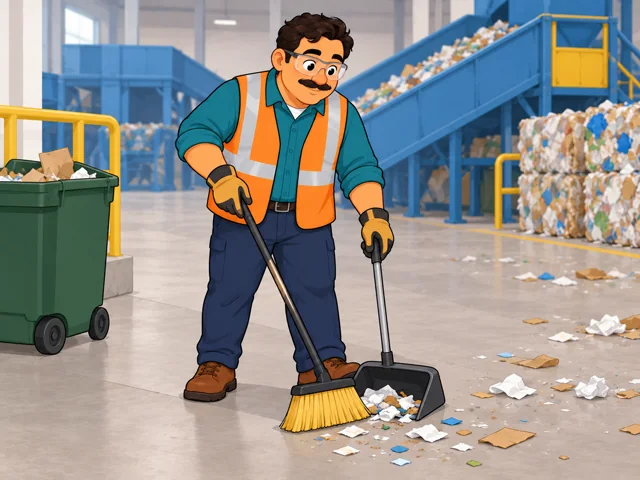
Sweep up stray paper and other litter so the work area stays clear of loose debris.
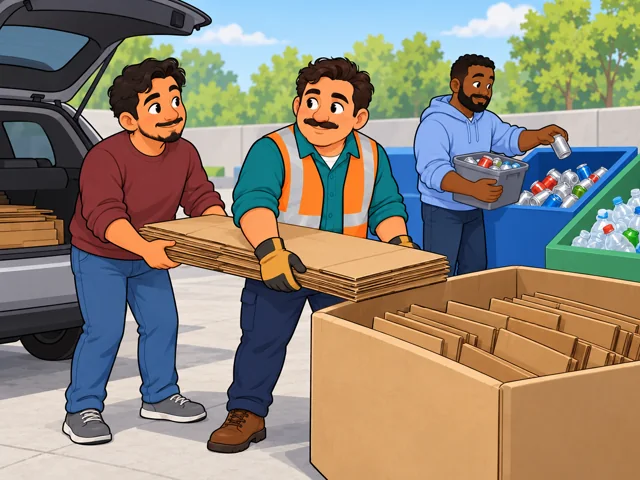
At public drop-off centers, help residents unload what they brought and sort it into the right categories.
United States
National figures combine recycling workers with other material movers. See the pay context below.
National projections do not separate this work from other hand material-moving jobs.
Quick orientation
A high school diploma or equivalent is common; some sorting jobs train beginners.
National figures combine recycling workers with other material movers. See the pay context below.
National projections do not separate this work from other hand material-moving jobs.
Some plants use light-based scanners to recognize materials and robots to separate them. These systems can reduce manual handling.
People still sort materials alongside machines and handle contaminants that remain in the stream.
As plants add automation, the balance between hand sorting and tending equipment may change. How much of your shift shifts to each task will depend on the facility.
Pay in context
Use national material-moving wages as broad context, then compare the actual rate and duties of a recycling job.
In 2025, Laborers and Freight, Stock, and Material Movers, Hand had a median of $19.35 an hour and $40,240 a year. This includes many jobs outside recycling.
That same group’s 10th–90th percentile span was $15.03–$26.51 hourly, or $31,270–$55,140 annually. These are wage percentiles, not starting and experienced-worker rates.
Contra Costa County, California, lists $52,361.03–$57,728.04 annually for Recycle Center Attendant I and $59,494.86–$65,593.09 for level II, which includes helping newer attendants. These are county salary ranges, not national rates.
The broader hand material-mover group has projected growth of 1%–2% and 384,300 annual openings for 2024–2034, including replacement openings. Those are not recycling-only opportunities.
Requirements vary: some employers train new sorters, while other entry jobs expect previous manual work.
After entry
This starts where the entry routes leave off: early work, growing capability, and advancement or specialization.
Learn the site’s material categories and safety routines so you can sort consistently.
Seek cross-training on processing machinery as you learn how the plant handles each material.
Equipment operator is one possible next role. Experienced attendant roles can add responsibility for helping new coworkers learn routes and daily routines.
You work around sorting machinery and balers with a production crew. Mixed household and business recyclables arrive together, and the pace can be fast.
You deal directly with residents bringing materials in. Unloading and sorting happen around trucks and loaders, with some work exposed to the weather.
Try it
Use your local recycling guide to sort ten pictures of everyday packaging into accepted, not accepted, and unsure. Check each decision and note what confused you. Did you enjoy spotting small differences and applying the rules consistently?
Stay safe: Use pictures rather than handling discarded waste. This explores sorting judgment, not the physical pace of a plant.