
Inspect the venue and gear
Scan the playing area and athletes' gear for anything that breaks the rules or could make play unsafe.
Career profile
Sports officials watch games, spot broken rules, and make calls that decide how play continues.
Enjoy learning a sport's rules in detail? Referees, umpires, and competition judges enforce those rules and explain calls to people who might object.
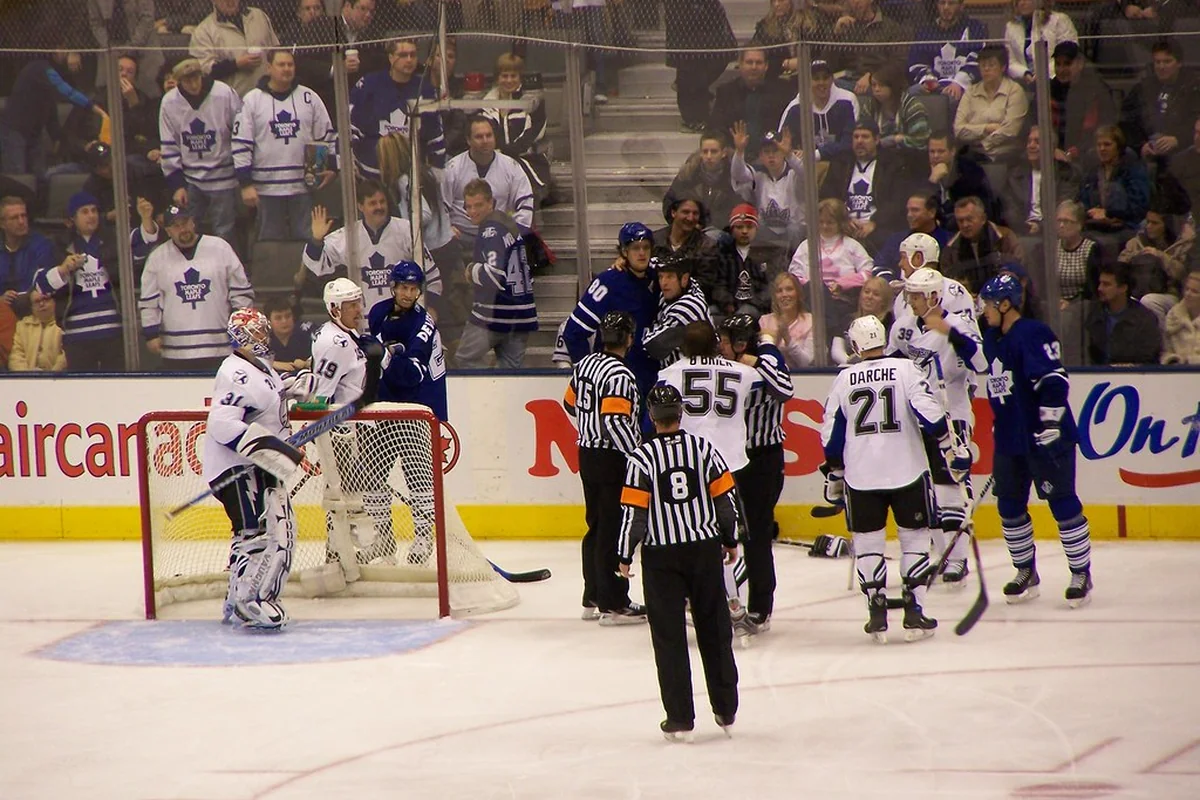
Scan the playing area and athletes' gear for anything that breaks the rules or could make play unsafe.
Spot what happened, match it to a rule, and signal the penalty so athletes and fellow officials understand.
Walk a protesting athlete through the rule, and settle a disputed play with a fellow official if needed.
Record the scores and report any complaints or discipline to the group that organizes the event.
United States · 2025–2035
United States · May 2025
United States · 2025–2035
Quick orientation
A high school diploma is typical, but requirements vary by sport and association.
May 2025 median for umpires, referees, and other sports officials; not a starting salary.
About 4,300 openings annually across the occupation, including replacement openings.
In Major League Baseball, cameras track pitches so challenged ball-or-strike calls can be checked against a measured strike zone. This is the Automated Ball-Strike Challenge System.
The plate umpire still makes the initial call and announces a player’s challenge. Using the system becomes part of managing the game.
How much future systems will decide automatically, and how much will remain subject to challenges, depends on the rules each competition adopts.
Pay in context
Most officials are paid per game. Your yearly total depends on how much you work.
The median was $40,710. The lowest 10% earned under $26,540; the highest 10% earned over $82,960. These annual figures cover umpires, referees, and other sports officials, excluding self-employed workers.
Annual medians were $52,790 in performing arts, spectator sports, and related industries; $39,060 in amusement, gambling, and recreation; $37,440 in local government excluding education and hospitals; and $35,310 in educational services.
Employment is projected to grow 5.2% from 2025 to 2035, with about 4,300 openings per year on average. Openings include replacing people who leave the occupation, so they are not all newly created jobs.
Choose a sport and the organization whose games you want to work.
After entry
This starts where the entry routes leave off: early work, growing capability, and advancement or specialization.
Learn positioning and signals alongside experienced officials.
Review your performance and study rule changes between games.
In soccer, Regional Referee is a next step toward regional and national adult amateur matches. Training includes a fitness test and match evaluations.
You work youth or adult outdoor matches, including smaller-sided games. Other licensed referees are your usual partners.
At this advanced level, the plate umpire handles player challenges to ball-or-strike calls. Camera tracking and scoreboard graphics make the review visible to the crowd.
Try it
Watch a recorded game and pause after one disputed play. Look up the relevant rule, write your call, and explain it aloud in one sentence. Notice whether you enjoy connecting what you saw to a precise rule.