
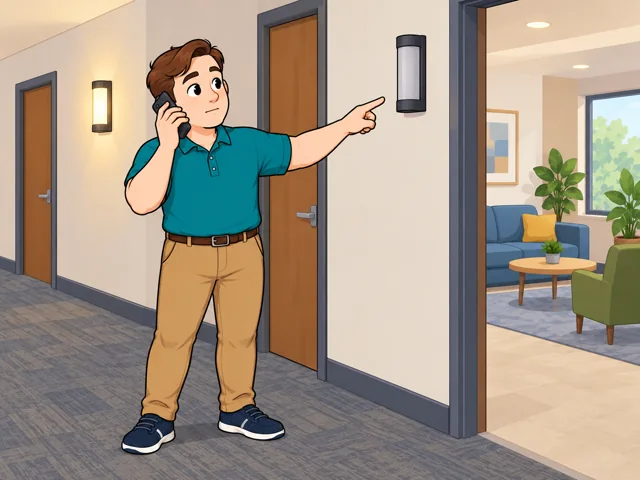
Walk rounds and report repairs
Walk your regular rounds of common areas and tell maintenance staff where a light has gone out.
Career profile
Residential advisors support people living together in dormitories, group homes, and similar communal housing.
Keeping daily life on track means noticing what needs repair, settling arguments between residents, and linking them to help when a problem outgrows house rules.

Walk your regular rounds of common areas and tell maintenance staff where a light has gone out.

Hear college roommates' complaints about sleep or guests, then help them rework their agreement so expectations are clear.

At an emergency shelter, you check in a newcomer, explain house rules, and update the sign-in log.

Run an educational event or house meeting, pass on key information, and leave time for questions.
United States · 2025
United States · May 2025
United States · 2025–2035
Quick orientation
Typical entry preparation is a high school diploma or equivalent, followed by short-term training on the job. Employer requirements vary.
National median for residential advisors across settings; the hourly median is $20.31.
About 16,500 openings a year are projected across the occupation.
Campus staff already use online incident forms to record concerns and share them with the people responsible for follow-up.
You still have to notice what happened, listen to residents, and decide when to call for help.
How much reporting software will eventually draft or sort is uncertain. Faster paperwork could also bring more information for staff to check.
Pay in context
Compare the whole offer, especially when the job includes living where you work. National wages cover residential advisors across several settings.
The May 2025 median was $42,240 a year, or $20.31 an hour. The 10th and 90th annual wage percentiles were $29,870 and $61,060. Those mark the wage spread, not starting and experienced pay.
In May 2023, annual mean pay was $40,920 in colleges, universities, and professional schools, versus $38,590 in community food and housing, and emergency and other relief services. These historical averages are separate from the current national median.
Some student resident assistant jobs provide room and meals as compensation. Check the cash pay, housing terms, meal benefits, and duty schedule before comparing that package with a salaried job.
Employment is projected to grow 3.5% from 2025 to 2035, with about 16,500 openings annually. Openings include replacing workers who leave the occupation; they are not all newly created positions.
You can enter through residential employment or a student housing position. The eligibility rules and compensation can be quite different.
After entry
This starts where the entry routes leave off: early work, growing capability, and advancement or specialization.
Learn the emergency procedures and referral contacts. Use training and supervisor meetings to work through situations you have not handled before.
Learn which concerns keep coming up in your residence. Use resident feedback to improve meetings and activities.
A senior resident assistant role can add peer mentoring and staff training. Some colleges require previous residential staff experience before you can apply.
In live-in student roles, your neighbors are also the people you support. Move-in and move-out shape the academic year, and evening duty must fit around classes.
Residents are dealing with a housing crisis. Work follows shifts, with handoffs about arrivals, room checks, meals, and concerns needing follow-up.
Try it
Imagine two roommates disagree about lights and visitors. Write three neutral questions you would ask, then draft a short agreement and a follow-up plan. Notice whether you enjoy turning competing needs into clear expectations.
Stay safe: Use a made-up situation; do not take responsibility for resolving a real conflict.