
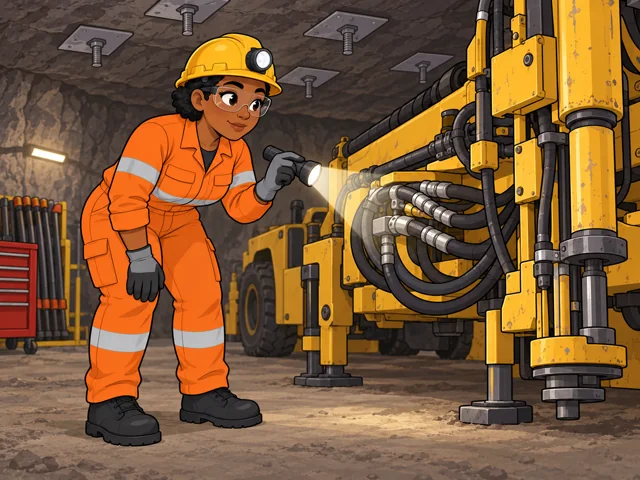
Give the bolter a once-over
Look the whole machine over carefully for problems before you start the bolter.
Career profile
Roof bolters install the supports that keep an underground mine's ceiling from falling.
Like machinery? As a roof bolter, you run a roof-bolting machine whose work points straight up at the rock over your head.
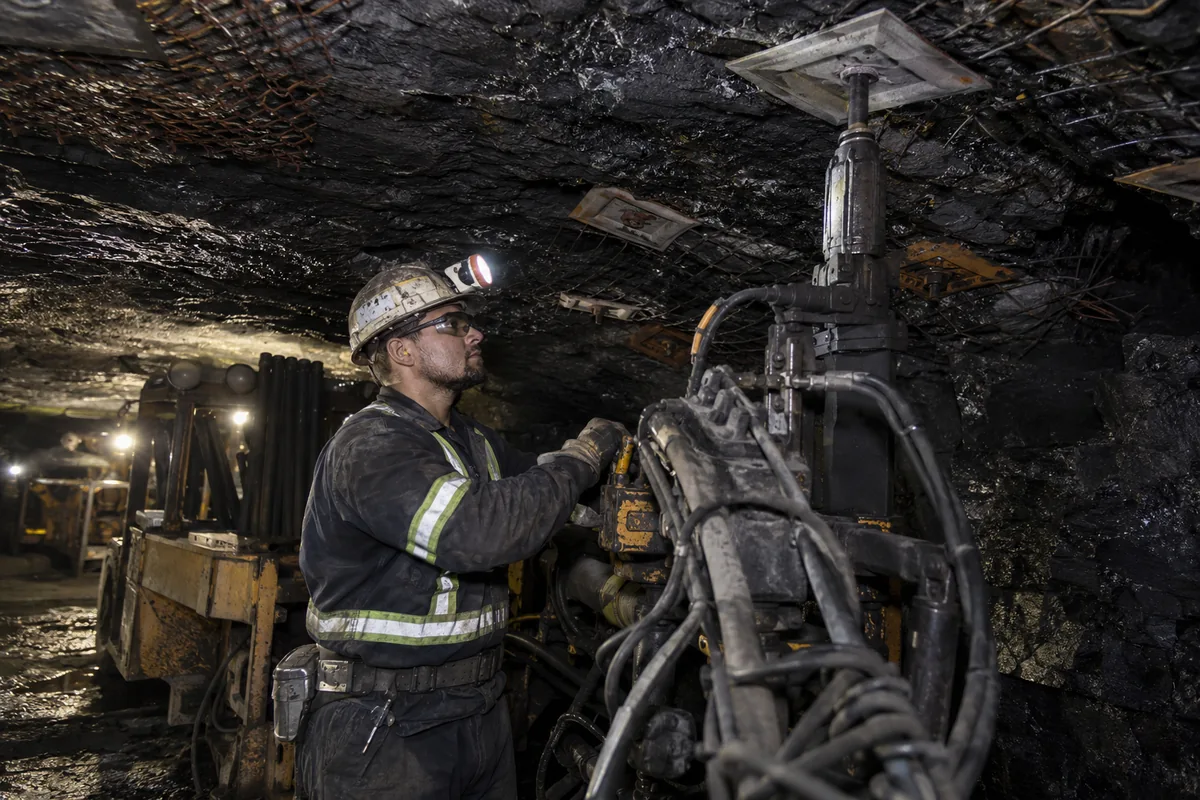
Look the whole machine over carefully for problems before you start the bolter.
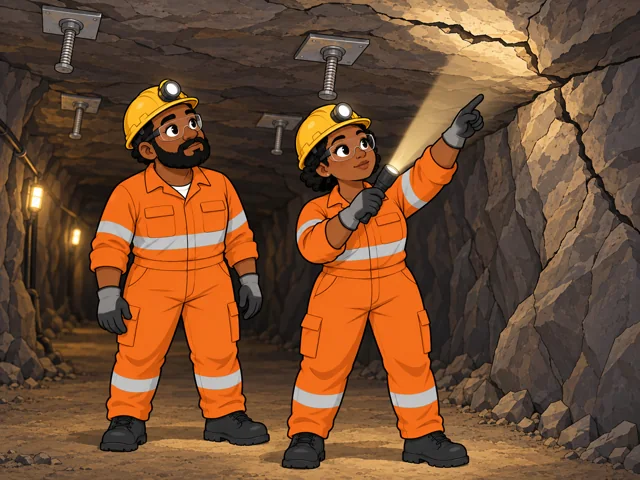
Scan the ceiling and side walls of your work area for hazards like rock that isn't secure.
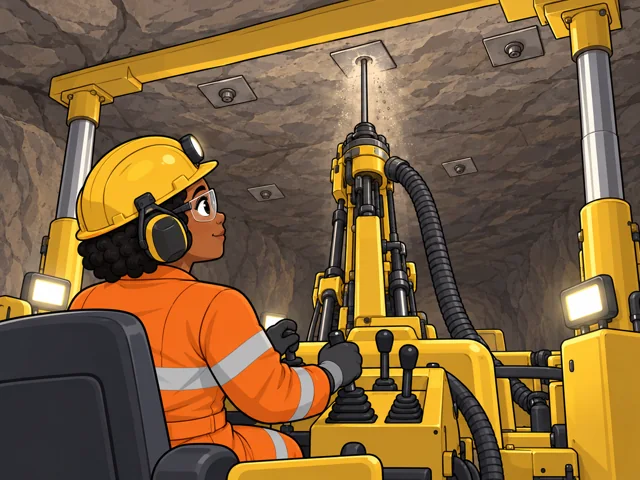
Pull the bolter into position and bore holes the required distance apart for the bolts.
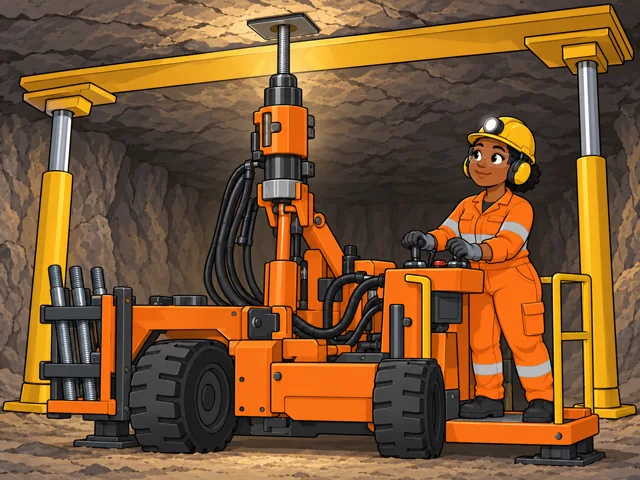
Then trade the drill bit for a bolt and have the bolter push it up into each hole.
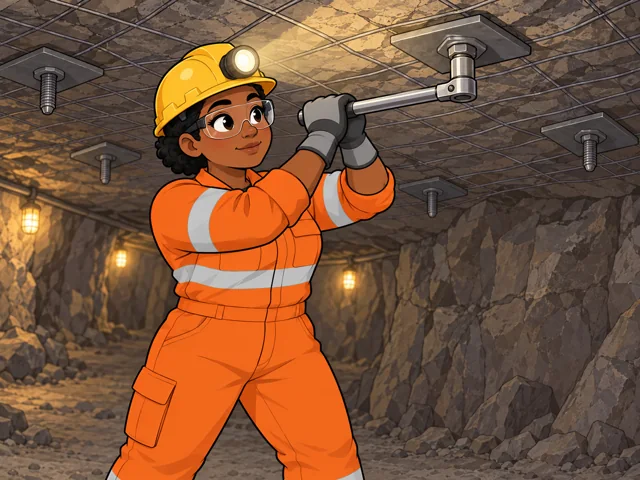
You measure bolt tightness with a torque wrench wherever the roof-support setup requires it.
United States · 2025–2035 source release
United States · May 2025
United States · 2025–2035
Quick orientation
The usual starting education; you learn the job through workplace training.
National median for roof bolters, mining: $37.76 an hour.
About 100 openings a year nationally, on average, despite shrinking employment.
Some bolters let you drill, insert bonding resin and install bolts from an enclosed cab after loading the bolt rack. This changes how close you work to the moving drill.
You still need to recognize hazardous ground and keep people out from under unsupported roof. Cab controls do not remove those decisions.
How much positioning and loading future machines will take over remains uncertain, especially across mines with very different clearances.
Pay in context
When comparing offers, ask about the hourly rate, scheduled hours and how extra hours are paid.
Roof bolters, mining had median wages of $78,540 a year, or $37.76 an hour. This is a midpoint across workers, not a starting-pay offer.
The 10th-to-90th-percentile range was $63,750–$92,830 a year, or $30.65–$44.63 an hour. These mark positions in the wage distribution, not beginner and experienced pay grades.
Employment is projected to decline 18.9% from 2025 to 2035, with about 100 openings annually on average. Openings can occur as workers leave even when the total number of jobs falls.
A high school diploma or equivalent is the typical starting point. Underground safety training and learning the bolter are separate parts of becoming ready for the work.
After entry
This starts where the entry routes leave off: early work, growing capability, and advancement or specialization.
Build reliable habits in machine checks, hole placement and bolt checks.
Expand your capability on different equipment. New or modified machines require instruction when their operating procedures change.
With experience, you may take on task instruction and coach new bolter operators. Federal rules allow people experienced in the task to provide this training; the mine determines who takes that responsibility.
Low-profile bolters fit beneath low roofs. Limited clearance makes the machine’s height and your working position especially important; uneven floors also affect how the bolter moves.
The roof is farther overhead. Bolters with elevating, swinging booms can reach several installation points from one position, so more of your work involves controlling that extended reach.
Try it
Compare the equipment photographs on Fletcher’s LOW RRII and 3035-AD product pages. Sketch where the operator works and where the drill boom moves. Which clearances would you want explained before touching the controls? Notice whether studying those details interests you.
Stay safe: Keep this a desktop exercise; equipment photographs are not operating instructions.