
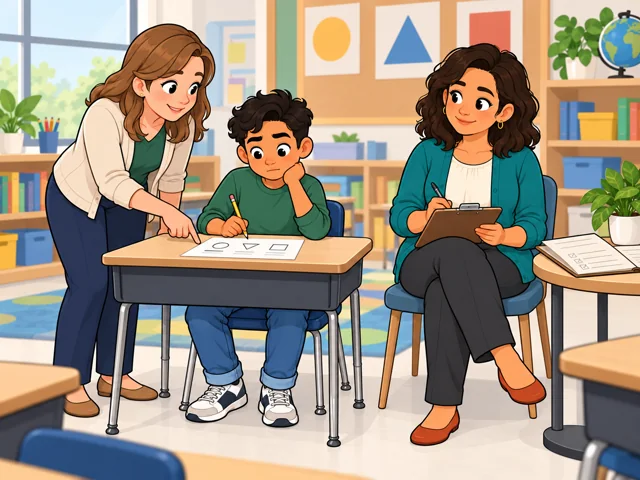
Watch a student during class
Note when the student starts or quits working, then match notes to school records and the teacher's observations.
Career profile
School psychologists find what blocks a student's learning, then help staff pick fitting support.
Say a student keeps leaving assignments unfinished. A class visit, learning-skill tests and talks with parents and the teacher turn worry into an action plan.

Note when the student starts or quits working, then match notes to school records and the teacher's observations.
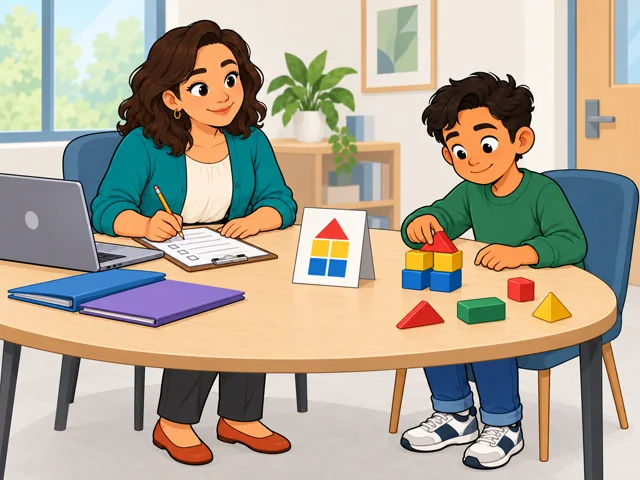
Run psychological tests, let software handle the scoring math, then read scores alongside family and staff input.
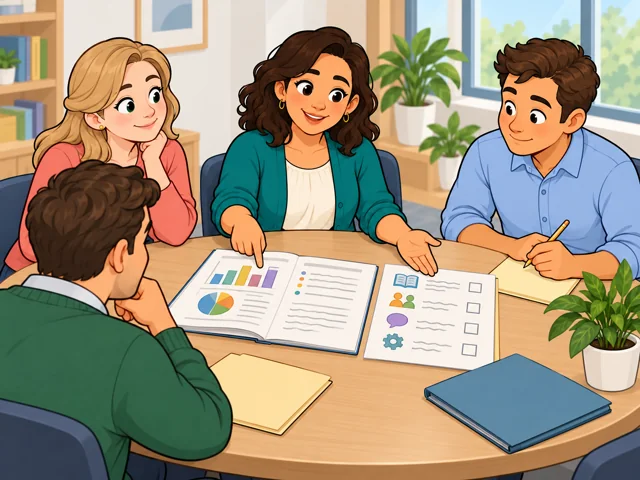
Walk parents and teachers through your written evaluation, helping tie findings to a formal plan and suitable services.
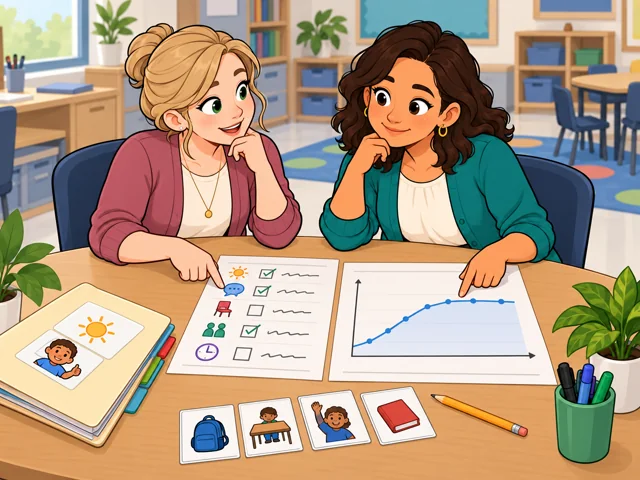
If progress stalls, first check whether staff are using the behavior plan correctly before you suggest changes.

Counsel a student whose anxiety or trouble adjusting hurts schoolwork, and work with campus adults who can help.
United States
United States · 2025
United States · 2025–2035
Quick orientation
A specialist-level school psychology program commonly takes three years after college, including supervised internship.
2025 national annual pay for school psychologists; approximately $46.15 per hour as a full-year equivalent.
About 3,400 openings per year are projected nationally for 2025–2035, including replacement openings.
Test-scoring software handles calculations. Tools that generate text—artificial intelligence (AI)—can also help draft or simplify report language.
You still choose appropriate assessments, interpret findings, and check recommendations. Protecting student information and verifying generated text remain part of the work.
How much report writing or analysis schools delegate to AI will depend on tool reliability, privacy protections, and district rules.
Pay in context
The national median is a useful reference point, but it is not a starting-salary offer.
In 2025, school psychologists’ median pay was $95,990 annually, equivalent to about $46.15 an hour over 2,080 hours. The 10th and 90th percentiles were $63,070 and $142,330. These describe the wage distribution, not beginner and experienced salaries.
For historical context, May 2023 average annual pay was $90,940 in elementary and secondary schools and $102,230 in educational support services. These are industry averages for school psychologists, not current offers or guaranteed premiums for changing settings.
School employers may use salary schedules or negotiated contracts. Compare required workdays and where you would enter the pay schedule; ask how later salary steps work.
Employment is projected to grow 0.8% from 2025 to 2035, with about 3,400 openings annually. Openings include replacing people who leave the occupation; they are not all newly created positions.
Begin with a bachelor’s degree, then pursue graduate preparation specifically in school psychology.
After entry
This starts where the entry routes leave off: early work, growing capability, and advancement or specialization. This path also has a credential or licensing boundary; see the requirements and limits.
Learn the district’s evaluation timelines and record system. Build a dependable routine for preparing reports and family meetings.
Get better at helping teachers choose and evaluate supports. Expand from individual cases to spotting patterns in a school’s learning and behavior data.
With experience and appropriate preparation, you may supervise interns or train school staff in assessment and behavior support.
Your work connects classrooms, individual assessment sessions, and meetings with families and teachers. You work closely with school staff to put supports into the student’s daily routine.
Some positions involve driving between buildings and working with different principals and teaching teams. Alongside evaluations, you may help schools strengthen their systems for identifying and supporting struggling learners.
Try it
Imagine a student completes classwork accurately but rarely turns it in. Write what you would ask the student, teacher, and family, plus what you would observe before recommending support. Notice whether you enjoy gathering evidence before settling on an explanation.
Stay safe: Keep the situation fictional; do not test or diagnose classmates.