

Listen to a student
Sit with a student to learn what's happening, their strengths and supports, and what help they need.
Career profile
School social workers keep students engaged, tackling behavior, mental health, attendance, home and access hurdles.
A day can include a one-on-one with a student, a family meeting, advice for a teacher, case notes and a call to a community agency.
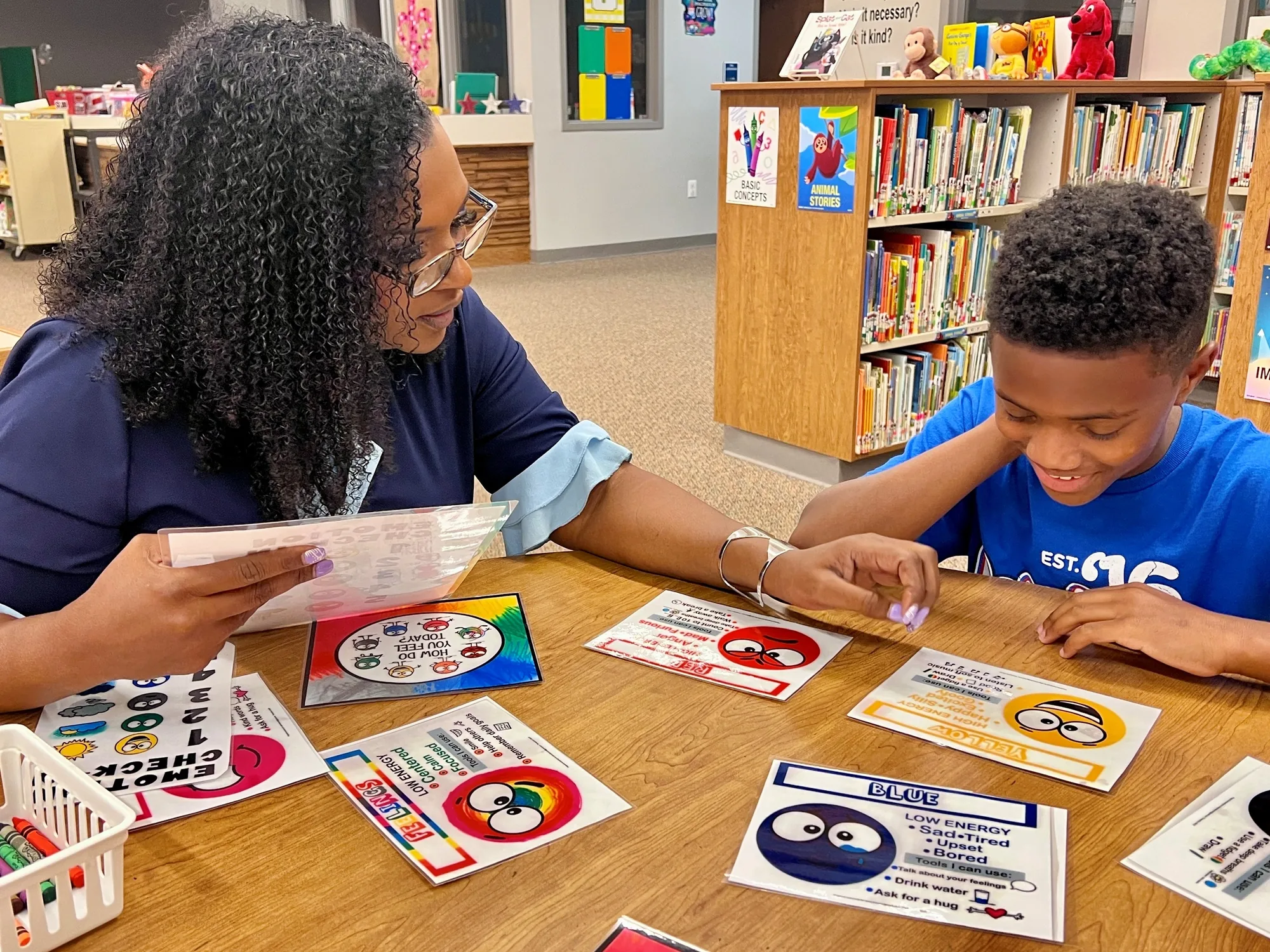
Sit with a student to learn what's happening, their strengths and supports, and what help they need.

Meet with teachers, administrators and parents about attendance, behavior, schoolwork or social worries to shape a workable plan.

Arrange school and community help, explain how to get it, and keep family, school and providers in touch.

Update case records, write reports, review service plans and follow up on whether the help is working.

Support a student in crisis, or join schoolwide efforts on behavior, mental health, student safety and school climate.
United States · Current sources accessed 2026-09-22
United States · May 2025
United States · 2025–2035
Quick orientation
Social workers typically need a bachelor's or master's degree in social work. School-specific education credentials and social work licenses are not uniform across states.
May 2025 median annual wage for U.S. child, family, and school social workers combined—not a school-only starting salary.
Projected 2025–2035 growth for child, family, and school social workers combined. School-only and local hiring are not separated, and budgets may limit growth.
Student information systems, electronic records, spreadsheets, email, and office tools can help organize notes, referrals, schedules, and progress information.
A person still has to listen, read context, earn trust, counsel students, coordinate adults, and make careful decisions during a crisis.
District adoption will vary, and it is uncertain how newer automation will affect school-social-worker staffing.
Pay in context
Use the national figure as context, then inspect the salary schedule and work-year terms for the district you are considering.
The median annual wage was $59,550. Half of workers in the combined child, family, and school social worker occupation earned more and half earned less. The median hourly wage was $28.63.
In May 2025, the 10th-percentile annual wage was $42,280 and the 90th-percentile wage was $95,530. These are wage percentiles, not starting and senior salaries.
Across all social worker specialties, the educational-services median was $68,850, compared with $51,980 in individual and family services. These broader industry medians are context, not school-social-worker offers.
There is no single national school-social-work credential. Check both the education agency and social-work board in the state where you want to work; these state examples show how routes can differ.
After entry
This starts where the entry routes leave off: early work, growing capability, and advancement or specialization.
After entry, learn the district's referral, documentation, special-education, and crisis procedures while building dependable relationships with students, families, and staff.
Manage plans and follow-up more independently: assess needs, coordinate services, monitor progress, and adjust support with the student and school team.
Develop expertise in attendance, behavior and mental-health supports, crisis response, family engagement, or schoolwide programs.
Stay based at one campus instead of splitting the week among schools. The office arrangement and caseload depend on the employer.
Split time across campuses, travel within the district, and coordinate with school teams and community specialists; travel and caseload shape the day.
Try it
Ask a school social worker or counselor for a 20-minute informational conversation. Offer a fictional scenario: a student has repeated absences and says their housing is unstable. Ask what they would learn first, who they would coordinate with, what they would document, and what falls outside their role. Notice whether you enjoy mapping people and resources without jumping to an answer.
Stay safe: Keep the scenario fictional. Do not share a real student's private information or ask to observe a confidential meeting.