
Career profile

Oil and Gas Service Unit Operator

Service unit operators run machinery that gets wells flowing again or pulls out stuck objects.

Every problem you fix is down the well where you cannot see it. You stay up top using gauges, instrument data and special tools.
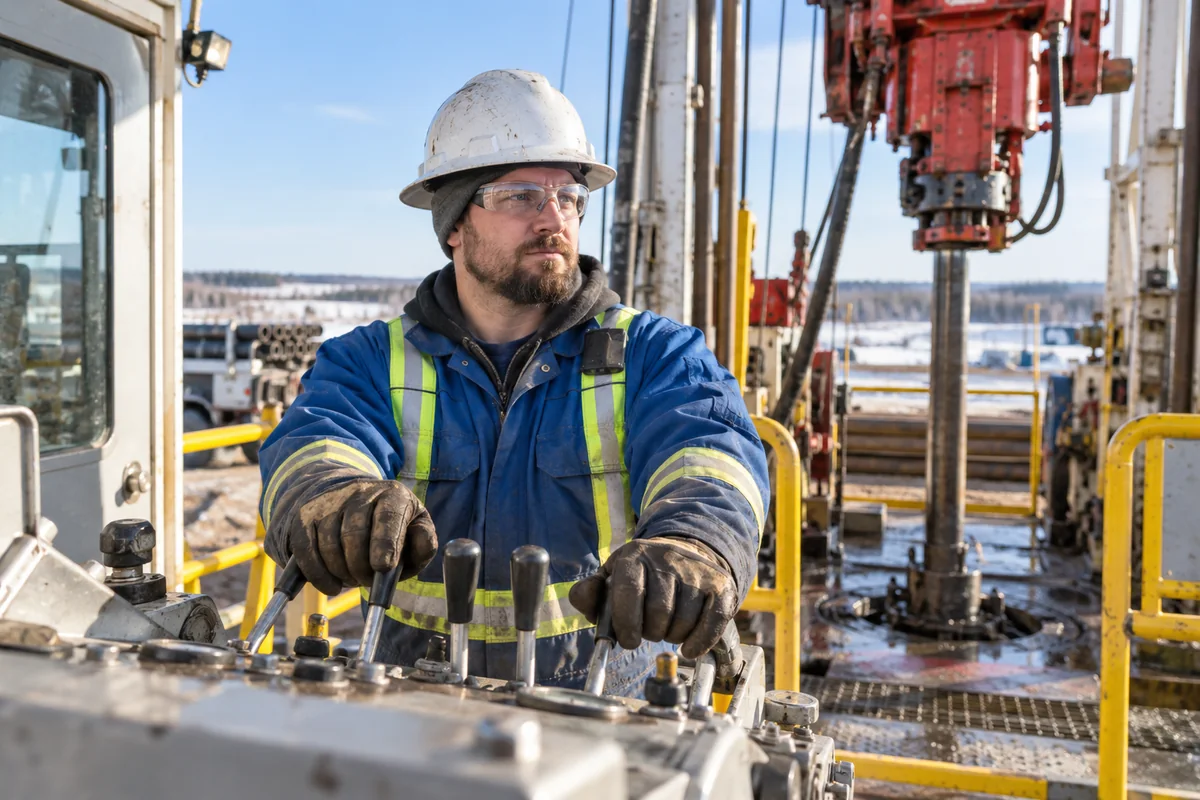
An adult oil and gas service unit operator controlling a well service rig from its safe work platform.

A day in the life

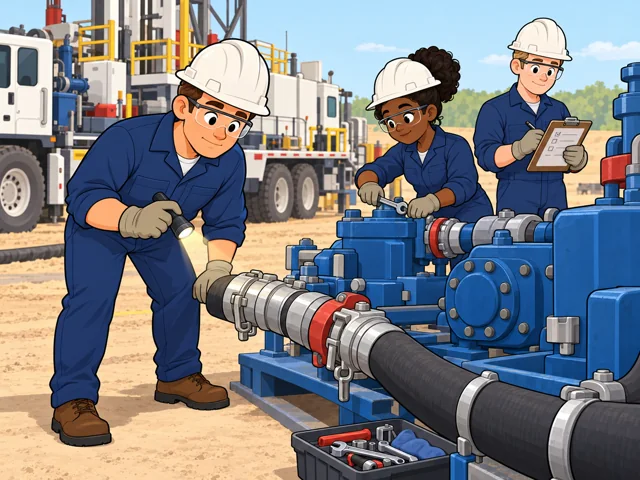
1An operator examines a hose connection on a stopped mud pump while one coworker checks a fitting and another records findings beside the service rig.

Look over the rig before work

Inspect the mud pump and service rig, log any problems, and do routine upkeep with the crew.
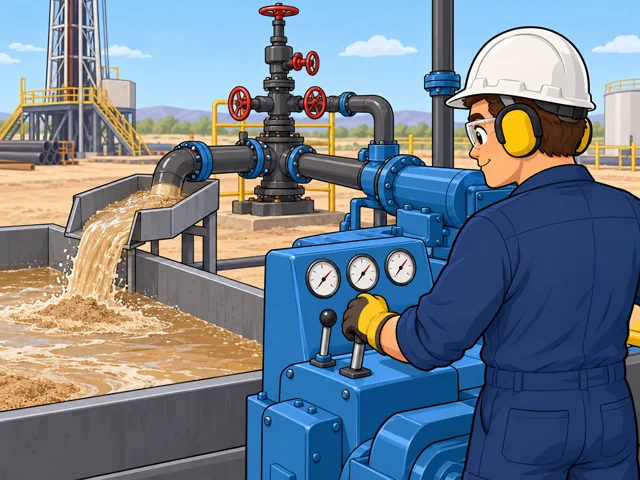
2An operator adjusts pump controls while watching gauges and sandy fluid returning from the well into a settling tank.

Pump fluid to clear sand

Run pumps that circulate fluid in the well to clear sand and other material holding back oil.
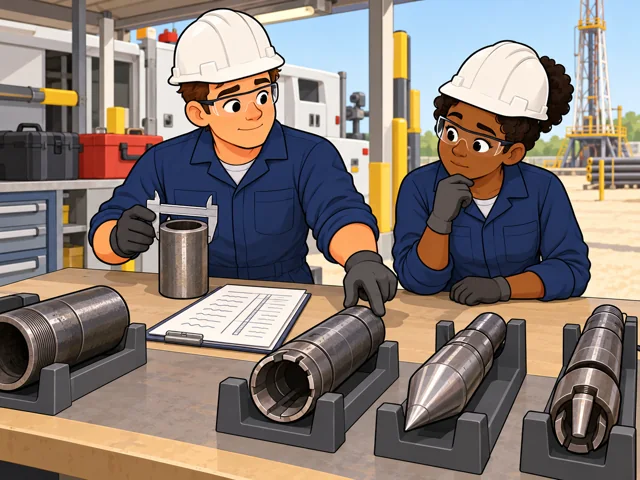
3An operator compares a pipe measurement and depth record before indicating a retrieval tool to a coworker at a preparation bench.

Choose tools for a fishing job

On fishing jobs, choose tools by depth and pipe size to pull stuck equipment out of the well.
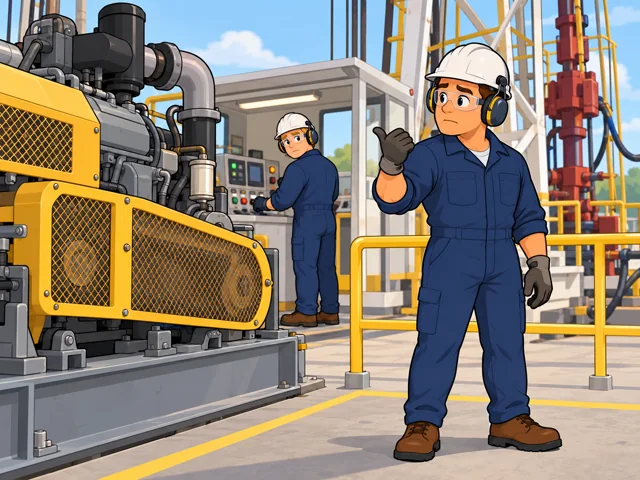
4An operator listens beside guarded rig machinery and signals a coworker at the controls after noticing an unfamiliar sound.

Listen for changes in engine noise

Listen for shifts in chain or engine noise that can mean a mechanical fault or odd well conditions.
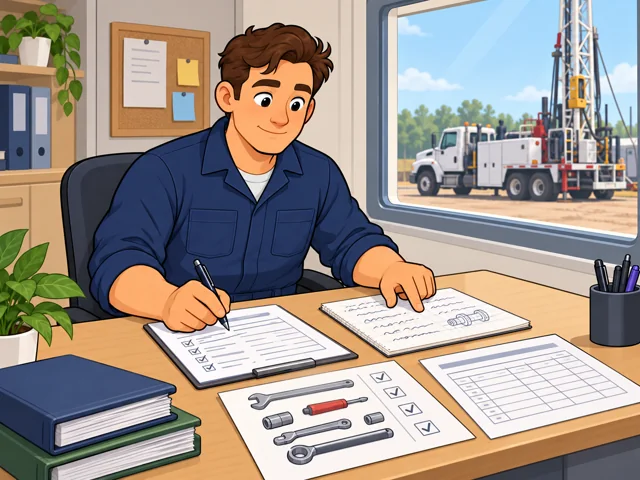
5Seated in a field office, the operator writes a service record while checking tool, work, and time notes.

Log tools, work and hours

Record the tools used, work done and hours spent so the customer gets billed correctly.

Quick facts

Preparation

Experience + workplace training

United States · 2025

Pay

$58,160 a year

United States · May 2025

Outlook

1.1% projected growth

United States · 2025–2035

Quick orientation

Preparation, pay & outlook

Preparation

Experience + workplace training

Typical entry involves related work experience and moderate-term on-the-job training. No formal educational credential is typical nationally; employers set their own requirements.

Geography
United States
Period
2025

Pay

$58,160 a year

National median, equivalent to $27.96 an hour.

Geography
United States
Period
May 2025

Outlook

1.1% projected growth

About 3,800 openings a year are projected, including replacement openings.

Geography
United States
Period
2025–2035

Fit, tradeoffs & changing tools

Things to weigh

  • Weather, noise, and heavy equipment are part of the day. Protective gear and physical stamina matter.
  • Some remote crews spend weeks away from home, working long shifts before a stretch of time off.

Where AI may help

Some well-service systems now track tools underground and automate movement or operating sequences. These capabilities are available in selected cable and coiled-tubing services.

What people still lead

Operators still inspect equipment, coordinate the crew, and handle problems at the well site.

What we can’t predict yet

How much routine control shifts to automation will depend on the equipment and the well. Operators may spend more time checking automated actions and handling exceptions.

Pay in context

Earnings

The national midpoint is useful, but the wage spread is wide.

The midpoint and spread

In May 2025, the median was $58,160 a year, or $27.96 an hour. The lowest-paid 10% earned $38,940 or less; the highest-paid 10% earned $97,560 or more. Those are wage percentiles, not beginner and experienced pay bands.

Geography
United States
Period
May 2025
Pay basis
Occupation-specific annual and hourly wage medians; annual 10th and 90th percentiles

Workplace type can matter

A historical comparison shows annual mean pay of $54,960 in support activities for mining and $76,210 in oil and gas extraction. Both figures are for service unit operators in May 2023; they are averages, not current offers.

Geography
United States
Period
May 2023
Pay basis
Occupation-specific annual mean wages by industry

Openings despite slow growth

Employment is projected to grow 1.1% from 2025 to 2035, with about 3,800 openings annually. Openings include replacing people who leave the occupation; they are not all newly created jobs.

Geography
United States
Period
2025–2035
Pay basis
Employment projection and annual average occupational openings; not compensation

Getting started

Join a service crew as a trainee

Paid
What the route involves
In a slickline operator-assistant role, learn equipment setup, inspections, and repairs under supervision.
What it can lead to
You gain direct well-service experience while completing the employer’s equipment and safety training.
What to check
Requirements vary. Some trainee jobs require a diploma or equivalent, eligibility for a commercial driver’s license, a satisfactory driving record, and physical, drug, and background screening.

Build field experience first

What the route involves
Start in roustabout work, cleaning and repairing equipment and learning how an oilfield crew works.
What it can lead to
Related field experience can prepare you to move into service-unit operator training.
What to check
An operator opening may still require specific equipment experience. The national typical-entry category is less than five years of related experience, not a fixed waiting period.

You usually learn this work through employment. Some employers require a high school diploma or equivalent, and many operator roles expect previous field experience.

After entry

Career paths

This starts where the entry routes leave off: early work, growing capability, and advancement or specialization.

  1. Get established

    Build reliable inspection and setup habits through workplace coaching. Some employers also use classroom lessons and simulators.

  2. Develop your judgment

    Learn to connect instrument readings with well conditions and choose suitable retrieval methods.

  3. Lead a service crew

    Move toward coordinating the rig crew, planning equipment needs with a field supervisor, and organizing other services at the well.

Where you can work

Land-based service and plugging crews

You move between well sites with a rig crew. Work can include preparing pipe and equipment for cementing when a well is being closed, with other service crews joining the job.

  • Outdoors
  • Field work
  • Travel
  • Physical demands
  • Safety-sensitive

Remote oilfield service bases

At remote Alaska sites, service work can mean living in employer-provided lodging during a rotation. Long or irregular days and short-notice calls can shape life away from work.

  • Outdoors
  • Field work
  • Travel
  • Shift work
  • On call
  • Safety-sensitive

Try it

See whether the job clicks before you commit to the path.

Sketch a narrow well with a broken pipe lodged inside. Draw a tool that could pass down the opening and grip the pipe. List the measurements you would need before choosing it. Notice whether solving a hidden mechanical problem interests you.

Stay safe: Keep this a paper exercise; it is not a procedure for operating well equipment.

Explore more careers

Sources

  1. O*NET OnLine. Service Unit Operators, Oil and Gas — 47-5013.00. Accessed 2026-10-03.
  2. O*NET OnLine / U.S. Bureau of Labor Statistics. National Wages: Service Unit Operators, Oil and Gas. Accessed 2026-10-03.
  3. U.S. Bureau of Labor Statistics. Table 1.2: Occupational projections, 2025–35, and worker characteristics, 2025. Accessed 2026-10-03.
  4. U.S. Bureau of Labor Statistics. May 2023 Occupational Employment and Wages: Service Unit Operators, Oil and Gas. Accessed 2026-10-03.
  5. U.S. Bureau of Labor Statistics. Occupational Outlook Handbook: Oil and Gas Workers. Accessed 2026-10-03.
  6. Halliburton. Oilfield Operator — Slickline; Operator Assistant Trainee, requisition 211302. Accessed 2026-10-03.
  7. CSR Services. Rig Operator Job Description. Accessed 2026-10-03.
  8. Key Energy Services. Careers: Training and Development. Accessed 2026-10-03.
  9. SLB. Autonomous Well Intervention. Accessed 2026-10-03.

Your message goes to the Great Jobs team. How we use your information