
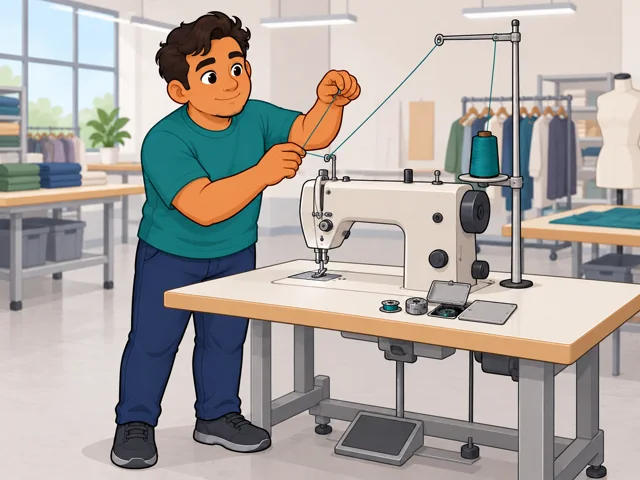
Thread up the machine
Load thread spools onto the machine, slip a bobbin in, and pull the thread through the guides.
Career profile
Sewing machine operators feed fabric through industrial machines to make clothing and other sewn goods.
Your hands keep the fabric pieces matched up while your eyes watch for any bad stitch that needs fixing.
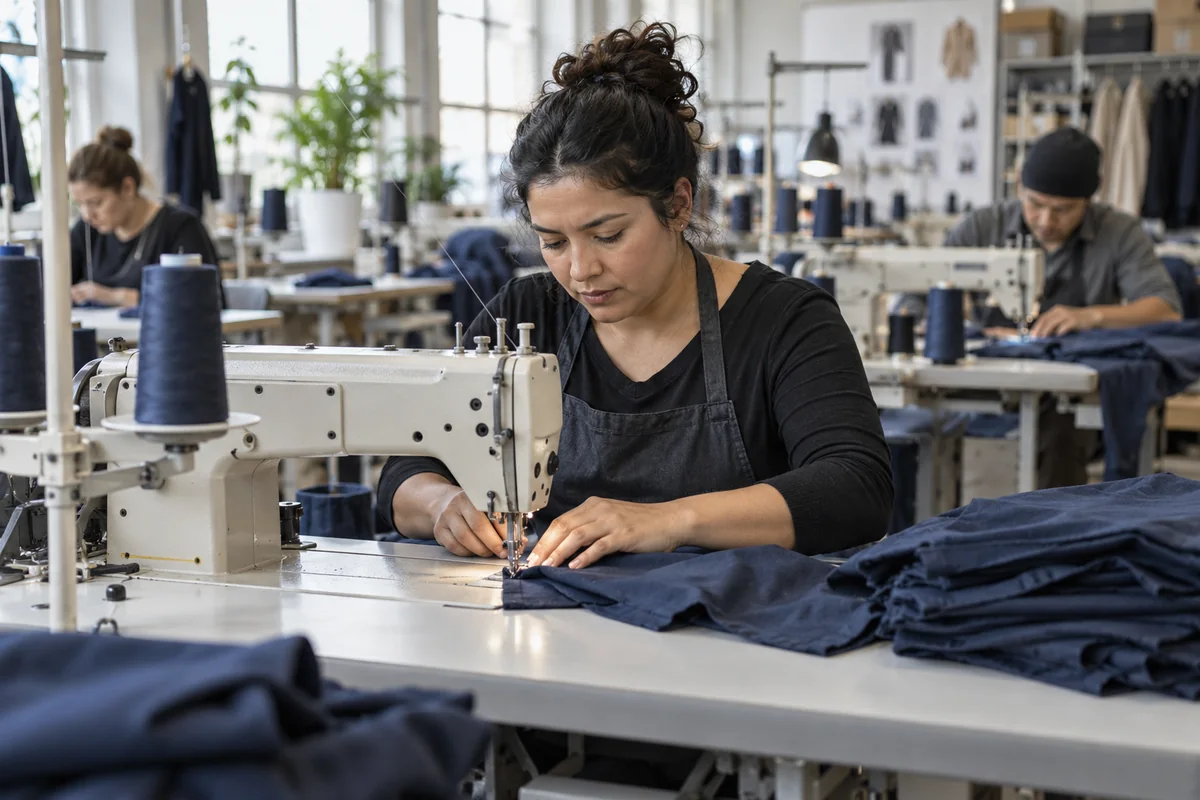
Load thread spools onto the machine, slip a bobbin in, and pull the thread through the guides.
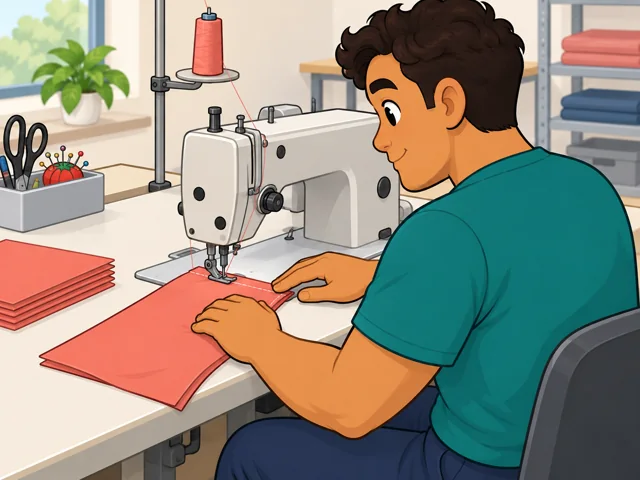
Match the cloth pieces edge to edge, then steer them under the needle to sew a seam.
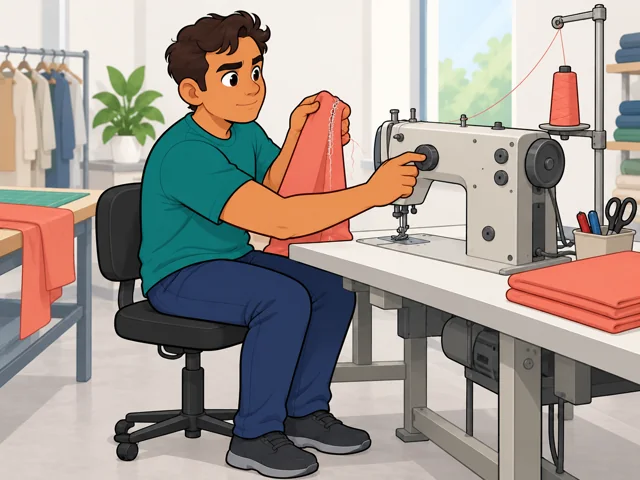
You keep watching for snapped thread or uneven stitches, then change the machine's settings to fix the problem.
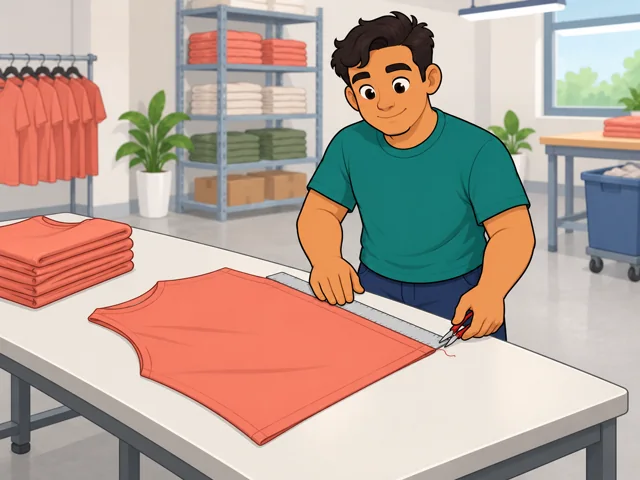
Lay a ruler along the finished item to confirm its size, then snip off any loose threads.
United States · 2025
United States · 2025
United States · 2025–2035
Quick orientation
Typically, no formal educational credential is needed; short-term workplace training builds the required skills.
National median: $17.63 an hour.
Employment is projected to shrink during 2025–35, with about 9,800 openings a year on average.
Some programmable machines repeat stored stitch patterns, control thread tension, and detect broken thread.
You still position materials and judge the finished stitching.
How much fabric handling machines will take over remains uncertain; automating a repeatable stitch is only part of making a complete product.
Pay in context
The national median describes the middle of the wage range. It is a reference point for comparing offers, not a promised starting wage.
In 2025, the lowest-paid 10% earned $27,860 or less annually, while the highest-paid 10% earned $47,840 or more. These are wage percentiles, not beginner and experienced pay rates.
Annual median pay was $36,460 in textile product mills and $36,130 in apparel manufacturing. The small difference between these settings does not tell you what an individual employer will offer.
The 2025–35 projection combines a 15.1% employment decline with 9,800 openings per year on average. Openings can occur as people leave the occupation even while its total workforce shrinks; check actual vacancies near you.
Workplace training is the typical route. A sewing program offers another way to build skills before applying.
After entry
This starts where the entry routes leave off: early work, growing capability, and advancement or specialization.
Build safe machine habits and make pieces that repeatedly meet the workplace's quality checks.
Develop beyond your first operation by practicing more clothing-construction techniques and industrial equipment.
With broad sewing experience and teaching skills, explore operator-trainer work: demonstrate techniques, coach new workers, and track their progress.
You may work through bundles of garment pieces or within a team production flow. Your completed operation feeds into the next construction step, so consistency matters to the people beside you.
Some sewing departments also build the pads that cover equipment. Work can include cutting upholstery and handling foam and wood, giving you a mix of stitching and pad assembly.
Try it
Turn a shirt you own inside out. Compare several seams for even spacing, loose thread, and matched edges. Mark differences on a sketch, then consider whether you enjoyed this close, repeated checking.