
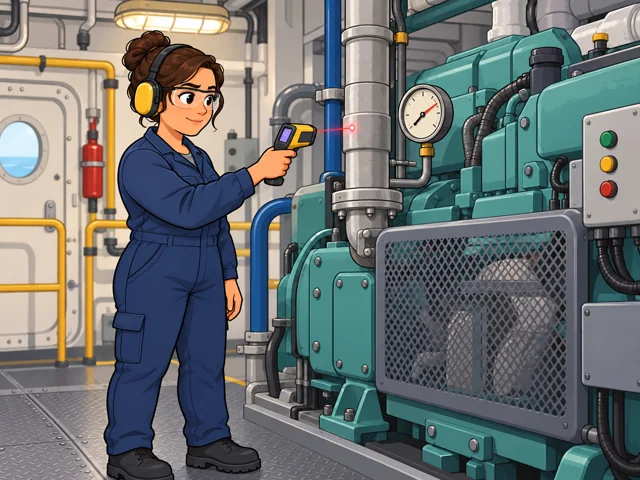
Test equipment behind odd readings
Scan the engine gauges, and when one looks off, test the equipment to learn if something's wrong.
Career profile
Ship engineers run and maintain the equipment that moves a vessel and powers it.
One drifting gauge reading can set off a hunt for a fault and settle which job the engine team takes on next.

Scan the engine gauges, and when one looks off, test the equipment to learn if something's wrong.
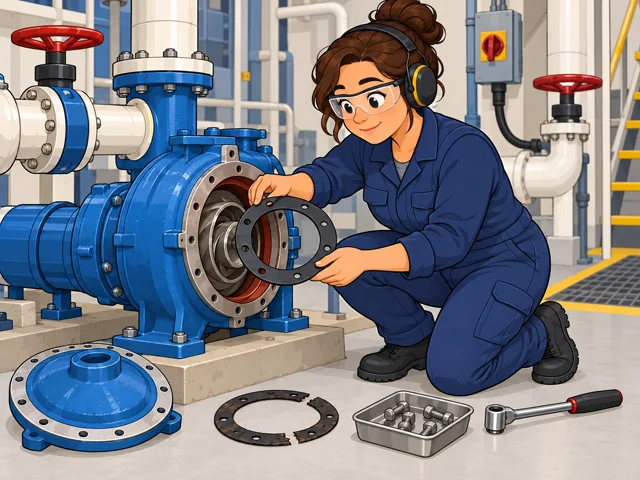
Find what broke in a pump and fix it, because one of the ship's systems needs it running.
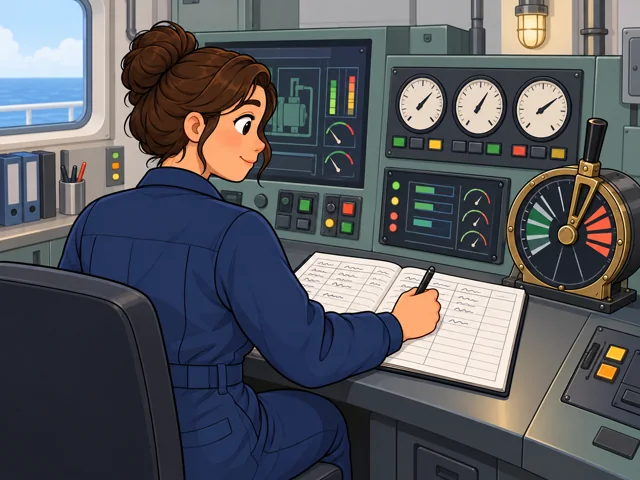
Enter the readings and engine orders in the engineering log so whoever takes over can trace events.
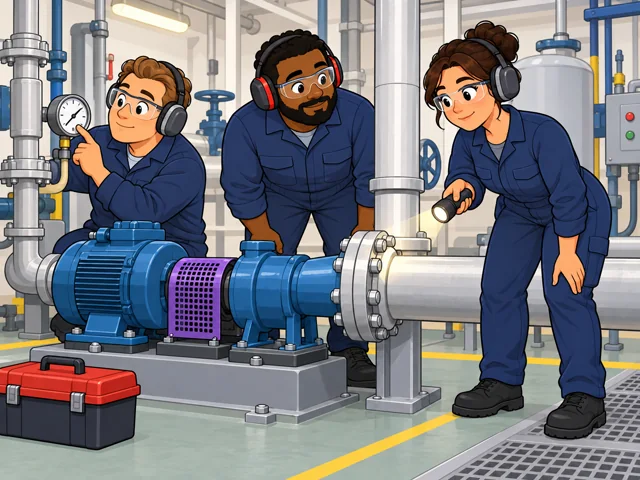
Direct the crew's upkeep jobs, then check their finished repair holds up before you call it done.
United States · 2025–2035 projections release
United States · May 2025
United States · 2025–2035
Quick orientation
Typical entry education is a postsecondary nondegree award. Academy and qualifying sea-service routes also exist.
National median for ship engineers; equivalent to $52.66 an hour.
About 900 openings per year nationally, averaged over 2025–2035.
On ships using connected engine-monitoring services, software can flag unusual readings. Artificial intelligence helps spot patterns that may signal a developing fault.
Engineers and shore specialists interpret the warning, choose a response, and carry out the physical repair.
How much troubleshooting shifts to software or shore specialists will depend on the machinery, connectivity, and faults these tools can reliably recognize.
Pay in context
The national median is a useful benchmark when you compare shipboard job offers.
Ship engineers had median wages of $109,530 a year, equivalent to $52.66 an hour. Half earned more and half earned less; this is not a starting-pay estimate.
The 10th-percentile wage was $57,870 a year and the 90th-percentile wage was $165,490. These mark the lower and upper ends of the middle 80% of wages, not beginner and senior pay grades.
Employment is projected to grow 2.7% from 2025 to 2035. About 900 annual openings include replacement needs as well as growth, so openings outnumber newly added positions.
Two routes toward a Third Assistant Engineer endorsement are academy study and qualifying engine-room experience.
After entry
This starts where the entry routes leave off: early work, growing capability, and advancement or specialization. This path also has a credential or licensing boundary; see the requirements and limits.
Get familiar with its engines, generators, and pumps, and build reliable engineering-log habits.
Build skill tracing problems across electrical and mechanical systems and organizing repairs.
One qualifying route requires a year of assistant-engineer service while holding Third Assistant Engineer. Meeting the service requirement supports an upgrade application; it is not an automatic promotion.
You work within an engineering department led by a chief engineer, with assistant engineers sharing machinery oversight. Voyages can keep you living and working aboard for weeks or months.
A small ship may have just one engineer. Machinery responsibility is concentrated, with fewer engineering colleagues aboard to divide it among.
Try it
Make a pretend engine-room log with several temperature and pressure readings over time. Change one trend, then write a short handover explaining what changed and what information you would want next. Notice whether tracking clues and explaining them interests you.
Stay safe: Keep this a paper exercise; invented readings are not operating limits for real machinery.