
Career profile

Sound Engineer

Sound engineers record and mix audio for live shows, studio recordings, film, television, and video.

Instruments are drowning out a singer's voice. Your task is to figure out what to change, then rebalance the mix toward the performer's goal.
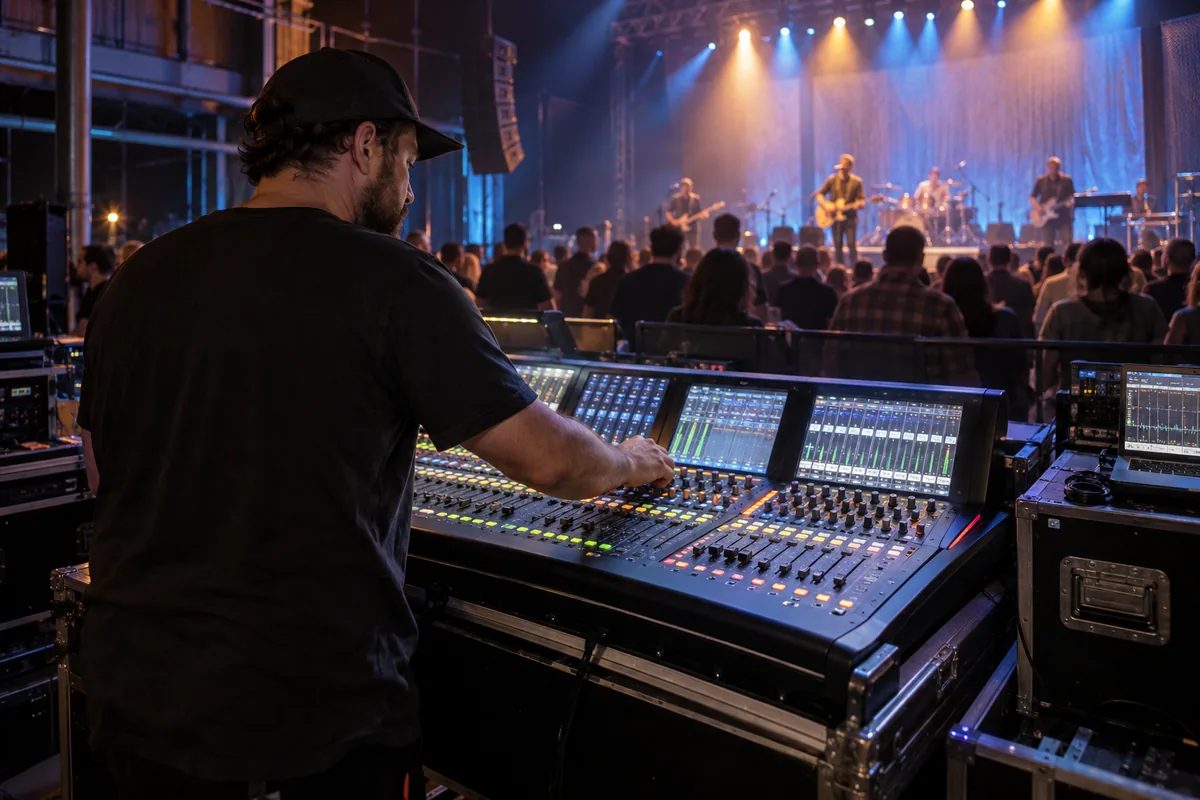
A sound engineer adjusting a mixing console during a live music performance, stage visible in the background.

A day in the life

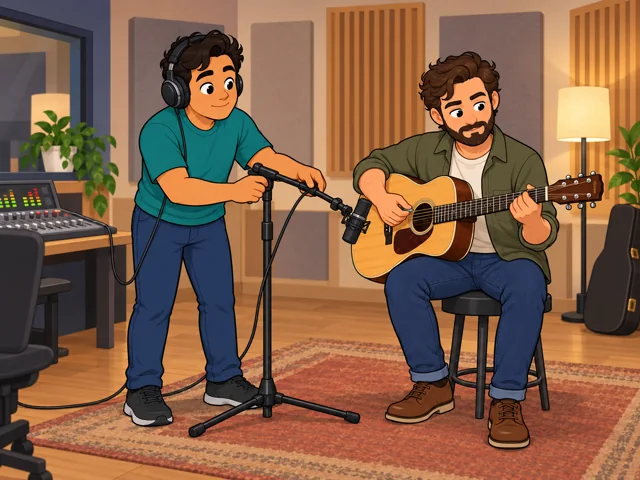
1A sound engineer adjusts a microphone aimed at an adult guitarist while listening through headphones, with its cable connected to a nearby recording console.

Set up and test a mic

Before a session or live show, place the mic, patch it into the console, and hear a test.
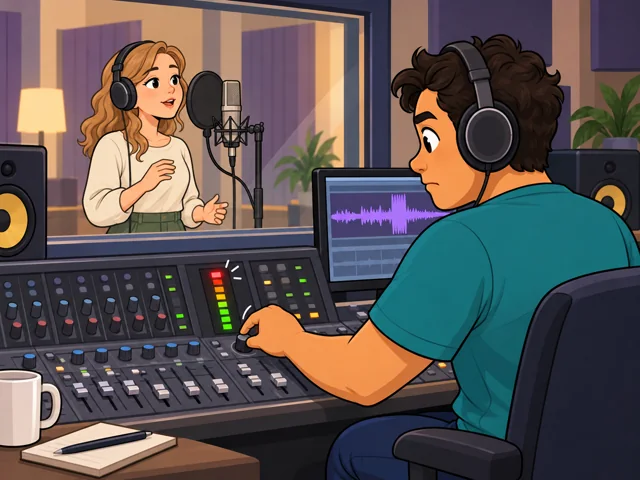
2A sound engineer lowers the recording input gain while monitoring a red level meter and listening to an adult vocalist performing in the booth.

Keep distortion off the recording

As someone plays or sings, watch the console meters, listen, and change the level when loud parts clip.
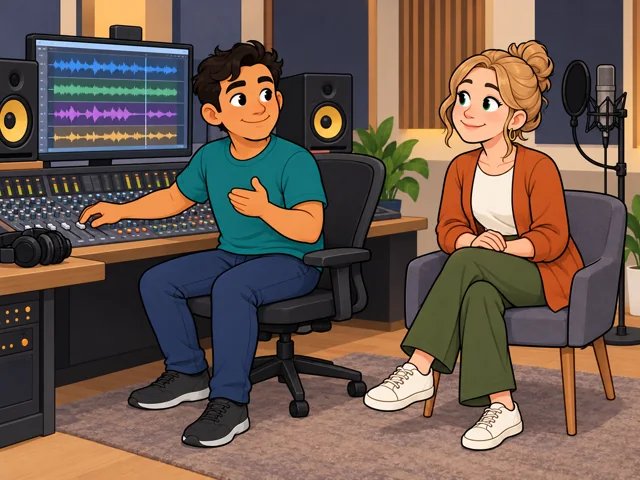
3A sound engineer adjusts a vocal fader during playback while the vocalist beside him listens and nods in approval.

Blend vocals with instruments

Set how loud the instrument and vocal tracks sit, then ask the performer if it's their intended sound.
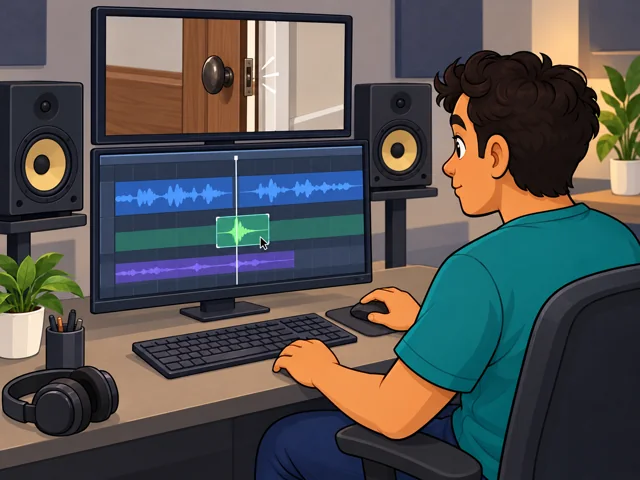
4A sound engineer aligns an effects waveform with a film image of a closing door, with separate dialogue and effects tracks visible on the editing screen.

Sync sound to the picture

For film or television, match dialogue and sound effects to on-screen action, then check the sync on playback.

Quick facts

Preparation

Usually a postsecondary certificate

United States · 2025–2035

Pay

$73,130 a year

United States · May 2025

Outlook

3.1% projected decline

United States · 2025–2035

Quick orientation

Preparation, pay & outlook

Preparation

Usually a postsecondary certificate

Typical entry education is a nondegree award after high school. Requirements vary by position.

Geography
United States
Period
2025–2035

Pay

$73,130 a year

Median employee pay for sound engineering technicians, equivalent to $35.16 an hour.

Geography
United States
Period
May 2025

Outlook

3.1% projected decline

About 1,000 openings a year are projected for sound engineering technicians despite declining total employment.

Geography
United States
Period
2025–2035

Fit, tradeoffs & changing tools

Things to weigh

  • Long workweeks and distracting or uncomfortable noise can be part of the job.
  • Movie deadlines can mean additional hours when a production needs its sound finished.

Where AI may help

For recorded audio, tools such as RX Scene Rebalance can separate dialogue, music, and effects so you can adjust them individually.

What people still lead

You still listen for unwanted changes and decide with collaborators what the finished sound should be.

What we can’t predict yet

How much cleanup can run unattended remains uncertain: separation software can put a sound in the wrong track, leaving corrections for you.

Pay in context

Earnings

The national median is a useful reference for employee jobs, but it is not a starting salary.

The national pay spread

Sound engineering technicians had median pay of $73,130 a year, or $35.16 an hour. The 10th-percentile annual wage was $37,570 and the 90th-percentile wage was $137,370. Those points describe the wage distribution, not beginner and senior salaries.

Geography
United States
Period
May 2025
Pay basis
Employee wages; annual and hourly median, annual 10th and 90th percentiles

What changes the comparison

Experience, responsibility, and location can affect pay. These employee estimates exclude self-employed earnings, so they do not tell you what a freelance project will bring in.

Geography
United States
Period
May 2025
Pay basis
Employee wage survey coverage; excludes self-employment

Openings in a shrinking occupation

Employment is projected to decline 3.1% from 2025 to 2035, with about 1,000 openings per year on average. Openings can occur as people leave an occupation even when its total employment falls.

Geography
United States
Period
2025–2035
Pay basis
Employment projection for sound engineering technicians; not a pay measure

Getting started

Study recording and audio production

St. Petersburg College’s certificate requires 24 credits.
What the route involves
Study studio recording, acoustics, critical listening, audio software, and live sound, with an internship included in the Audio Production and Engineering Certificate.
What it can lead to
Build preparation for audio-production work; the certificate also counts toward the college’s Music Industry/Recording Arts associate degree.

Train around live events

What the route involves
In Glendale Community College’s EnTech Audio certificate, practice with audio equipment in labs and help set up, run, and take down live events.
What it can lead to
Develop practical preparation for live-entertainment audio work, including mixer programming, audio networking, and recording software.
What to check
Required courses need grades of C or better, or P; at least six required semester units must be completed at Glendale. Prerequisites may add coursework, and this certificate is not financial-aid eligible.

Requirements range from a high school diploma to a college degree, depending on the position. These two training options emphasize different parts of sound work.

After entry

Career paths

This starts where the entry routes leave off: early work, growing capability, and advancement or specialization.

  1. Become dependable on sessions

    Get consistent at setup, testing, and keeping recording logs that others can use.

  2. Solve harder sound problems

    Learn to trace a missing signal through the system and make more deliberate choices about microphone placement and mix balance.

  3. Specialize in the finished sound

    Develop toward mixing or mastering work, refining the balance or final presentation of recordings.

Where you can work

Recording studios

Work with microphones, recording software, and studio monitors. You can compare recorded passes and refine the mix after the performance.

  • Indoors

Live-performance venues

Setup and teardown surround the show. During the performance, you manage sound for the audience or the mix performers hear onstage.

  • Physical demands

Film and television postproduction

Work against a picture timeline, balancing dialogue with music and effects. Movie delivery deadlines can stretch the working day.

  • Indoors

Try it

See whether the job clicks before you commit to the path.

Using a phone or computer you already have, record a short spoken introduction and a separate background sound. In an audio editor, combine them and adjust the background until every word is clear. Compare versions: do you enjoy the repeated listening and small decisions?

Stay safe: Listen at a comfortable volume; louder playback is not needed to judge the balance.

Explore more careers

Sources

  1. O*NET OnLine. Sound Engineering Technicians, 27-4014.00. Accessed 2026-10-10.
  2. U.S. Bureau of Labor Statistics. Occupational Employment and Wage Statistics, May 2025 national estimates. Accessed 2026-09-29.
  3. U.S. Bureau of Labor Statistics. Employment Projections, Table 1.2, 2025–2035. Accessed 2026-09-29.
  4. U.S. Bureau of Labor Statistics. Broadcast, Sound, and Video Technicians. Accessed 2026-10-10.
  5. St. Petersburg College. Audio Production and Engineering Certificate. Accessed 2026-10-10.
  6. Glendale Community College. EnTech Audio. Accessed 2026-10-10.
  7. Arapahoe Community College. Sound Engineering Certificate — Academic Plan. Accessed 2026-10-10.
  8. iZotope. Fix it in post: How to reclaim the mix with RX 12 Scene Rebalance. Accessed 2026-10-10.

Your message goes to the Great Jobs team. How we use your information