
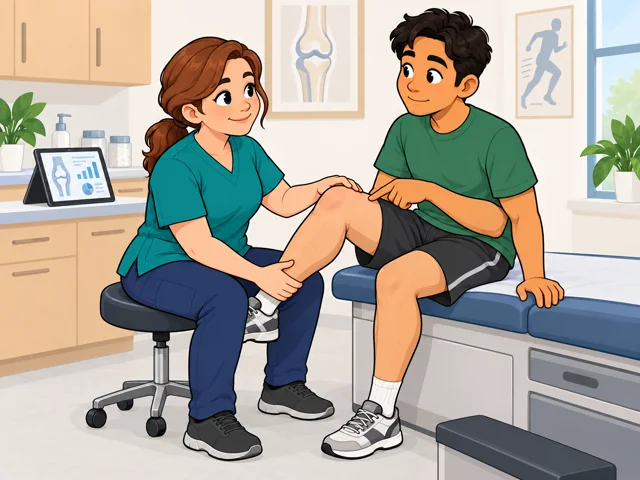
Examine a sore knee
Ask when the pain began, feel the knee, and judge if an X-ray or other test would help.
Career profile
Sports medicine physicians diagnose sports injuries and movement-limiting conditions, then get patients active again.
For an everyday runner keen to train again or a competitive athlete, you trace the pain, choose nonsurgical care and judge when returning is wise.
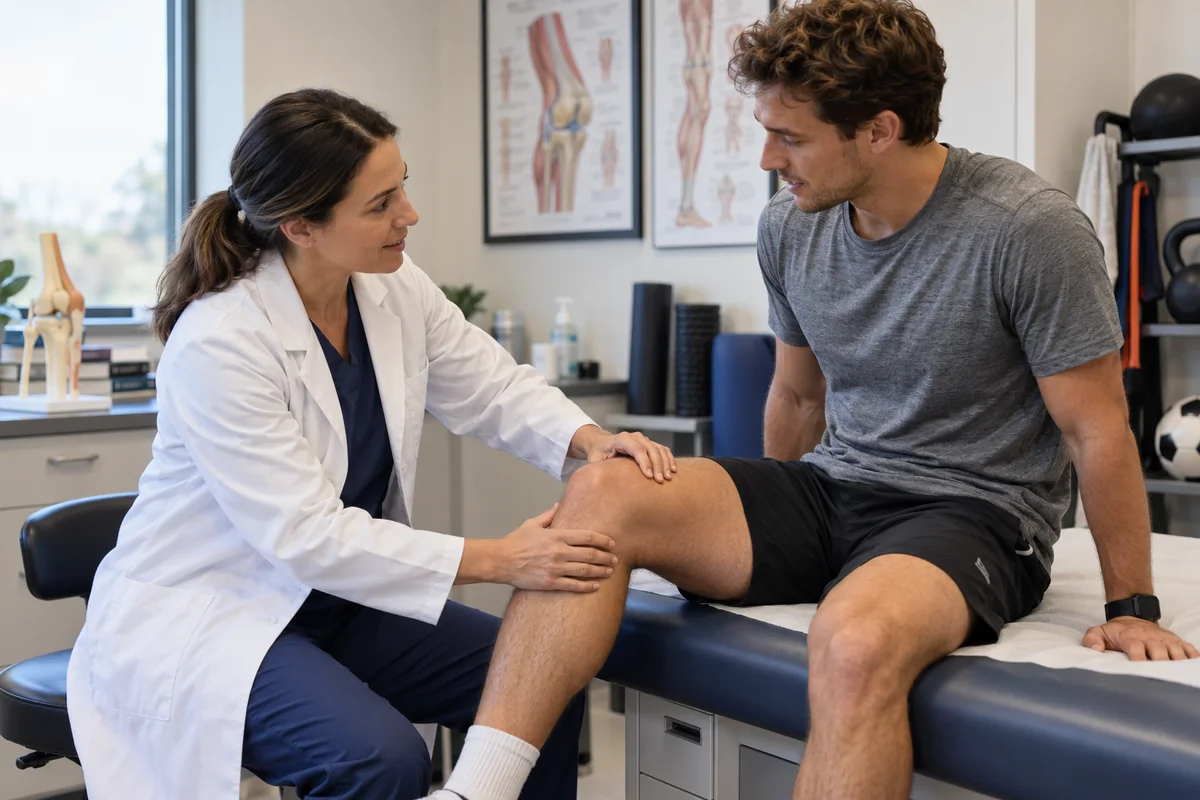
Ask when the pain began, feel the knee, and judge if an X-ray or other test would help.
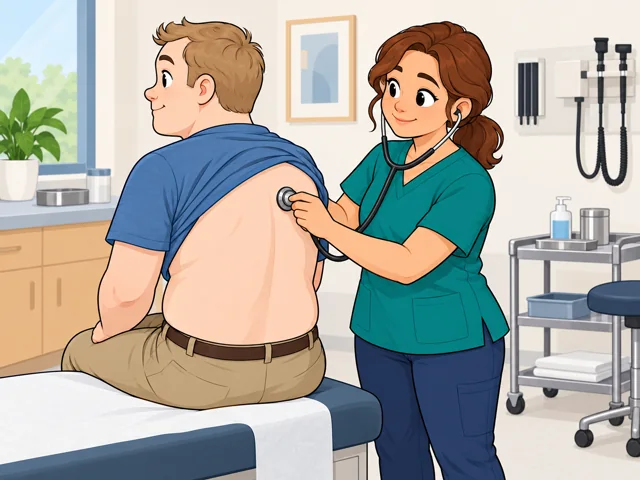
For a patient short of breath during workouts, weigh medical causes such as exercise-induced asthma.
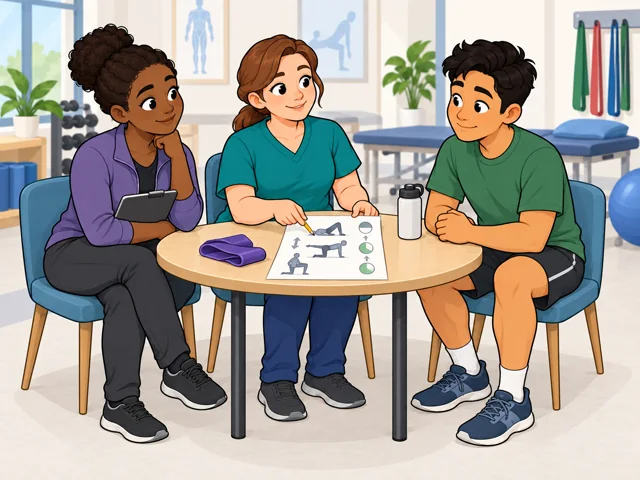
Track recovery, change treatment, arrange physical therapy, and refer anyone who might need surgery to orthopedic surgeon colleagues.
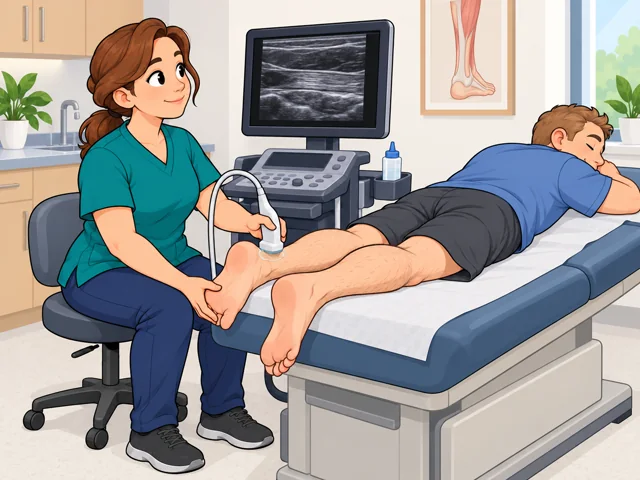
In practices with ultrasound, glide a handheld probe over tendons and muscles or guide procedures.
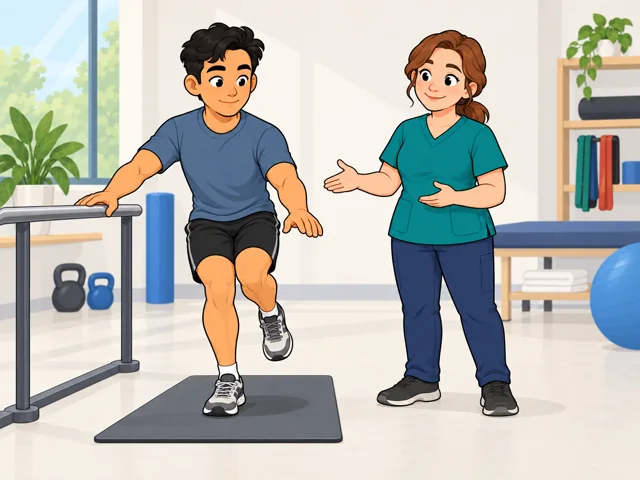
Gauge how well the injury has healed, then tell the patient if they're ready for sport or activity.
United States
Pay depends on the position and work schedule; see the university salary range below.
Explore clinic, university, and team-care positions in the places you might live.
Quick orientation
You train as a physician first, then complete focused sports medicine training.
Pay depends on the position and work schedule; see the university salary range below.
Explore clinic, university, and team-care positions in the places you might live.
Motion-capture systems turn an athlete's movement into measurements. In sports research, they help compare movements and test wearable sensors.
You connect measurements with the examination, symptoms, and recovery goals before making a medical decision.
How much wearable measurements can guide treatment or return-to-sport decisions remains unsettled; accuracy during real sports movements matters.
Pay in context
Look closely at how much of a full-time schedule a salary covers and how many months you work.
In 2025, the broader Physicians, All Other category had a U.S. median wage of $265,930 a year, with a reported hourly equivalent of $127.85. The annual 10th–90th percentile spread was $69,170–$452,360. These figures cover multiple physician specialties, not sports medicine alone; the percentiles describe the wage distribution, not starting and experienced salaries.
At San José State University, the 2026 sports medicine hiring range is $16,500–$17,500 a month at 80% of full time. You work ten months and receive pay over twelve, totaling $198,000–$210,000 annually.
In Oakland, California, a full-time primary care sports medicine position with The Permanente Medical Group lists $325,920–$336,000 a year, before potential incentives. You practice within a multispecialty orthopedic department.
First complete college and medical school, earning a Doctor of Medicine or Doctor of Osteopathic Medicine degree. Residency and fellowship provide supervised clinical training. Independent practice requires a state medical license; specialty board certification is a separate qualification. Two routes are below.
After entry
This starts where the entry routes leave off: early work, growing capability, and advancement or specialization.
Build reliable referral and follow-up routines with physical therapists, athletic trainers, and surgeons.
Develop your ultrasound skills or focus more closely on a patient group, such as young athletes or dancers.
In an academic practice, teach residents and fellows or study ways to prevent and treat sports injuries.
See scheduled visits for injuries and activity problems, including patients who do not compete in sports. Follow-up appointments let you track recovery alongside rehabilitation care.
Combine training-room visits with event coverage. At competitions, you assess problems where they happen; this may be one part of a larger clinical job.
Your appointments can mix sports injuries with common medical concerns. You work with campus health staff and athletics while caring for a broader student population.
Try it
Imagine a runner says, “My knee hurts, but I want to race next week.” Write five questions you would want answered before discussing a return. Notice whether investigating the problem interests you as much as the sport.
Stay safe: Keep this a writing exercise; do not examine an injury or decide whether someone is safe to compete.