
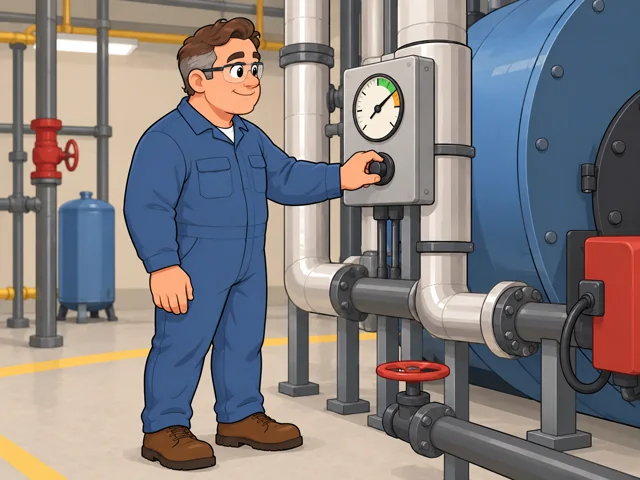
Keep boiler pressure on target
When a gauge drifts outside its set range, adjust the water, air or fuel to hold pressure.
Career profile
Stationary engineers run boilers, pumps and more, supplying steam and heat to buildings and industry.
Catching a fault before service stops is the goal, so you watch pressure readings, adjust control settings and dig into problems.
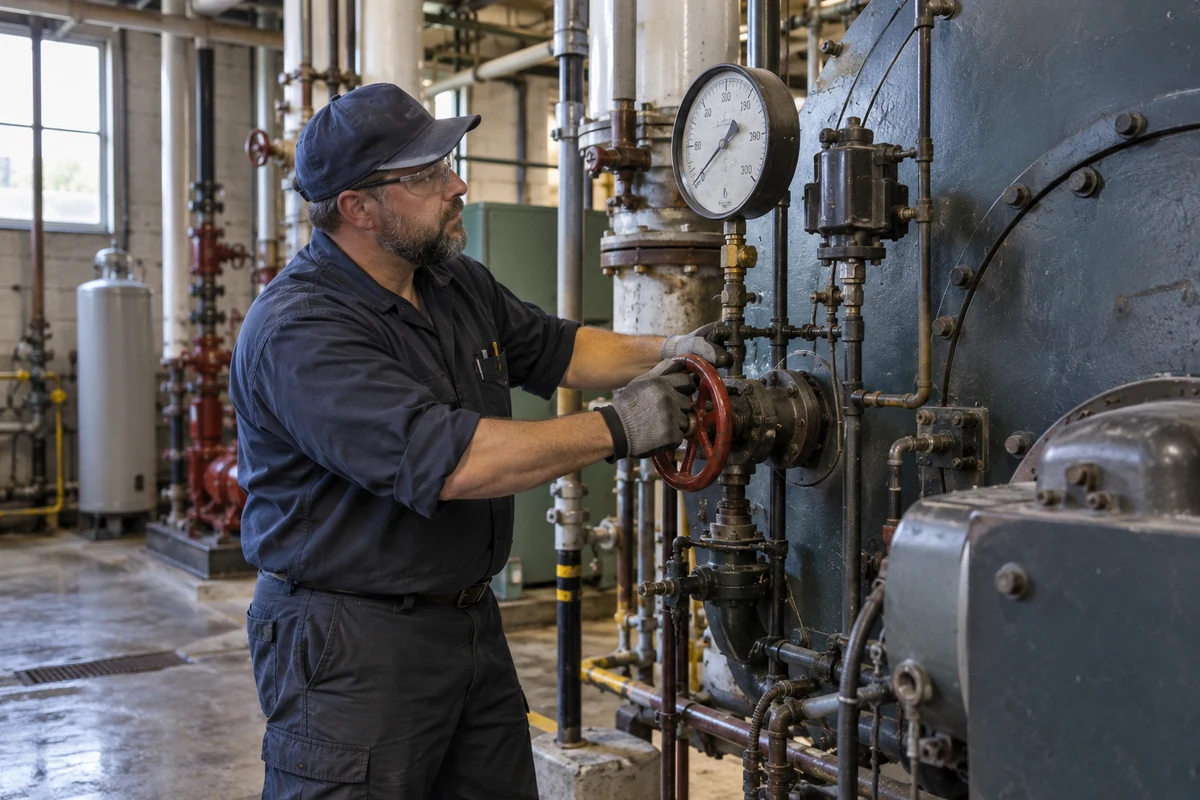
When a gauge drifts outside its set range, adjust the water, air or fuel to hold pressure.

Test the boiler water's quality and adjust its treatment to keep corrosion and deposits from forming.
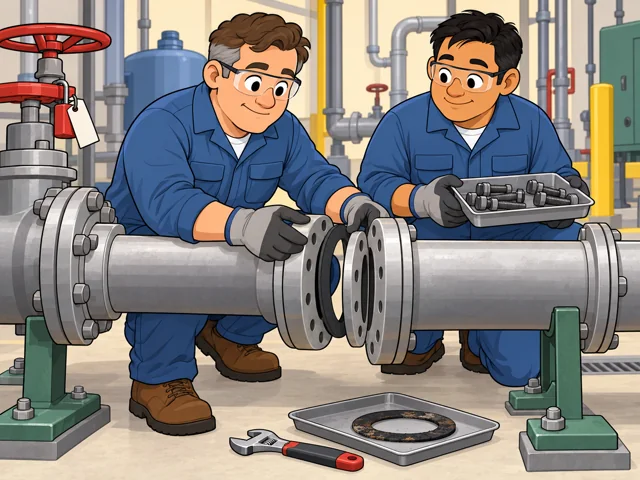
Isolate the equipment safely first, then fix a worn bearing, valve or leaky gasket, or arrange a replacement.
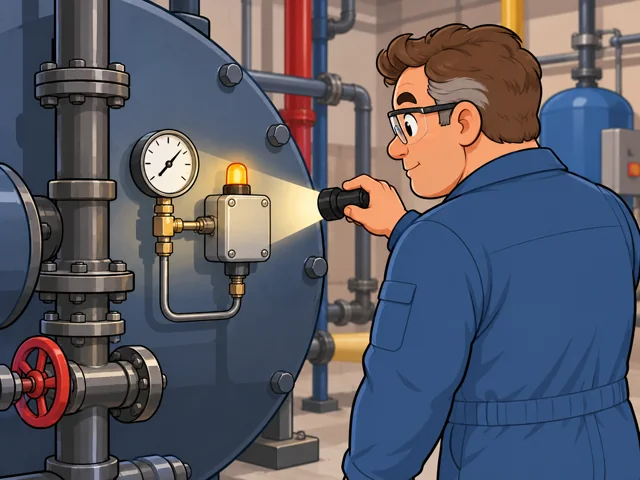
When an alarm sounds, go inspect the equipment's safety devices, switches and gauges for leaks or malfunctions.

Comparing plant log utility readings over time, you notice a shift that could justify inspecting machines before failure.
United States · 2025–2035
United States · May 2025
United States · 2025–2035
Quick orientation
A high school diploma or equivalent is typical, followed by long-term training on the job.
National median for stationary engineers and boiler operators; $37.80 per hour.
About 3,200 openings per year are projected nationally for stationary engineers and boiler operators.
Computerized building controls help regulate temperatures and show how heating and cooling systems are performing.
You investigate unusual readings, troubleshoot equipment, and check that building spaces receive the conditions they need.
How much fault-finding software will take over remains uncertain; different plants combine older machinery and newer controls.
Pay in context
The national median describes the whole occupation, not a starting offer.
The median was $78,620 a year, or $37.80 an hour. The 10th and 90th percentiles were $50,590 and $125,390 annually. Those are wage-distribution markers, not beginner and senior salaries.
Annual medians were $105,500 in local government excluding schools and hospitals; $80,800 in hospitals; $74,130 in manufacturing; $72,920 in educational services; and $55,220 in traveler accommodation.
Check whether quoted pay excludes overtime, shift premiums, and benefits. Ask how your experience and skills affect placement within the offered range.
Employment is projected to grow 3.1% during 2025–2035, with about 3,200 openings annually. Many replace people who leave the occupation.
Some states and cities require licenses, usually involving experience and an exam. License classes limit equipment authority. Employers may also require competency exams before unsupervised operation; check local requirements before choosing training.
After entry
This starts where the entry routes leave off: early work, growing capability, and advancement or specialization.
Learn the plant's normal readings and make dependable rounds. Keep logs clear enough to spot changes over time.
Develop your knowledge of refrigeration and computer controls as equipment changes.
A chief engineer role can put you in charge of mechanical systems and the operators maintaining them.
Steam and chilled-water systems serve patient and staff spaces. You may also check emergency power equipment; evening and overnight coverage can be part of the job.
One engineer may cover the building's mechanical systems. That means broader responsibility across heating, cooling, and related equipment within one site.
Try it
Find a labeled steam-heating diagram. Trace water into the boiler, steam to the building, and condensed water back. Mark where you would want pressure or temperature readings. Notice whether following the system makes you curious.
Stay safe: Keep this exercise on paper; do not enter a boiler room or operate equipment.