
Career profile

Sterile Processing Technician

Sterile processing technicians clean, inspect and prepare surgical tools for reuse in later operations.

A tray can look complete while one instrument has a problem. Catching small details keeps the surgical team's equipment safe to use.
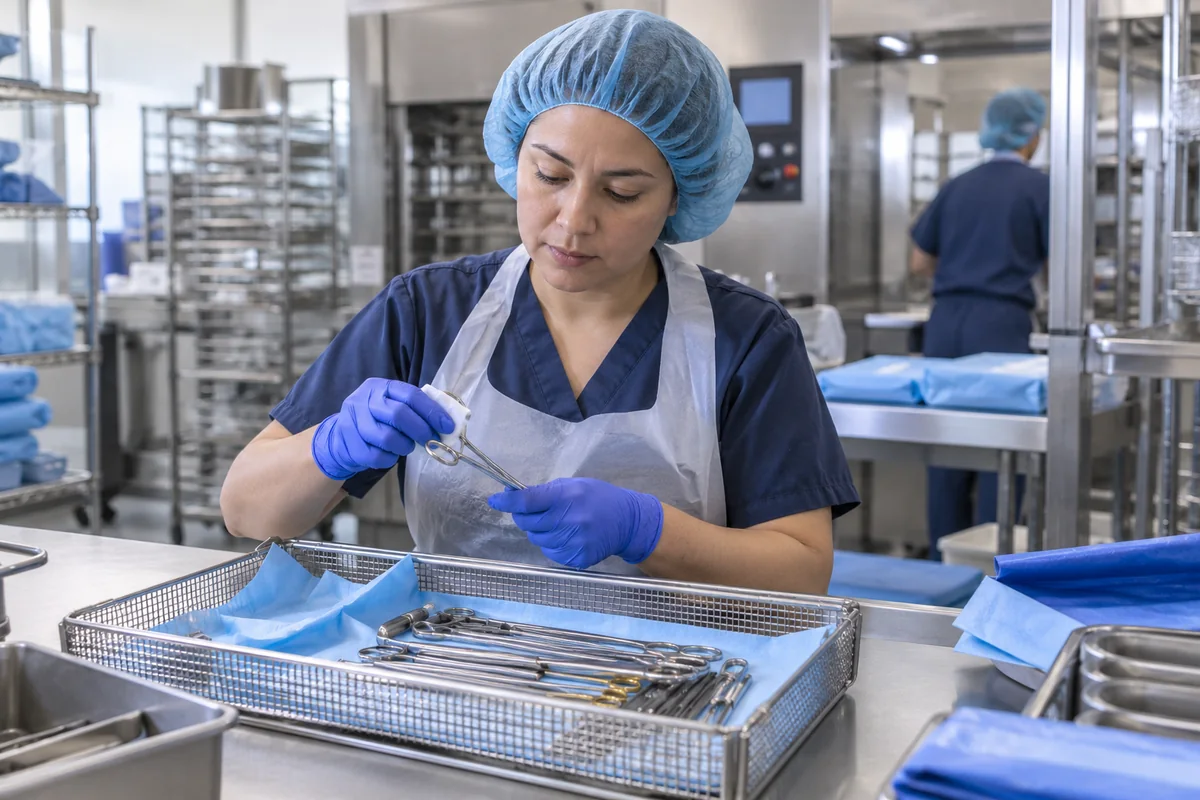
A sterile processing technician inspecting and packing clean surgical instruments on a tray in a hospital reprocessing room.

A day in the life

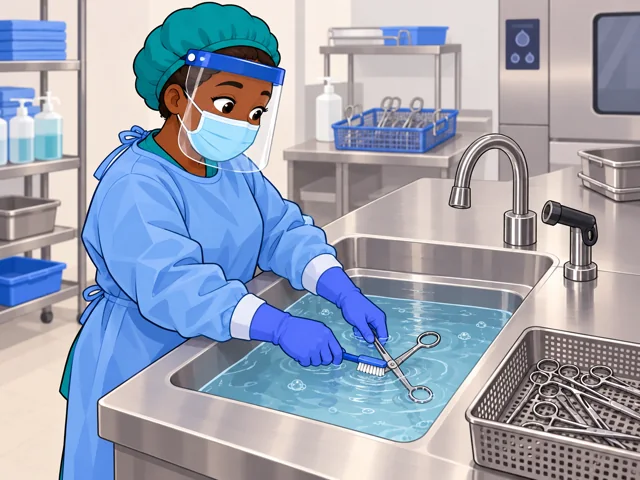
1A technician in protective clothing brushes an opened surgical instrument beneath the solution in a deep cleaning sink.

Clean instruments before further processing

You clean debris off used instruments and get them ready for processing, even where machines handle later stages.
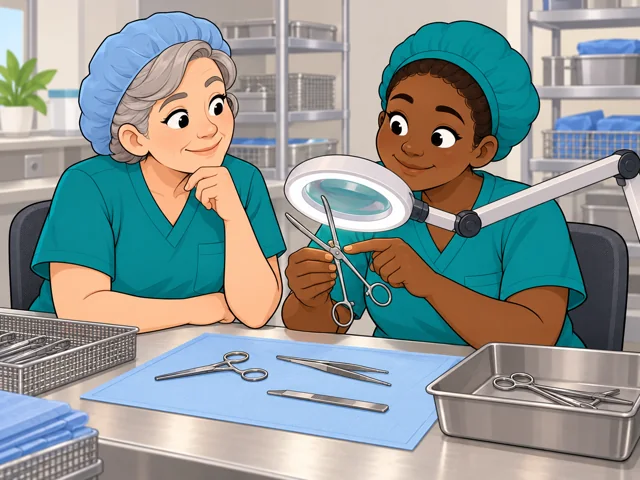
2A seated technician points out a loose instrument hinge under a magnifier to an older woman supervising the inspection.

Spot worn or loose parts

Look closely at an instrument and tell your supervisor if any part seems worn or loose.
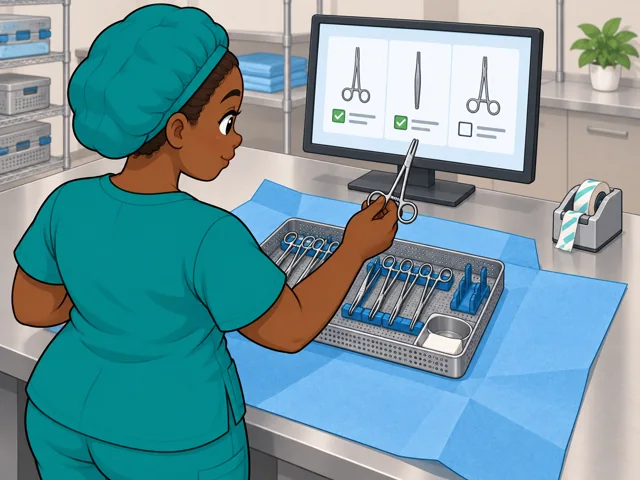
3A technician checks instrument pictures on a screen while completing a surgical tray laid out on sterilization wrap.

Count and wrap for sterilizing

Match tools to a count sheet, sometimes digital with photos, sort out missing ones, and wrap the set.
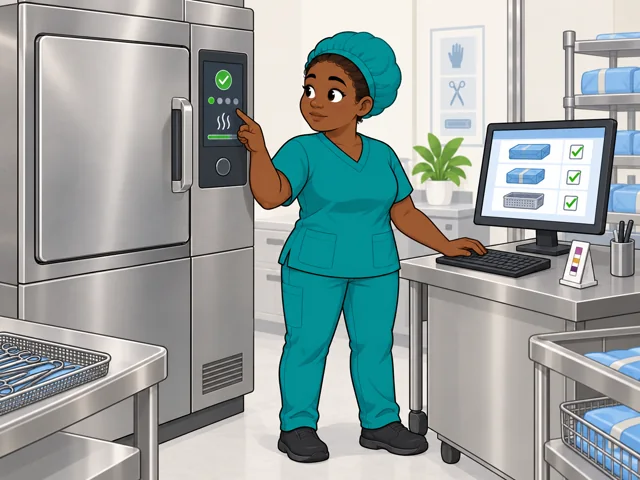
4A technician checks a sterilizer display and records load information and an indicator result at a nearby workstation.

Sterilize and record each load

Start the sterilizer, watch its controls, and log each load's items and test results.
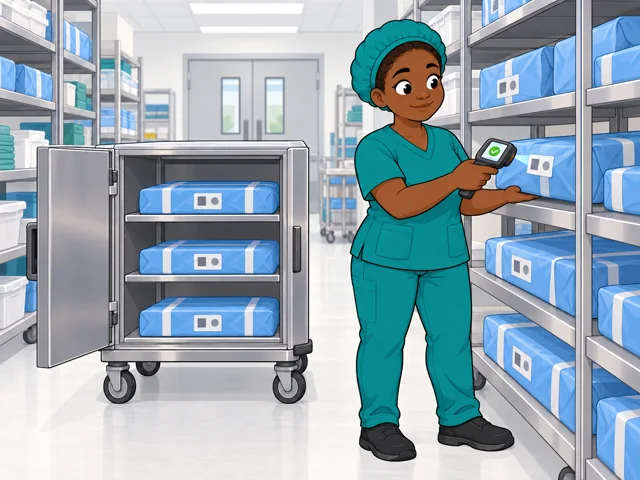
5A technician scans a packaged instrument set in sterile storage before placing it in a delivery cart for surgery.

Pull requested sets to send out

With tracking software, where it exists, you can locate a set and see its processing progress.

Quick facts

Preparation

Workplace training or a certificate

United States · 2026-10-03

Pay

Not displayed

National pay figures below cover the broader medical equipment preparer occupation.

Outlook

Not displayed

The broader occupation is projected to grow; its forecast also includes work outside sterile processing.

Quick orientation

Preparation, pay & outlook

Preparation

Workplace training or a certificate

You can learn through an employer or a college program with clinical practice.

Geography
United States
Period
2026-10-03

Pay

Not displayed

National pay figures below cover the broader medical equipment preparer occupation.

Geography
United States
Period
May 2025

Outlook

Not displayed

The broader occupation is projected to grow; its forecast also includes work outside sterile processing.

Geography
United States
Period
2025–2035

Fit, tradeoffs & changing tools

Things to weigh

  • Standing, moving trays, and repeating hand movements can be tiring.
  • You handle contaminated equipment and wear protective gear while working.
  • Some hospital jobs rotate through nights, weekends, and holidays.

Where AI may help

Instrument-tracking software can show where a set is and keep digital records of its sterilization process.

What people still lead

You still inspect instruments, assemble sets, and deal with missing or damaged pieces.

What we can’t predict yet

Experimental robots can sort and pack instruments. How much tray assembly they will take over across different surgical sets remains uncertain.

Pay in context

Earnings

Use the national figures as broad context, then compare the hourly rates and requirements of jobs near you.

National pay context

Medical equipment preparers had a May 2025 median of $47,700 a year, or $22.93 an hour. The 10th and 90th percentiles were $36,410 and $69,950. These figures cover a broader group than sterile processing technicians; the percentiles are not starting and experienced pay levels.

Geography
United States
Period
May 2025
Pay basis
Broader occupation's annual and hourly median wages and annual wage percentiles

A hospital pay range

In Rochester, Minnesota, a hospital sterile-processing role advertises $21.96–$29.02 an hour under a union contract. That is a local advertised range, not a guaranteed starting rate.

Geography
Rochester, Minnesota
Period
2026-10-03
Pay basis
Advertised hourly wage range

The broader hiring outlook

Medical equipment preparer employment is projected to grow 10.8% from 2025 to 2035, with about 10,700 openings annually. Those openings include replacements and growth across the broader occupation, not just sterile processing.

Geography
United States
Period
2025–2035
Pay basis
Employment projection and average annual openings; not compensation

Getting started

Learn in a paid hospital role

Paid
What the route involves
Some hospitals hire beginners and teach instrument processing alongside experienced staff.
What it can lead to
You gain workplace experience while earning wages.
What to check
Mayo Clinic's Rochester route requires age 18 or older and Certified Registered Central Service Technician (CRCST) certification within 18 months. Internal transfers may be restricted for up to two years.

Combine college study with clinical hours

Skyline College: two semesters, just over 10 months.
What the route involves
Study instruments, cleaning, and sterilization in lectures and labs, then practice in a clinical department. Skyline College includes 400 clinical hours.
What it can lead to
You build practical experience for certification as well as completing a college certificate. Finishing the course alone does not earn CRCST certification.
What to check
Skyline requires high school completion or equivalent and health, background, and drug-screen clearances. Clinical shifts may include evenings or weekends.

Look for either a job that trains beginners or a program that includes supervised clinical practice.

After entry

Career paths

This starts where the entry routes leave off: early work, growing capability, and advancement or specialization. This path also has a credential or licensing boundary; see the requirements and limits.

  1. Get established

    Learn your department's flow from contaminated instruments to packaged sets and sterile storage. Build reliable habits through hands-on practice.

  2. Handle more complex sets

    Learn specialty instruments and their inspection needs. Get better at spotting a missing piece or a problem that prevents a tray from being ready.

  3. Specialize in instrumentation

    Work toward an instrument-specialist role. The Certified Instrument Specialist credential requires full CRCST certification, 200 separate qualifying experience hours completed within the previous five years, and a passing exam.

Where you can work

Hospital instrument departments

You supply operating-room staff and work with instrument washers, sterilizers, and tracking systems. Some roles include night, weekend, and holiday rotations.

  • Indoors
  • Shift work
  • Physical demands
  • Safety-sensitive

Outpatient surgery centers

You prepare instruments for the center's surgical cases. Some centers offer weekday daytime work without overnight shifts or call; check the particular center's schedule.

  • Indoors
  • Physical demands
  • Safety-sensitive

Try it

See whether the job clicks before you commit to the path.

Make a count sheet for a small tray of clean household utensils. Have someone remove or swap an item, then check the tray against your list. Notice whether you enjoy the close comparison and catching a mismatch.

Stay safe: Use blunt household items only. This explores checking habits, not medical cleaning or sterilization.

Explore more careers

Sources

  1. O*NET OnLine. Medical Equipment Preparers — 31-9093.00. Accessed 2026-10-03.
  2. U.S. Bureau of Labor Statistics. Occupational projections and worker characteristics, 2025–35. Accessed 2026-10-03.
  3. O*NET OnLine. National Wages: Medical Equipment Preparers. Accessed 2026-10-03.
  4. Healthcare Sterile Processing Association. What Is Sterile Processing. Accessed 2026-10-03.
  5. Mayo Clinic. Sterile Processing Technician (Paid Training Provided), Rochester. Accessed 2026-10-03.
  6. Skyline College. Sterile Processing Technology. Accessed 2026-10-03.
  7. Healthcare Sterile Processing Association. Certified Registered Central Service Technician. Accessed 2026-10-03.
  8. Healthcare Sterile Processing Association. Advocacy. Accessed 2026-10-03.
  9. Healthcare Sterile Processing Association. Sterile Processing Orientation Program. Accessed 2026-10-03.
  10. Healthcare Sterile Processing Association. Certified Instrument Specialist. Accessed 2026-10-03.
  11. STERIS. SPM Workflow Solution and Surgical Asset Tracking Software. Accessed 2026-10-03.
  12. STERIS. Optimizing Sterile Processing Operations. Accessed 2026-10-03.
  13. Raghavasimhan Sankaranarayanan and coauthors. Towards Autonomous Instrument Tray Assembly for Sterile Processing Applications. Accessed 2026-10-03.
  14. United Surgical Partners International. Sterile Processing Technician — Santa Barbara Surgery Center. Accessed 2026-10-03.

Your message goes to the Great Jobs team. How we use your information