
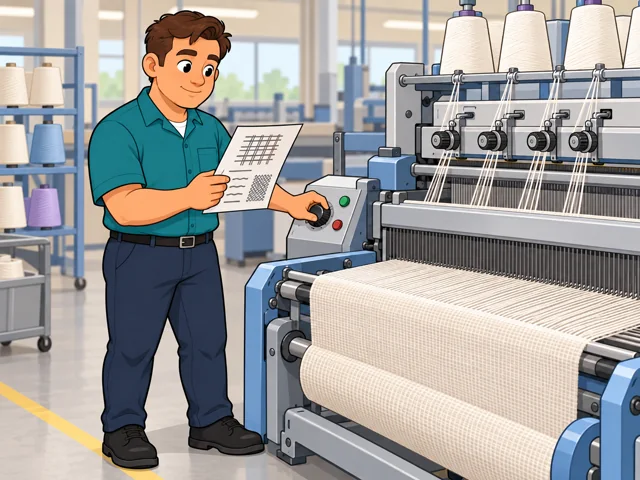
Set yarn tension and speed
First, you read the pattern or spec sheet, then set yarn tension and machine speed to match.
Career profile
Knitting and weaving machine operators keep yarn feeding into machines that make cloth.
As the cloth forms, you watch for flaws and work out which setting change will bring the machine back to making good fabric.
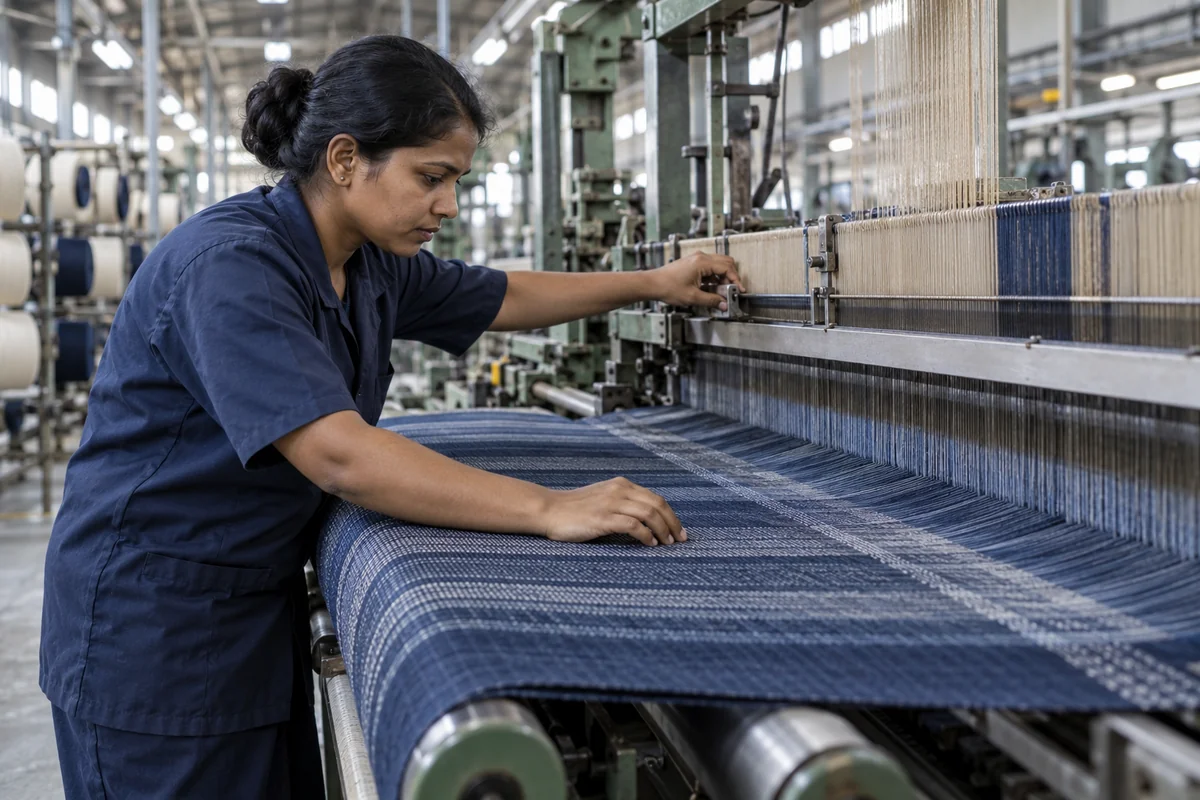
First, you read the pattern or spec sheet, then set yarn tension and machine speed to match.
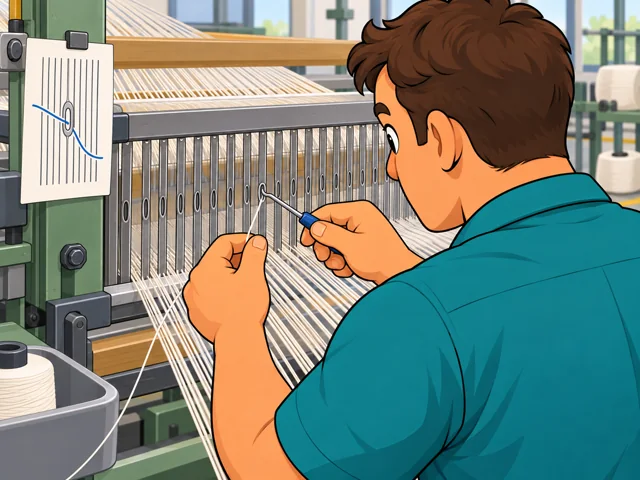
Following the pattern, you pull fine yarn through the bars and guides with careful hand-eye control.
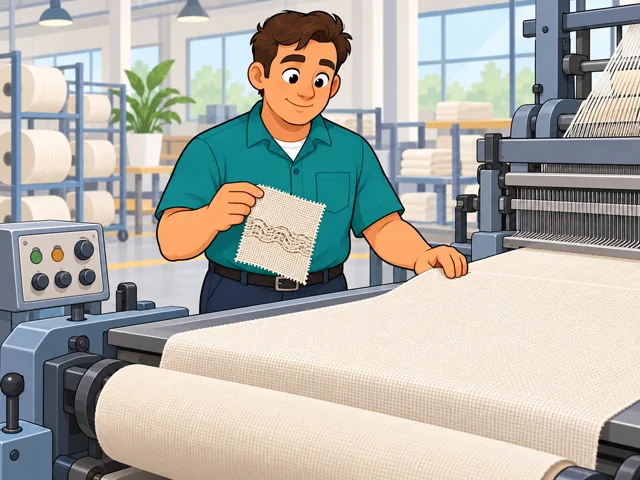
Study cloth as it leaves the machine, and if it's wrong, change settings, then inspect a trial piece.
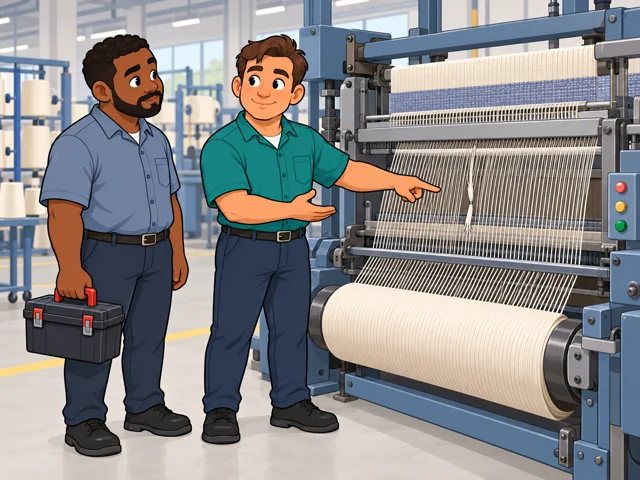
Search a stopped loom for snapped yarn or mechanical trouble, then report any needed repair to a technician.
United States · 2025
United States · 2025
United States · 2025–2035
Quick orientation
Typical entry combines a high school diploma or equivalent with short-term on-the-job training.
About $19.01 an hour; national 2025 wages for textile knitting and weaving machine setters, operators, and tenders.
Employment is projected to shrink during 2025–2035, with about 1,300 openings per year across the occupation.
Automated equipment can draw yarn through loom parts during setup, taking over some repetitive threading work.
Workers still identify cloth faults and trace mechanical problems so the right repair gets made.
How much threading becomes automated—and how much of your shift moves toward troubleshooting—will depend on the equipment a mill adopts.
Pay in context
The national median is $39,530 a year, or $19.01 an hour. It includes setters and tenders as well as operators, and is not a starting-pay promise.
In 2025, the lowest-paid 10% earned $29,960 or less annually; the highest-paid 10% earned $49,130 or more. These are wage percentiles, not beginner and experienced pay levels.
At Darlington Fabrics in Rhode Island, threader pay increases during training, and second and third shifts carry extra hourly pay. Ask which increases and shift premiums apply to the job you are considering.
The 2025–2035 projection combines a 13.7% employment decline with about 1,300 openings annually as workers leave or change occupations. Openings do not mean the workforce is growing.
A high school diploma or equivalent is the typical educational starting point. Training usually happens on the job; related experience is not typically required.
After entry
This starts where the entry routes leave off: early work, growing capability, and advancement or specialization.
Build reliable threading habits and learn to recognize common fabric faults.
Learn to adjust settings, verify them with test runs, and record what worked.
Some plants train experienced weavers for technician roles. At Milliken's Kingsley plant, senior-operator and relief-weaving proficiency come before technician classroom training and practice on the job.
Machine preparation can mean handling fine yarn through guide and needle bars, with repeated reaching and long periods on your feet. Evening and overnight schedules are possible.
You work around looms and coordinate with technicians when fabric defects or machine faults appear. Some plants use rotating shifts, so your working hours can change.
Try it
Weave paper strips over and under a second set of strips. Deliberately skip one crossing, then inspect the pattern to find it. Notice whether tracing and correcting a small defect holds your attention.