
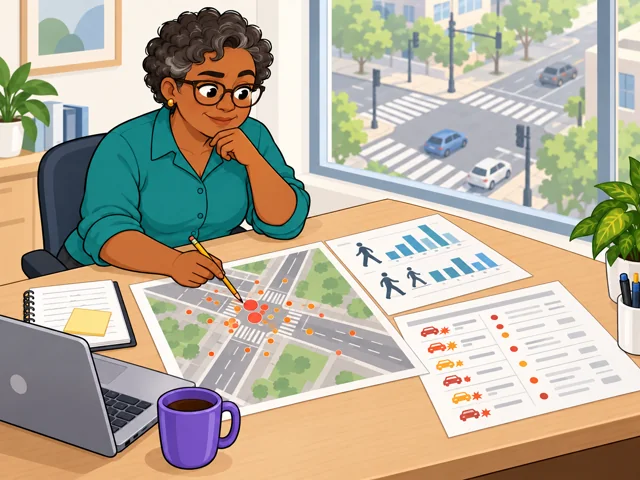
Match crashes to foot traffic
Lay crash records beside pedestrian counts for a problem intersection to learn what any change needs to fix.
Career profile
Transportation engineers plan roads and wider transport networks to fit how people travel.
Would changing an intersection let walkers cross safely while traffic keeps moving? You study it, weigh options and turn the chosen fix into engineering plans.
Lay crash records beside pedestrian counts for a problem intersection to learn what any change needs to fix.
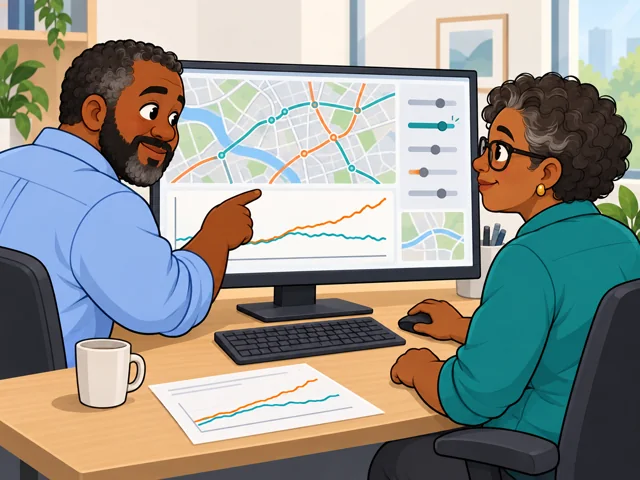
In modeling roles, you tune the simulation until its trip times match real ones before comparing designs.
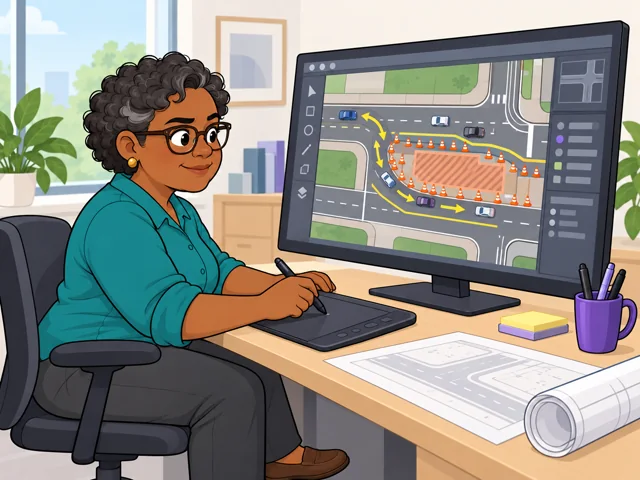
Draw the temporary traffic layout, signs and markings in design software so drivers can pass during construction.
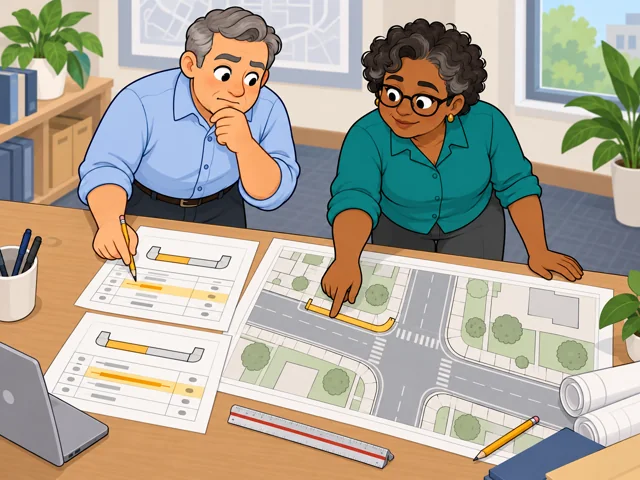
Cross-check drawings against calculations and cost estimates so the plan set is complete and consistent.

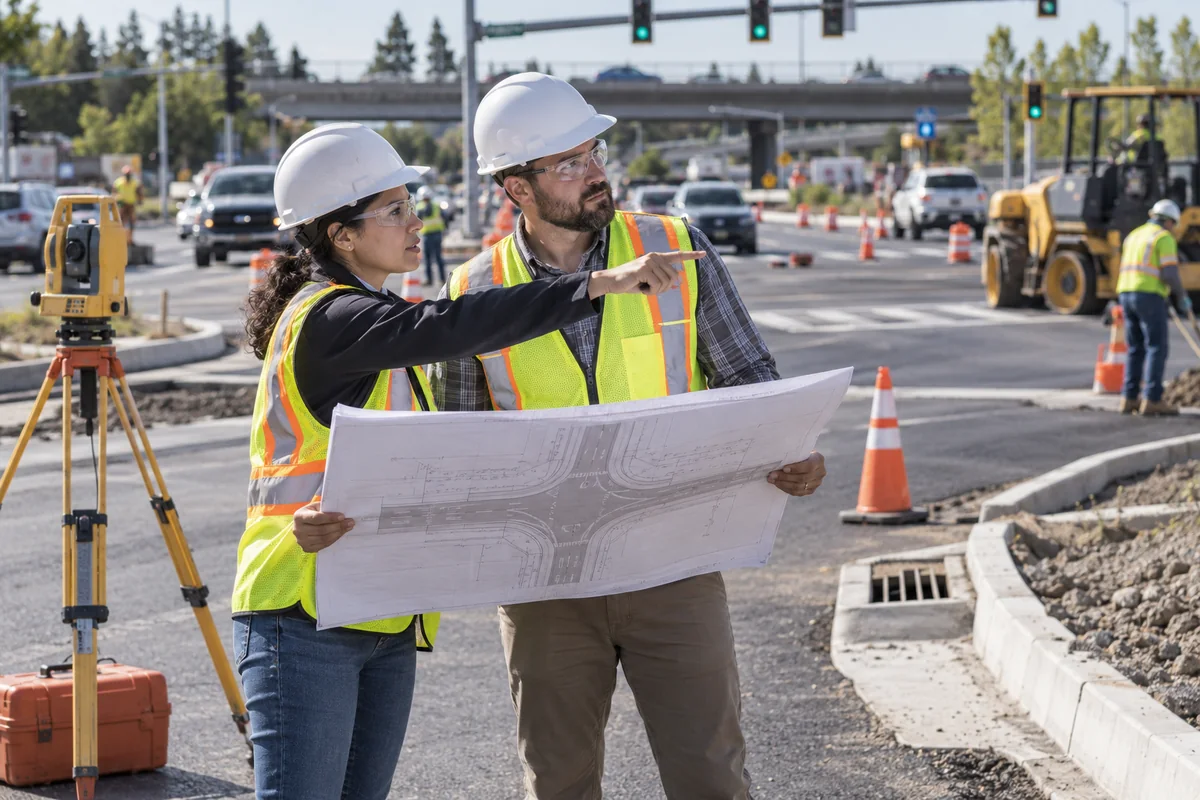
Bring maps and traffic findings to a public meeting to explain a planned road change and take questions.
United States
Pay depends on location and position; see the local salary ranges below.
Public transportation work depends partly on project funding.
Quick orientation
Civil engineering is a common starting point.
Pay depends on location and position; see the local salary ranges below.
Public transportation work depends partly on project funding.
Traffic simulation software can test how vehicles move through a design. Automated routines can also help adjust a model to match observed conditions.
You choose meaningful observations, investigate unrealistic results, and decide whether the model is reliable enough for the question.
How much model adjustment can become automatic remains uncertain: traffic patterns change with weather, incidents, and local driving behavior.
Pay in context
These national figures cover civil engineers, including transportation engineers; they are not transportation-specialty estimates. Your pay can vary with location, experience, and responsibility.
In May 2025, U.S. civil engineers had median pay of $100,840 a year, or $48.48 an hour. Half earned more and half earned less; this is not a starting salary.
Among civil engineers, the lowest-paid 10% earned less than $68,240 a year, while the highest-paid 10% earned more than $163,220. These thresholds describe the pay distribution, not stages in a career.
Civil-engineer annual medians were $100,620 in engineering services, $102,440 in state government, and $113,640 in local government. Government figures exclude education and hospitals. These averages of the middle wage do not compare identical jobs.
Civil-engineer employment is projected to grow 6% from 2025 to 2035, with about 22,700 openings a year on average. Openings include replacing people who leave the occupation. Public-project hiring can fluctuate with funding.
Most students begin with an engineering degree, then learn the employer’s design methods on the job. Entry-level work generally does not require a professional engineering license.
After entry
This starts where the entry routes leave off: early work, growing capability, and advancement or specialization. This path also has a credential or licensing boundary; see the requirements and limits.
Learn the drawing standards and calculation checks. Use review comments to make your next roadway plan clearer and more accurate.
Develop a traffic-signal or signing package, including drawings, estimates, and field checks that help the project reach construction.
Move toward traffic project engineer work: coordinate designers, review their work, and manage the project’s schedule and budget.
Your plans become construction contract documents. Office design work connects with field reviews along highways, sometimes in difficult weather or at night.
You work with other engineering specialties and a client’s project staff. The agreed scope, budget, and delivery date shape how you organize the work.
The focus is an operating street network: signal timing, coordination with neighboring cities, and improvements to existing intersections. Senior engineers also work with city officials and manage operations staff.
Try it
From a safe sidewalk, watch one intersection for ten minutes. Sketch where people cross and vehicles turn, then mark one place where their paths interact. Propose one question you would need data to answer before changing the layout. Notice whether connecting observations to a design problem interests you.
Stay safe: Stay out of the roadway and leave all traffic equipment alone. This is an observation exercise, not a safety assessment.