
Career profile

Tree Trimmer and Pruner

Tree trimmers prune limbs, remove damaged trees and help their crew steer where wood lands.

From a tree harness or a truck-mounted lift, you cut while teammates below handle lines. Each tree and its surroundings need muscle and careful choices.
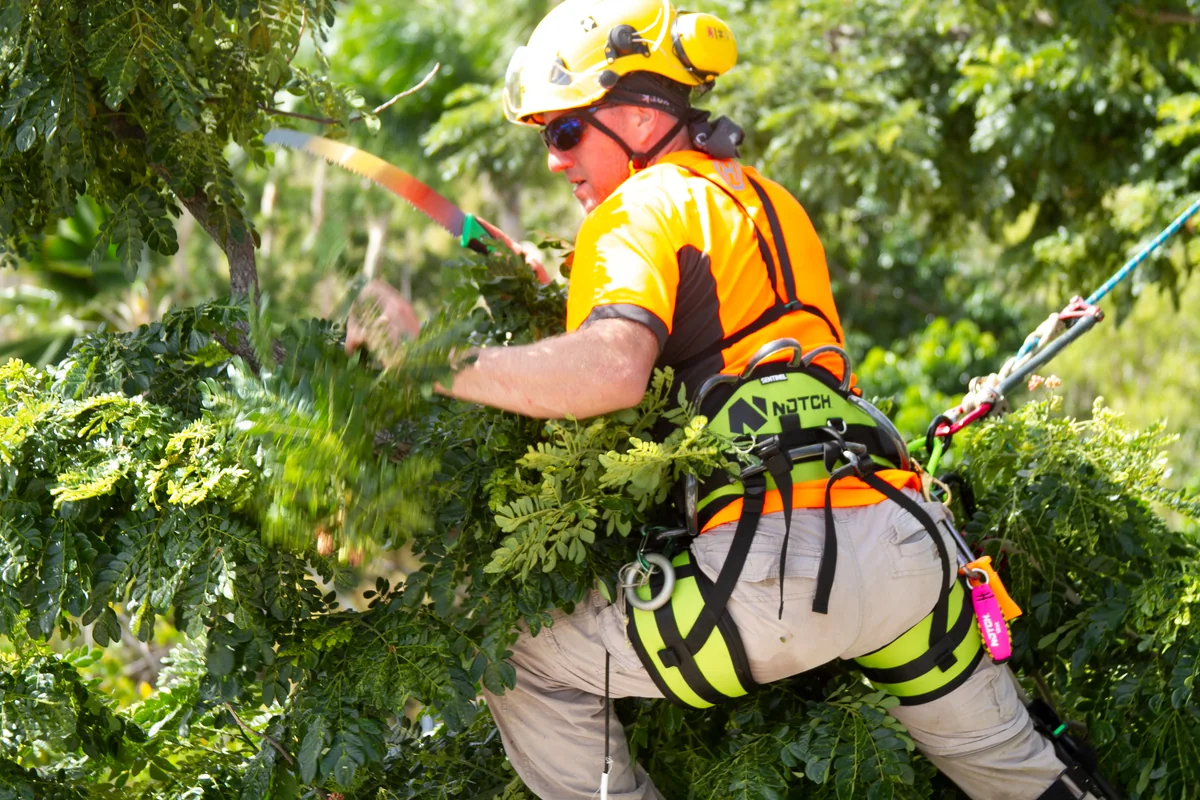
A tree care worker prunes branches while secured with climbing gear.
TreeMinion15 / Wikimedia Commons. CC BY-SA 4.0

A day in the life

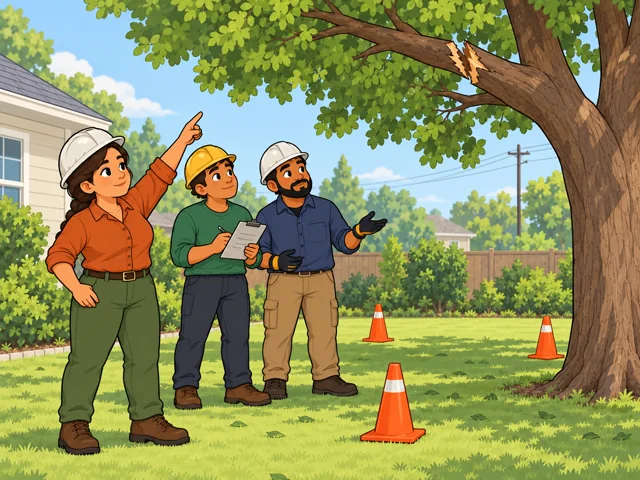
1A tree trimmer and two coworkers assess a damaged limb and discuss the clear work area beneath the tree.

Talk through the work zone

Before sawing, you and your crew look for broken or weak wood and nearby power lines or structures.
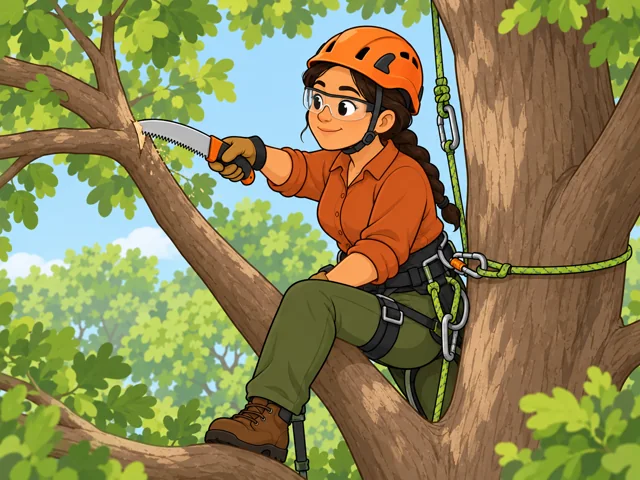
2Secured beside the trunk with climbing equipment, the tree trimmer carefully prunes a small branch with a handsaw.

Saw limbs by hand or power

Get into the canopy with climbing gear or an aerial lift, then cut off the chosen limbs.
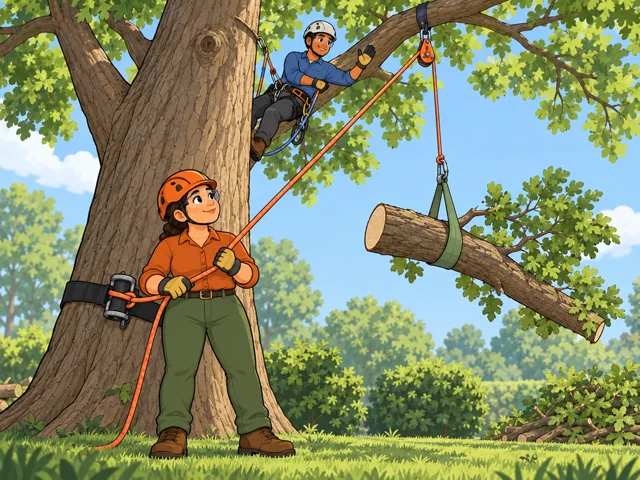
3The tree trimmer controls a lowering rope from outside the drop zone as a climber coordinates the descent of a cut limb.

Keep pace with the climber

Lower cut wood on ropes and send gear up, timing each move to what the climber is doing.
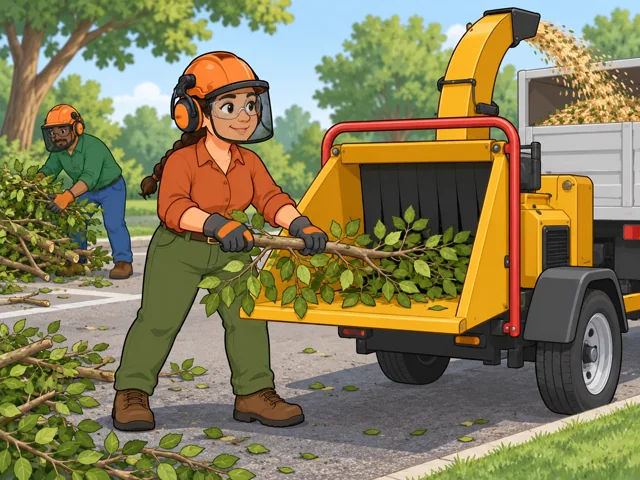
4The tree trimmer feeds a long branch into a brush chipper from the side while a coworker gathers remaining brush.

Chip brush and load wood

Cleanup is much of the work: gather branches, run the brush chipper and load wood to haul away.
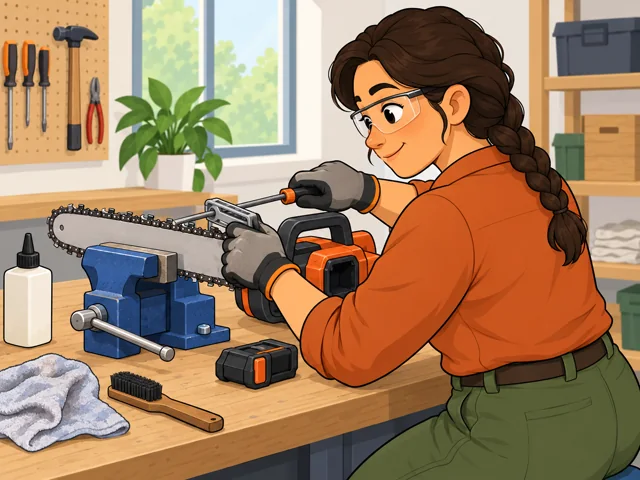
5At a workshop bench, the tree trimmer sharpens a secured chainsaw chain with its battery removed.

Tune up your tools

Clean, sharpen and oil the saws and other gear so it's ready before anyone uses it again.

Quick facts

Preparation

Learn on a tree crew

United States

Pay

$24.50/hour

United States · 2025

Outlook

4% projected growth

United States · 2025–2035

Quick orientation

Preparation, pay & outlook

Preparation

Learn on a tree crew

Entry jobs can provide training without previous tree-work experience. Employers set education and hiring requirements.

Geography
United States
Period
Not applicable

Pay

$24.50/hour

The national median was $50,960 a year in 2025.

Geography
United States
Period
2025

Outlook

4% projected growth

Employment of tree trimmers and pruners is projected to grow 4% from 2025 to 2035.

Geography
United States
Period
2025–2035

Fit, tradeoffs & changing tools

Things to weigh

  • Lifting, bending, weather, and loud equipment can make a day tiring.
  • Falls and falling branches can cause severe injuries. Protective equipment, equipment checks, and a controlled work area are part of the work.
  • Some municipal jobs include storm emergencies, which can interrupt a predictable schedule.

Where AI may help

On some removal jobs, a crane-mounted gripper and saw can hold, cut, and move sections of a tree. This equipment is called a grapple saw.

What people still lead

People assess the tree, choose the equipment position, operate the controls, and watch the work area.

What we can’t predict yet

How much climbing these machines will replace remains uncertain. Tight access and limited reach can still require a mix of machine work and workers in aerial lifts.

Pay in context

Earnings

The 2025 national median was $24.50 an hour, or $50,960 a year. Treat it as a midpoint across workers, not a starting offer.

The national spread

The lowest-paid 10% earned $37,940 a year or less; the highest-paid 10% earned $80,310 or more. These are wage percentiles, not beginner and expert salaries.

Geography
United States
Period
2025
Pay basis
Annual employee wage percentiles, 10th and 90th

Workplace type can matter

In May 2023, average pay was $25.13 an hour ($52,270 annually) in services to buildings and dwellings, versus $29.59 ($61,550 annually) in local government excluding schools and hospitals. These historical industry averages are not current offers.

Geography
United States
Period
May 2023
Pay basis
Industry mean hourly and annual employee wages for tree trimmers and pruners

Growth and replacement openings

The 2025–2035 forecast projects 4% employment growth. A separate, older 2024–2034 forecast estimated 7,400 openings a year, including replacement needs as well as growth.

Geography
United States
Period
2025–2035 growth; 2024–2034 annual openings
Pay basis
Employment projections, not compensation

Getting started

Join a ground crew

Paid
What the route involves
Apply for groundperson jobs that offer beginner training. Learn equipment care, brush handling, and crew support alongside experienced workers.
What it can lead to
You gain paid tree-crew experience and learn how work on the ground connects with the climber above.
What to check
Work near energized power lines requires specialized electrical-safety training; general tree-work experience alone is not enough.

Apply for an arborist apprenticeship

Paid
What the route involves
Combine paid work with a mentor and classroom instruction in tree care, including pruning, climbing, and lowering branches.
What it can lead to
Completing a registered program earns a portable apprenticeship credential and builds a broader set of tree-care skills.
What to check
Apply through an employer or program sponsor. Check its admission requirements, training schedule, and application dates; programs are not available everywhere.

You can enter through employer training or a structured apprenticeship. A college degree is not the usual starting requirement.

After entry

Career paths

This starts where the entry routes leave off: early work, growing capability, and advancement or specialization.

  1. Become dependable on the ground

    Build steady habits in brush handling, tool care, and supplying the climber. Learn to coordinate rope work with the rest of the crew.

  2. Develop aerial skills

    Build climbing, aerial-lift, and branch-lowering skills through further training. Learn how different trees change the work plan.

  3. Lead or specialize

    With experience, you may train newer workers and lead a crew, or develop skill in complex removals using cranes and grapple saws.

Where you can work

Residential tree-service crews

Homes, driveways, and narrow yards shape how you reach a tree and move the wood. Protecting nearby property is a constant planning concern.

  • Outdoors
  • Field work
  • Physical demands
  • Safety-sensitive

Utility line-clearance crews

You help keep branches clear of utility lines. Roadside jobs can also involve setting warning devices and managing traffic around the crew.

  • Outdoors
  • Field work
  • Physical demands
  • Safety-sensitive

Municipal forestry departments

You care for trees along public streets and green spaces. Some departments also use tree crews for storm cleanup and winter snow operations.

  • Outdoors
  • Field work
  • Physical demands
  • Safety-sensitive

Try it

See whether the job clicks before you commit to the path.

From a public path, sketch a tree and the space around it. Mark nearby buildings, walkways, and places a truck could reach. Write two questions you would ask before planning tree work. Notice whether studying the whole site interests you.

Stay safe: Stay on the ground and outside active work areas. Do not climb, cut, or approach wires; this is an observation exercise.

Explore more careers

Sources

  1. O*NET OnLine / U.S. Department of Labor. Tree Trimmers and Pruners. Accessed 2026-10-03.
  2. O*NET OnLine / U.S. Department of Labor. National Wages: Tree Trimmers and Pruners. Accessed 2026-10-03.
  3. U.S. Bureau of Labor Statistics. May 2023 Occupational Employment and Wage Estimates: Tree Trimmers and Pruners. Accessed 2026-10-03.
  4. U.S. Bureau of Labor Statistics. Grounds Maintenance Workers. Accessed 2026-10-03.
  5. Occupational Safety and Health Administration. Inspection Guidance for Tree Care and Tree Removal Operations. Accessed 2026-10-03.
  6. Occupational Safety and Health Administration. Clarification of 1910.269 as Applied to Line-Clearance Tree-Trimming Operations. Accessed 2026-10-03.
  7. The Davey Tree Expert Company. Groundperson | Line Clearance. Accessed 2026-10-03.
  8. Asplundh Tree Expert, LLC. Groundperson - Union. Accessed 2026-10-03.
  9. U.S. Department of Labor. Career Seekers: Registered Apprenticeship. Accessed 2026-10-03.
  10. Wisconsin Department of Workforce Development. Arborist Apprenticeship. Accessed 2026-10-03.
  11. City of Milwaukee. Urban Forestry Arborist Apprentice. Accessed 2026-10-03.
  12. GMT Equipment. Grapple Saws. Accessed 2026-10-03.
  13. Tree Jaws. Grapple Saw Truck Water Oak Removal. Accessed 2026-10-03.

Your message goes to the Great Jobs team. How we use your information