
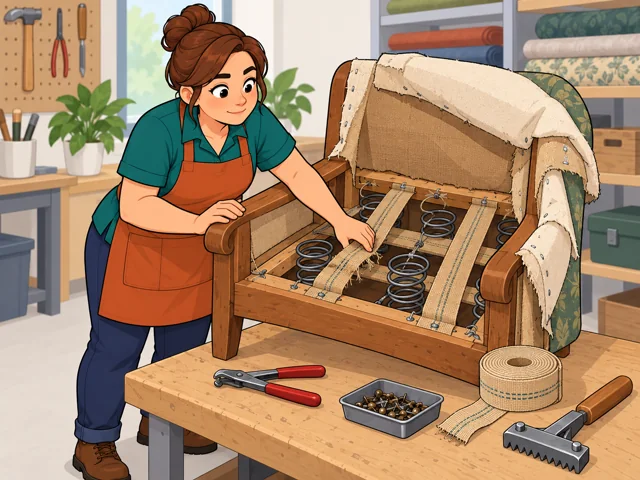
Find why a seat sags
Pull the worn cover off with a tack puller, examine the webbing and springs, and replace worn supports.
Career profile
Upholsterers build and repair the padding and fabric covers on furniture and vehicle seats.
Flat fabric turns into a snug cover in your hands, and that fit decides a seat's look as well as its comfort.
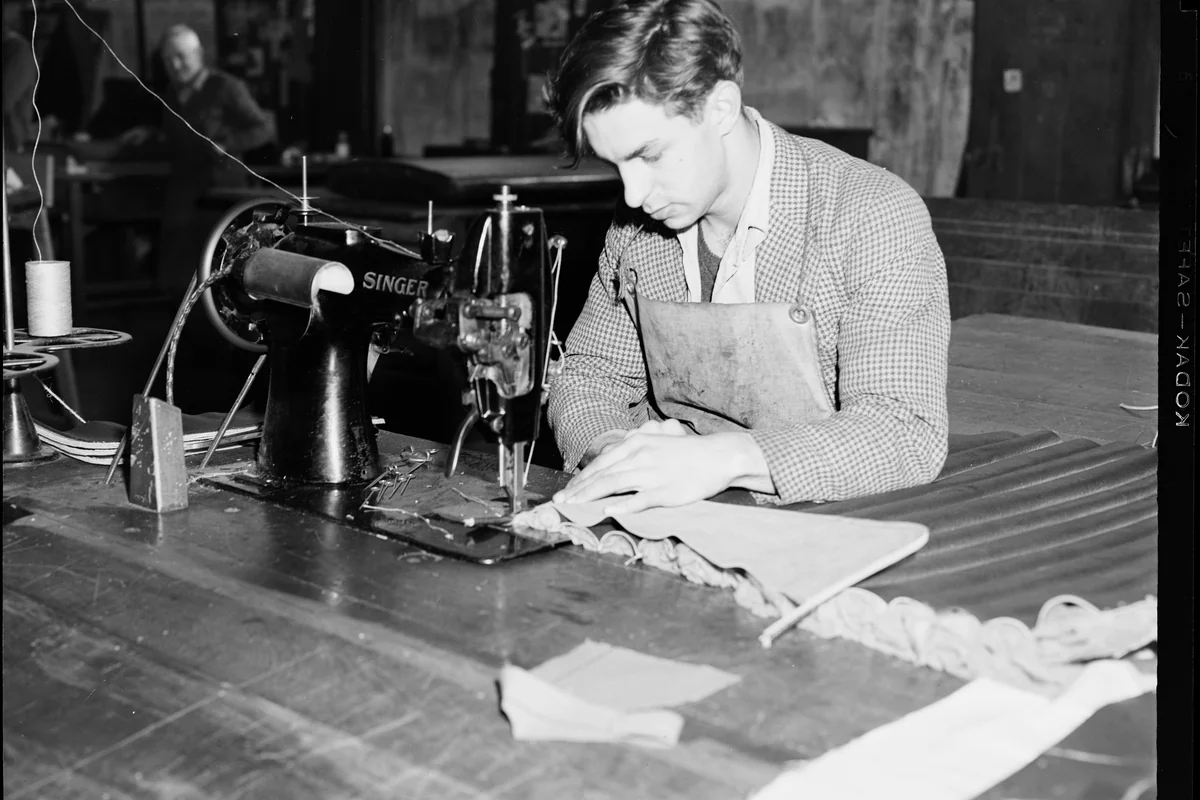
Pull the worn cover off with a tack puller, examine the webbing and springs, and replace worn supports.
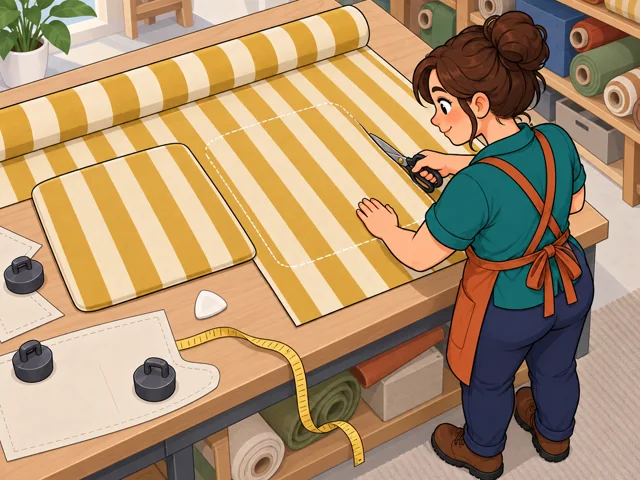
Measure, then cut the cover fabric so its design lines up across the pieces once they're joined.
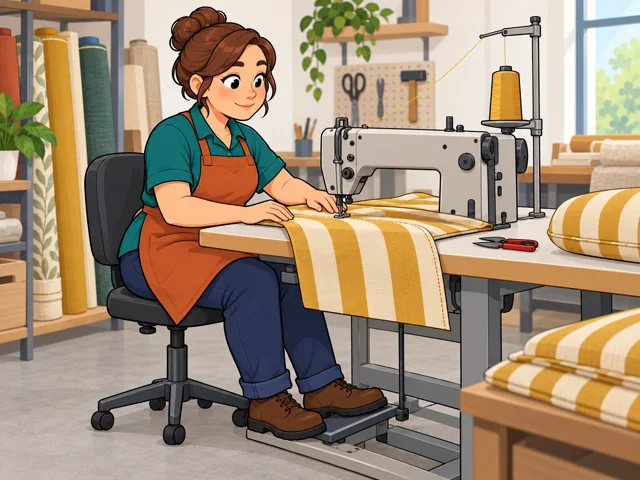
Feed the cut pieces through a heavy-duty industrial sewing machine to make a cushion cover.
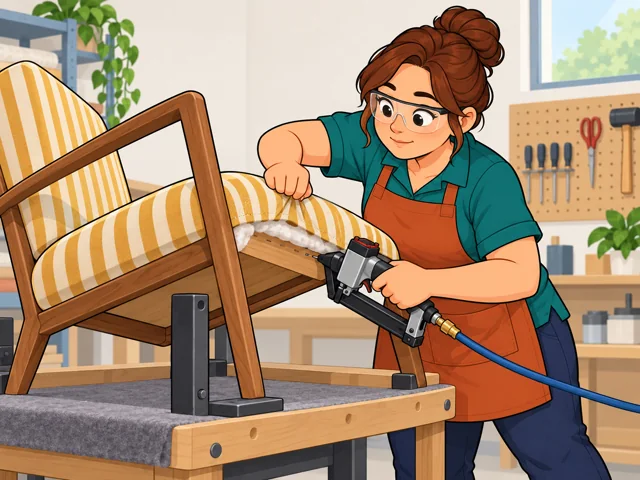
Add padding layers first, then lay the sewn cover on top and fasten it with an air stapler.
United States · 2025
United States · 2025
United States · 2025–2035
Quick orientation
A high school diploma or equivalent is typical; you learn the craft through training on the job.
National median employee pay in 2025, equivalent to $22.28 an hour.
Employment is projected to shrink during 2025–2035, with about 1,700 openings a year on average.
In furniture manufacturing, software can arrange pattern pieces to use fabric efficiently and send them to automated cutters.
You still inspect damaged supports and adjust the padding and cover to the actual piece.
How much cutting becomes automated will vary by shop; fitting and repairing irregular pieces may change differently from repeat production.
Pay in context
The national median is a useful reference, but it is not a starting offer.
In 2025, median pay was $46,340 a year, or $22.28 an hour. The lowest-paid 10% earned $31,690 or less; the highest-paid 10% earned $63,770 or more. These are wage percentiles, not beginner and expert rates.
A custom upholstery shop in Rancho Cordova and Rocklin, California, advertises $18–$30 an hour depending on experience. That is a local advertised range, not an average for repair shops nationwide.
The 2025–2035 projection combines a 2.3% employment decline with about 1,700 openings annually. Openings are not the same as newly created jobs.
Workplace training is the typical route. A technical-college program is another way to build the basic skills.
After entry
This starts where the entry routes leave off: early work, growing capability, and advancement or specialization.
After entry, work toward neat, repeatable results and catch defects before a piece leaves your station.
Develop from individual operations toward complete chairs or sofas, choosing materials and calculating how much you need.
Build expertise in spring tying, shaped chair backs or diamond tufting—the recessed button pattern used on some upholstered furniture.
You may receive precut, sewn covers and prepared components. Foremen coordinate production, and your work must fit the next step in the process.
Projects can change from one customer's furniture to another's. The job may include pickup, delivery and installation as well as bench work.
You travel to customers and repair furniture in their homes. Some employers expect you to supply your own tools and transportation.
Try it
Wrap a scrap of cloth around a small cushion without cutting or fastening it. Try to smooth the front while keeping the corner folds even. Notice whether you enjoy the repeated adjustments needed to make the surface look right.