
Career profile

Veterinarian

Veterinarians diagnose, treat and care for animals, piecing scattered clues together into one picture.

Detective work starts with a limp: examine the animal, make sense of what the checks show, then tell the owner what comes next.
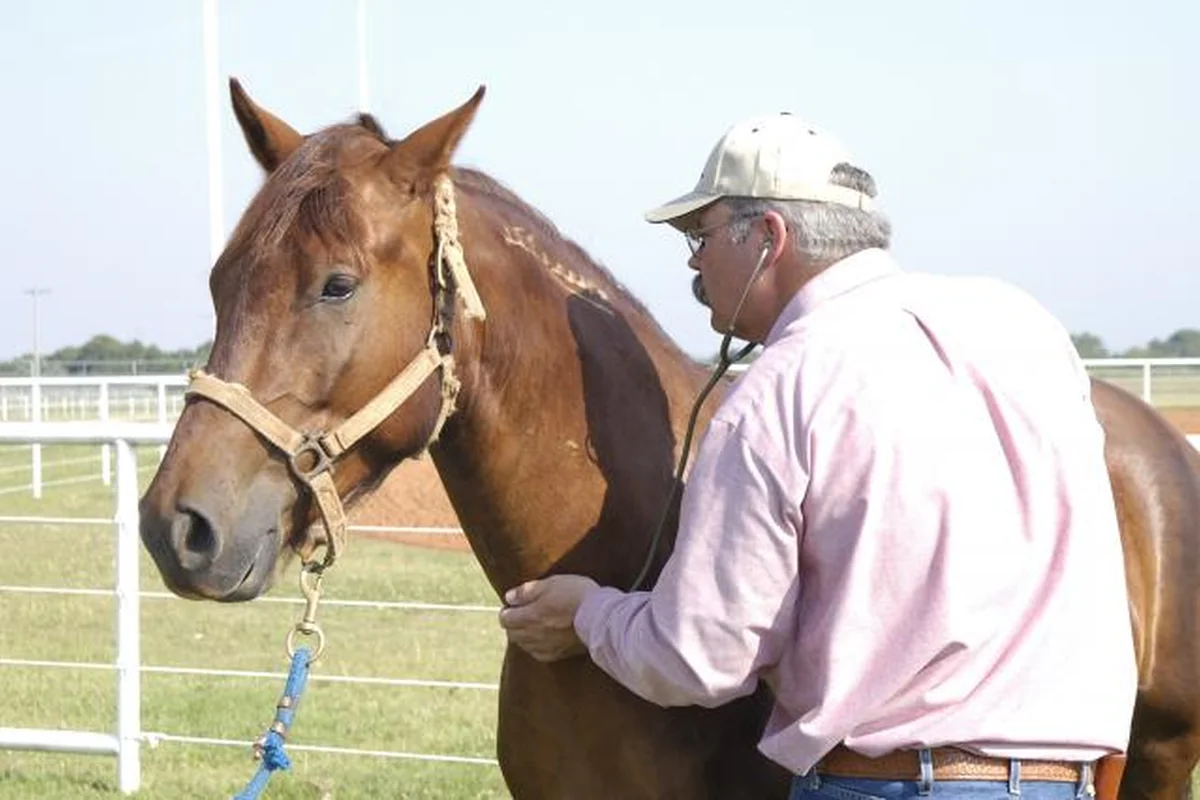
Veterinarian examines a horse outdoors.
blmcalifornia / Wikimedia Commons, Public domain

A day in the life

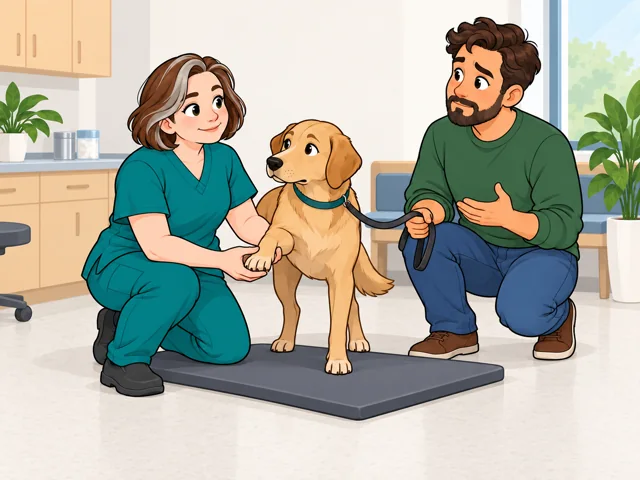
1A veterinarian kneels to examine a tan dog's raised front paw while its owner holds the leash and explains his concerns.

Question the owner, watch the walk

First ask the owner what changed, then watch the animal move and check its body for injury.
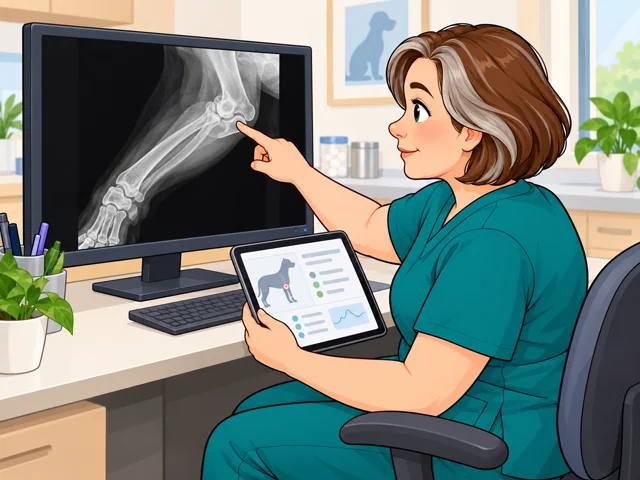
2A veterinarian studies a dog's forelimb X-ray and compares it with examination and test findings on a tablet.

Weigh the X-ray against the exam

Set the X-ray beside your hands-on exam and any test results to figure out the cause.
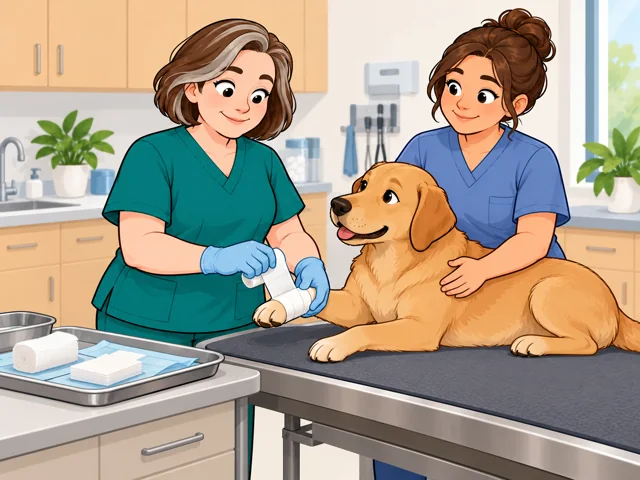
3A veterinarian dresses a dog's injured front paw while a coworker gently supports the animal.

Bandage, prescribe or operate

Depending on what this animal needs, you dress or clean a wound, write a prescription, or do surgery.
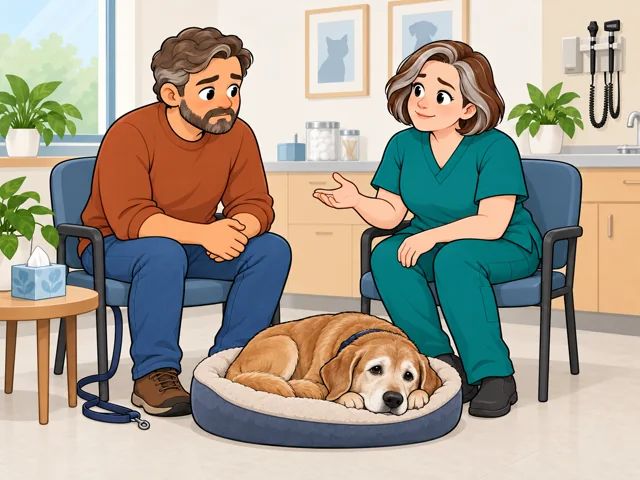
4A veterinarian talks gently with an owner about difficult care choices while his elderly dog rests beside them.

Help an owner face hard choices

Lay out each treatment choice plainly for the owner, and sometimes talk about euthanasia and the animal's pain.

5A veterinarian types examination findings and a treatment plan into a medical record while checking her notes.

Record findings and the plan

Write down your findings and the care plan so the rest of the veterinary team has clear details.

Quick facts

Preparation

Veterinary degree + license

United States · 2026

Pay

$130,100/year

United States · 2025

Outlook

9.4% projected growth

United States · 2025–2035

Quick orientation

Preparation, pay & outlook

Preparation

Veterinary degree + license

A Doctor of Veterinary Medicine (DVM) program typically takes four years after undergraduate prerequisites.

Geography
United States
Period
2026

Pay

$130,100/year

National median employee pay in 2025; hourly equivalent: $62.55.

Geography
United States
Period
2025

Outlook

9.4% projected growth

About 3,100 openings annually, averaged across 2025–2035. Local opportunities vary.

Geography
United States
Period
2025–2035

Fit, tradeoffs & changing tools

Things to weigh

  • Euthanasia and distressed owners can make the work emotionally heavy.
  • Frightened or hurting animals may bite, kick, or scratch.
  • Some jobs include long weeks, nights, weekends, and emergency calls.

Where AI may help

Software can help interpret animal X-rays. Some systems use artificial intelligence (AI) to identify patterns in images.

What people still lead

You still connect the image to the examination, decide on treatment, and explain the reasoning to the owner.

What we can’t predict yet

How much image interpretation can be automated depends partly on whether tools work reliably across animals with very different sizes and anatomy.

Pay in context

Earnings

The median is a midpoint across working veterinarians, not a starting offer. These employee wages exclude self-employed practice owners.

The national spread

In 2025, median pay was $130,100 annually, equivalent to $62.55 hourly. The 10th percentile was $73,920 and the 90th was $215,700. These are wage positions, not career stages.

Geography
United States
Period
2025
Pay basis
Gross employee wages; annual amounts and published hourly equivalent

Workplace type matters

Annual medians were $129,990 in veterinary services, $121,890 in educational services, and $115,210 in government, excluding state and local education and hospitals.

Geography
United States
Period
May 2025
Pay basis
Median annual employee wages by industry

Openings include replacements

Employment is projected to grow 9.4% during 2025–2035. The roughly 3,100 annual openings include replacing people who leave the occupation, not just newly created jobs.

Geography
United States
Period
2025–2035
Pay basis
Employment projections, not compensation

Getting started

Complete a bachelor’s degree, then veterinary school

Typically about eight years of education after high school.
What the route involves
Complete college prerequisites within a bachelor’s degree, apply competitively, then study animal medicine and complete clinical training in an accredited DVM program.
What it can lead to
Graduation supplies the professional education needed to pursue licensure.

Apply after prerequisites, before finishing a bachelor’s

What the route involves
At schools that allow it, complete the required undergraduate courses and apply without a finished bachelor’s degree. If admitted, complete the veterinary program.
What it can lead to
You can reach the same professional degree without first completing a separate undergraduate degree.
What to check
Check each school’s course, experience, and degree requirements; eligibility does not guarantee admission.

Both routes lead through veterinary school. You then need approval to take the North American Veterinary Licensing Examination (NAVLE), a passing result, and completion of your state’s licensing requirements.

After entry

Career paths

This starts where the entry routes leave off: early work, growing capability, and advancement or specialization.

  1. Get established

    In your first veterinarian job, seek regular coaching on cases and learn the hospital’s records and team routines.

  2. Build clinical range

    Use continuing education and case discussions to strengthen an area you find difficult, then apply that learning in practice.

  3. Specialize or lead

    Surgical specialization adds an internship or equivalent, a residency of at least three years, research publication, credential review, and examinations.

    • Move toward clinical leadership, helping guide other veterinarians and the hospital’s care.

Where you can work

Pet hospitals

You work with a veterinary team around appointments, medical records, and conversations with owners. Preventive visits sit alongside treatment for illness.

  • Indoors
  • Safety-sensitive

Farms and ranches

In traveling horse or food-animal practice, driving and outdoor weather become part of the day. You may treat animals or perform surgery far from a hospital.

  • Outdoors
  • Field work
  • Travel
  • Physical demands

Try it

See whether the job clicks before you commit to the path.

Imagine an owner says, “My dog has started limping.” Write five questions you would ask before deciding what to examine. Then mark what you still could not know without an exam or tests. Notice whether gathering clues and explaining uncertainty interests you.

Stay safe: Keep this hypothetical; do not test an animal’s movement, diagnose it, or try a treatment.

Explore more careers

Sources

  1. O*NET OnLine. 29-1131.00 — Veterinarians. Accessed 2026-10-04.
  2. O*NET OnLine / U.S. Bureau of Labor Statistics. National Wages: Veterinarians. Accessed 2026-10-04.
  3. U.S. Bureau of Labor Statistics. Occupational projections and worker characteristics. Accessed 2026-10-04.
  4. U.S. Bureau of Labor Statistics. Occupational Outlook Handbook: Veterinarians. Accessed 2026-10-04.
  5. American Association of Veterinary Medical Colleges. Veterinary Medical Education. Accessed 2026-10-04.
  6. American Association of Veterinary Medical Colleges. Veterinary Medical College Application Service: 2026 Applicant Guide. Accessed 2026-10-04.
  7. International Council for Veterinary Assessment. North American Veterinary Licensing Examination. Accessed 2026-10-04.
  8. Veterinary Clinics of North America: Small Animal Practice. Artificial Intelligence-Assisted Interpretation of Veterinary Radiographs: Opportunities, Risks, and Best Practices for Clinicians. Accessed 2026-10-04.
  9. Cornell University College of Veterinary Medicine. New horizons: Artificial intelligence in veterinary medicine. Accessed 2026-10-04.
  10. Banfield Pet Hospital. Veterinarian opportunities. Accessed 2026-10-04.
  11. Banfield Pet Hospital. New opportunities for veterinary graduates. Accessed 2026-10-04.
  12. American College of Veterinary Surgeons. Certification. Accessed 2026-10-04.

Your message goes to the Great Jobs team. How we use your information