
Career profile

Veterinary Technician

Veterinary technicians combine hands-on animal nursing, lab work and conversations with animal owners.

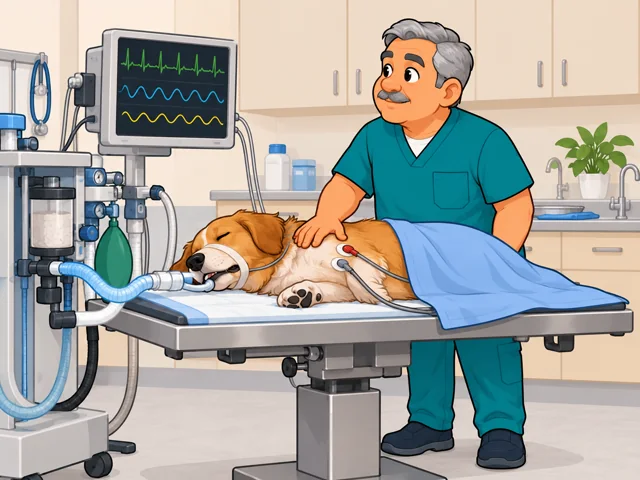
During surgery, your attention stays on how the animal is handling the anesthetic. Spotting a change and telling the veterinarian is central to the job.
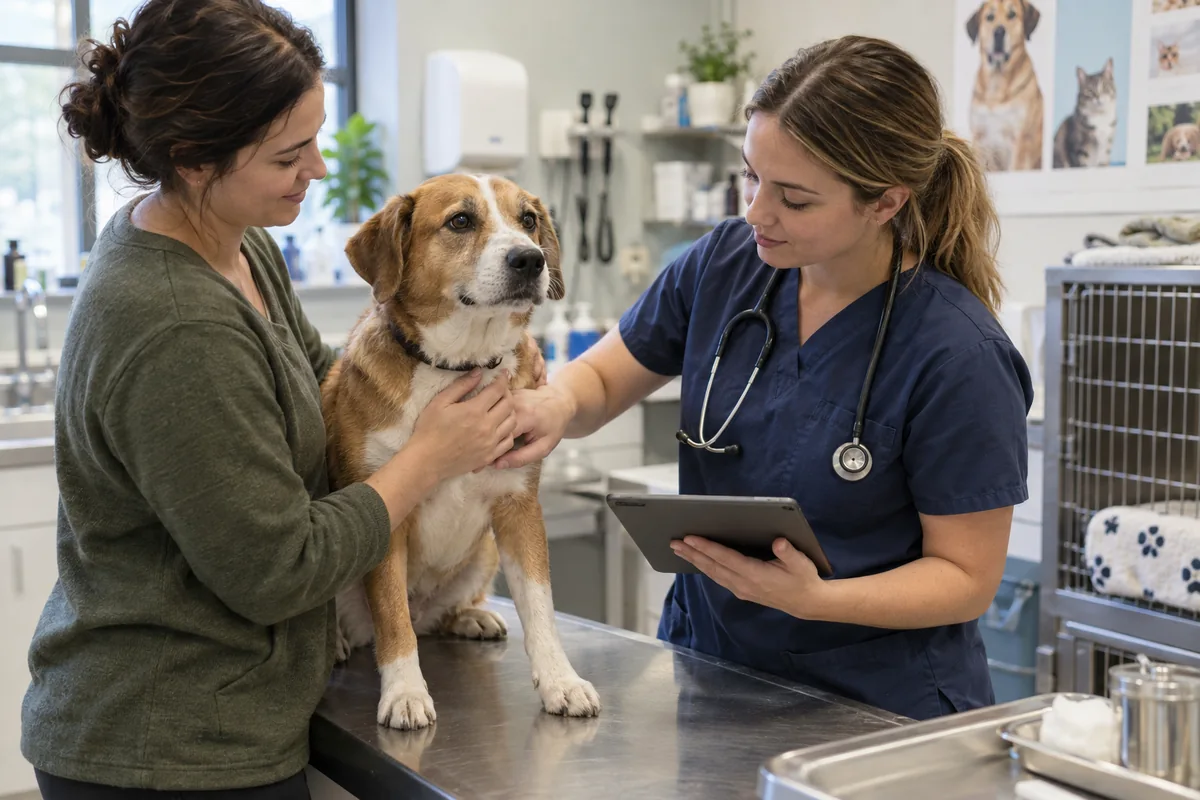
A veterinary technician examining a dog with its owner nearby.

A day in the life

1A veterinary technician watches an anesthetized dog's breathing while checking its monitoring equipment.

Track an anesthetized patient

Keep watching the animal and the monitor readings under anesthesia, and alert the veterinarian whenever something changes.
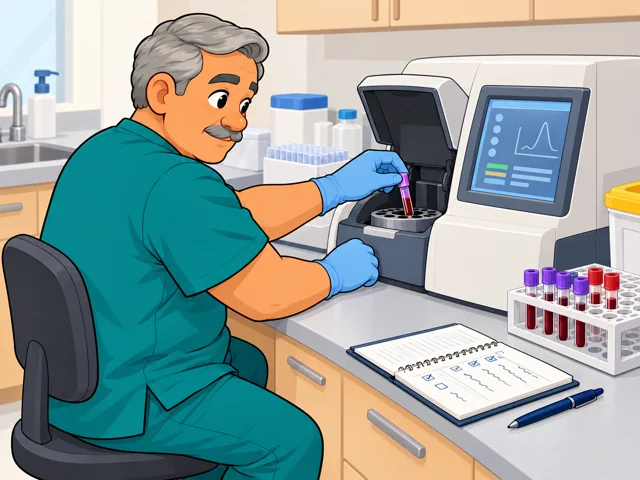
2A gloved veterinary technician loads a blood sample into a laboratory analyzer beside a results record.

Test a blood or urine sample

Write down what the test shows, and at some clinics an analyzer handles part of the cell exam.
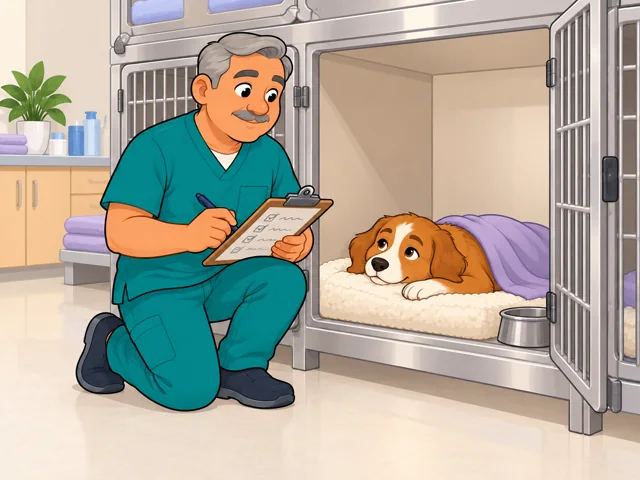
3A veterinary technician kneels beside a recovering dog and records observations on a clipboard.

Check on a patient after surgery

Watch how the animal is recovering and note any changes for the technician taking over later.

4A veterinary technician demonstrates an oral medicine syringe and listens as a dog owner asks a home-care question.

Coach an owner on medicine

Explain to the owner how to give the vet's prescribed medicine at home, then leave room for questions.

Quick facts

Preparation

Associate’s degree

United States

Pay

$47,380/year

United States · May 2025

Outlook

9.4% growth

United States · 2025–2035

Quick orientation

Preparation, pay & outlook

Preparation

Associate’s degree

A veterinary technology program is the usual starting point.

Geography
United States
Period
Not applicable

Pay

$47,380/year

Median for veterinary technologists and technicians combined; $22.78 an hour.

Geography
United States
Period
May 2025

Outlook

9.4% growth

Projected for veterinary technologists and technicians combined.

Geography
United States
Period
2025–2035

Fit, tradeoffs & changing tools

Things to weigh

  • Lifting and restraining animals takes physical effort; frightened animals can bite or scratch.
  • You may help with euthanasia and spend time with grieving owners.
  • Some jobs include evenings, weekends and holidays.

Where AI may help

Some clinics use machines that analyze cells and send results into patient records, reducing manual lab steps.

What people still lead

You still prepare samples, handle the animal and connect observations at the cage with information on a screen.

What we can’t predict yet

How much routine slide work shifts to machines—and how much checking remains with technicians—will depend on the tests and equipment a clinic adopts.

Pay in context

Earnings

When comparing jobs, ask about base pay, extra pay for nights or weekends, and benefits alongside the hourly rate.

The national midpoint

The median was $47,380 a year, or $22.78 an hour. These figures cover veterinary technologists and technicians together; technician-only pay is not reported separately.

Geography
United States
Period
May 2025
Pay basis
National employee wages; annual and hourly medians for SOC 29-2056.

The national spread

For the same combined group, the 10th-percentile annual wage was $35,710 and the 90th-percentile wage was $63,180. These describe the wage distribution, not starting and senior salaries.

Geography
United States
Period
May 2025
Pay basis
National employee annual wages, 10th and 90th percentiles.

Openings over the next decade

Employment in the combined group is projected to grow 9.4%, with about 13,400 openings a year on average, including replacement openings. That does not predict hiring in your town.

Geography
United States
Period
2025–2035
Pay basis
Employment projection and average annual openings; not compensation.

Getting started

Study through a campus program

What the route involves
Complete a veterinary technology associate’s program with classroom and practical training. Look for American Veterinary Medical Association accreditation.
What it can lead to
An accredited program provides a standard eligibility pathway to the Veterinary Technician National Exam (VTNE), subject to the jurisdiction’s requirements.

Pair online classes with clinical mentorship

What the route involves
In an accredited distance program such as Purdue’s, study online and build hands-on skills at a veterinary clinic with a licensed veterinarian or credentialed technician.
What it can lead to
You can earn an associate’s degree through distance study and pursue the accredited-program pathway to VTNE eligibility.
What to check
Clinical skills require in-person practice. Confirm the program’s mentorship arrangements before enrolling.

You work under a licensed veterinarian’s supervision. Start by comparing qualifying programs and the credential rules where you plan to work.

After entry

Career paths

This starts where the entry routes leave off: early work, growing capability, and advancement or specialization. This path also has a credential or licensing boundary; see the requirements and limits.

  1. Get established

    Learn the clinic’s records and lab routines, and give clear patient handovers between shifts.

  2. Build clinical confidence

    Deepen your anesthesia and recovery skills, especially noticing changes and reporting them promptly.

  3. Develop a specialty

    Explore a Veterinary Technician Specialist (VTS) credential in an area such as anesthesia or emergency care. Each specialty academy sets its advanced requirements.

Where you can work

Private veterinary clinic

You move between animal care, lab tests and conversations with owners about care at home.

  • Indoors
  • Lab
  • Physical demands

Emergency teaching hospital

You may move between walk-in emergencies and hospitalized critical patients, working with clinicians and helping teach students. Overnight and holiday coverage can be part of the schedule.

  • Indoors
  • Shift work
  • Physical demands
  • Safety-sensitive

Try it

See whether the job clicks before you commit to the path.

Try a paper-only recovery handover. Invent three timed observations of a dog waking after surgery, using only visible actions such as lifting its head. Give a 30-second report that separates observations from guesses. Notice whether you enjoy precise notes and clear communication.

Stay safe: This is a writing exercise, not a guide to monitoring or treating an animal.

Explore more careers

Sources

  1. O*NET OnLine. Veterinary Technologists and Technicians — 29-2056.00. Accessed 2026-10-11.
  2. U.S. Bureau of Labor Statistics. Veterinary Technologists and Technicians — Occupational Outlook Handbook. Accessed 2026-10-11.
  3. U.S. Bureau of Labor Statistics. Occupational Employment and Wage Statistics — May 2025 national estimates, SOC 29-2056. Accessed 2026-09-29.
  4. U.S. Bureau of Labor Statistics. Employment Projections, Table 1.2 — 2025–2035, SOC 29-2056. Accessed 2026-09-29.
  5. American Association of Veterinary State Boards. Veterinary Technician National Exam. Accessed 2026-10-11.
  6. American Association of Veterinary State Boards. Review Your Pathway. Accessed 2026-10-11.
  7. Purdue University. Veterinary Technology Distance Learning Program. Accessed 2026-10-11.
  8. Purdue University. Clinical Mentorship for Distance Learners. Accessed 2026-10-11.
  9. National Association of Veterinary Technicians in America. Veterinary Technician Specialties. Accessed 2026-10-11.
  10. IDEXX. IDEXX inVue Dx Cellular Analyzer. Accessed 2026-10-11.
  11. University of Florida. ICU & ER Veterinary Technician I/II — job 540232. Accessed 2026-10-11.

Your message goes to the Great Jobs team. How we use your information