

Career profile

Water and Wastewater Engineer

Water/wastewater engineers design pipes, pumps and treatment for drinking water and releasing or reusing wastewater.

Why does water pressure sag in just one neighborhood? A software model lets you test the likely causes, then figure out which fixes would help.
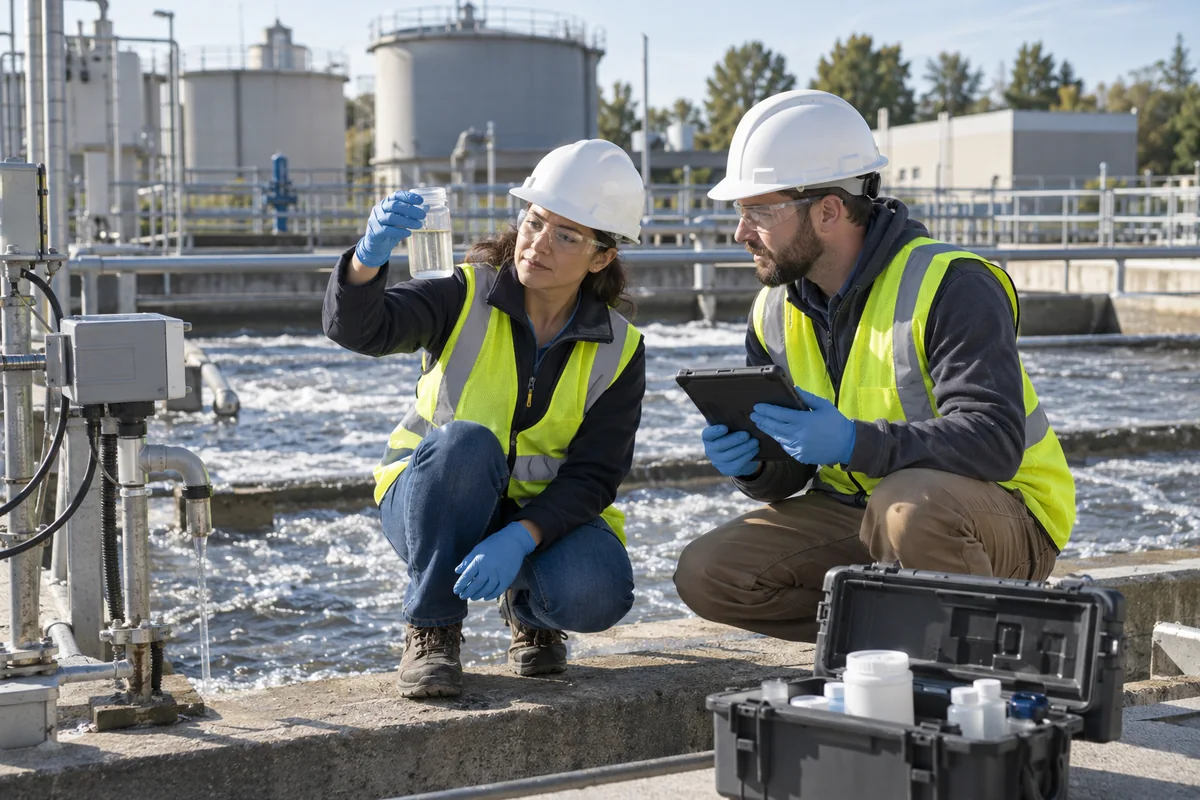
An adult water and wastewater engineer inspecting treatment tanks and sampling equipment with a colleague at a municipal water treatment plant.

A day in the life

1A water engineer tests a pipe change on a computer, comparing pressure patterns in two versions of a water-network model.

Model fixes before anything's built

Model the water network, find where pressure drops, and see whether a pipe or pump change helps.
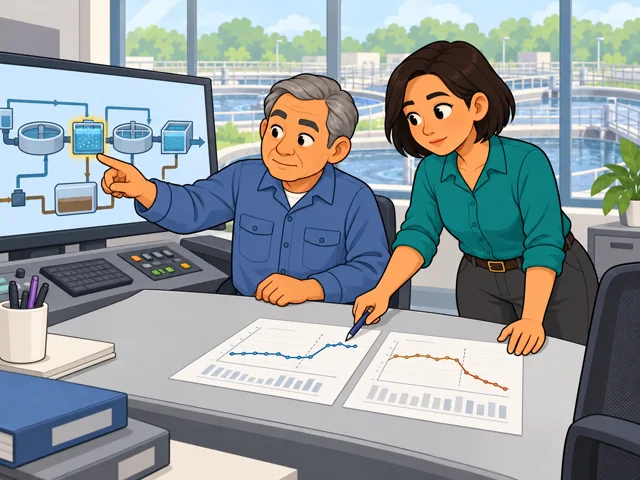
2The engineer and an older coworker compare laboratory results with plant operating trends to investigate a change in treatment quality.

Chase a drop in treatment

Set lab results beside plant logs, and when they worsen, study the process with operators and test fixes.
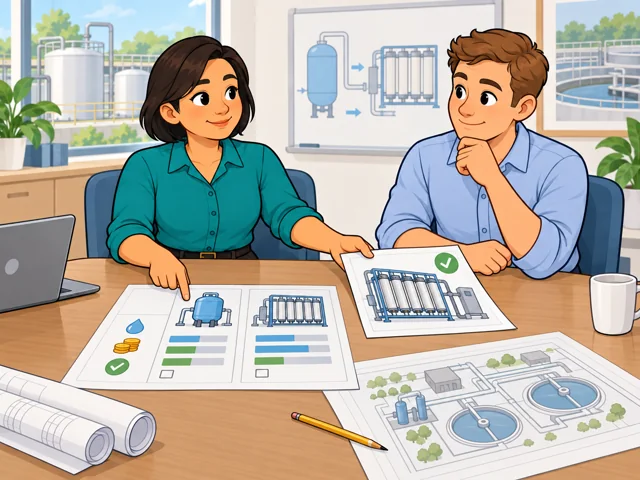
3The engineer recommends treatment equipment to a coworker after comparing water-quality performance and costs.

Pick an upgrade option

Weigh treatment methods and equipment against water-quality rules and cost, then recommend one for the plant upgrade.
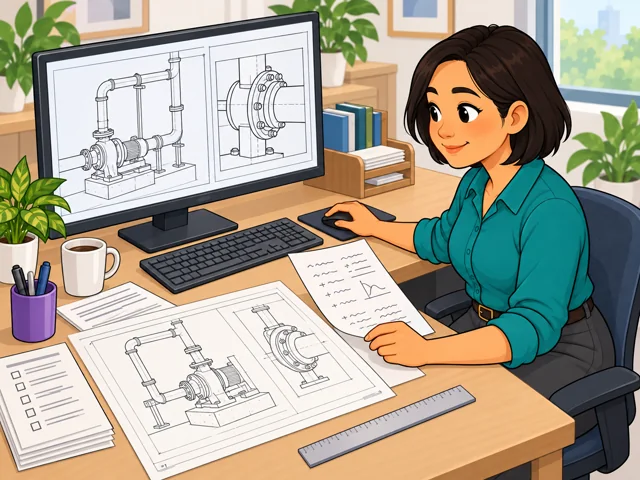
4The engineer turns calculations into construction drawings, refining a pipe connection and preparing equipment specifications.

Draw plans and write specifications

Map pipe routes and equipment details in drawing software, then write specifications telling contractors what to build.
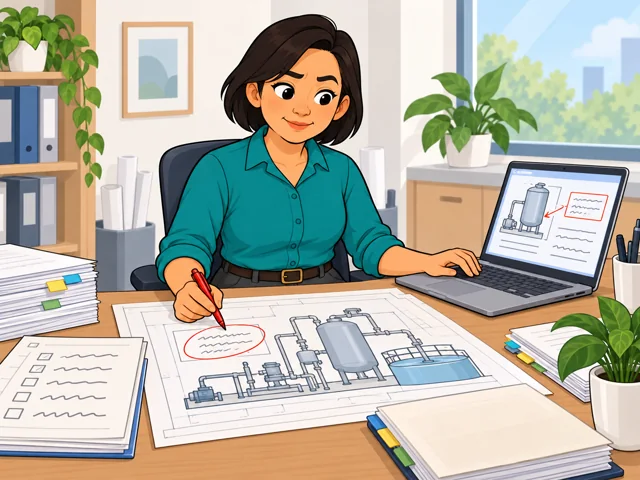
5In a regulatory review role, the engineer checks a treatment plan against permit requirements and drafts a specific comment requesting a calculation revision.

Send pointed comments to designers

In regulatory jobs, you check proposed treatment plans against permits and flag calculations or equipment to fix.

Quick facts

Preparation

Usually a bachelor's degree

United States

Pay

Not displayed

Salary ranges differ by role and location.

Outlook

Not displayed

Water-system repairs and treatment upgrades create project work, while public funding affects which projects move ahead.

Quick orientation

Preparation, pay & outlook

Preparation

Usually a bachelor's degree

Engineering study provides the usual foundation for this work.

Geography
United States
Period
Not applicable

Pay

Not displayed

Salary ranges differ by role and location.

Geography
United States
Period
Not applicable

Outlook

Not displayed

Water-system repairs and treatment upgrades create project work, while public funding affects which projects move ahead.

Geography
United States
Period
2025–2035

Fit, tradeoffs & changing tools

Things to weigh

  • Much of the work happens at a desk, checking calculations and working through documents.
  • Project deadlines can stretch the workweek, especially when you are responsible for keeping a design on schedule.
  • Plant visits can involve noise, stairs, and exposure to biological or chemical hazards.

Where AI may help

Software calculates pipe pressure and pumping energy. Drinking-water modeling tools can also connect models to live operating data.

What people still lead

You judge whether equipment will fit the plant's needs and work through design questions with operators and construction staff.

What we can’t predict yet

How far automated analysis will take over choosing designs remains uncertain, especially when actual system behavior differs from the model.

Pay in context

Earnings

These national benchmarks cover civil engineers broadly, including water and wastewater engineers. They give you context for comparing jobs, rather than a specialty-only estimate or a starting-pay promise.

National pay and spread

Median pay was $100,840 a year ($48.48 an hour). The lowest-paid 10% earned below $68,240; the highest-paid 10% earned above $163,220. These thresholds describe the workforce, not career stages.

Geography
United States
Period
May 2025
Pay basis
Civil-engineer wages; annual and hourly median, with annual 10th- and 90th-percentile thresholds.

Pay across workplaces

Annual medians were $100,620 in engineering services, $102,440 in state government, and $113,640 in local government. Government figures exclude education and hospitals; these comparisons cover all civil-engineering specialties.

Geography
United States
Period
May 2025
Pay basis
Median annual civil-engineer wages by industry.

Projected openings

Civil-engineer employment is projected to grow 6%, with about 22,700 openings a year on average. Many openings replace people leaving the occupation or retiring.

Geography
United States
Period
2025–2035
Pay basis
Employment growth and average annual openings for civil engineers broadly; not a pay measure.

Getting started

Build the engineering foundation

What the route involves
Complete an engineering bachelor's degree. Civil and environmental engineering are common choices for water work.
What it can lead to
Meet the degree requirement for many junior roles and learn the mathematics behind design calculations.
What to check
For the usual licensure route, check for Engineering Accreditation Commission accreditation through ABET, formerly the Accreditation Board for Engineering and Technology.

Join a junior water-design team

What the route involves
After your engineering degree, prepare calculations and construction drawings alongside experienced staff.
What it can lead to
Build experience connecting a design on screen with field conditions and construction requirements.
What to check
Entry jobs generally do not require a Professional Engineer license. Your early work is reviewed by experienced engineers.

The usual sequence is an engineering degree followed by a junior engineering job. Internships can add practical experience during college.

After entry

Career paths

This starts where the entry routes leave off: early work, growing capability, and advancement or specialization. This path also has a credential or licensing boundary; see the requirements and limits.

  1. Get established

    Learn to produce calculations and drawings that others can check, and connect them with what you observe in the field.

  2. Carry a design further

    Take an equipment recommendation through design review, contractor questions, and testing after installation.

  3. Lead or specialize

    With experience and applicable licensure, lead a treatment-upgrade project, guide junior engineers, or develop deeper expertise in treatment equipment and processes.

Where you can work

Engineering consulting firm

You prepare designs and construction documents for clients, then check work in the field. Some roles include extended travel to project sites.

  • Office
  • Field work
  • Travel

Water or wastewater utility

In a treatment-process role, you stay close to an operating plant, working with operators on performance problems and improvements to existing equipment.

  • Office
  • Field work
  • Safety-sensitive

State environmental agency

Your work centers on reviewing proposed facilities, resolving technical questions with designers, and inspecting treatment sites for compliance.

  • Office
  • Field work

Try it

See whether the job clicks before you commit to the path.

Sketch a water tank supplying three streets through pipes. Imagine water use doubles on one street. Mark where you would want pressure measurements, then compare a larger pipe with added storage. Write what you would need to know before choosing. Notice whether turning a service problem into design questions interests you.

Explore more careers

Sources

  1. O*NET OnLine. Water/Wastewater Engineers — 17-2051.02. Accessed 2026-10-04.
  2. U.S. Bureau of Labor Statistics. Civil Engineers — Occupational Outlook Handbook. Accessed 2026-10-04.
  3. U.S. Bureau of Labor Statistics. Occupational Projections and Worker Characteristics. Accessed 2026-10-03.
  4. U.S. Environmental Protection Agency. EPANET. Accessed 2026-10-03.
  5. U.S. Environmental Protection Agency. Enhancements to the EPANET-RTX (Real-Time Analytics) Software Libraries-2015. Accessed 2026-10-03.
  6. Iowa Department of Natural Resources. Environmental Engineer — Wastewater, 26-03464. Accessed 2026-10-03.
  7. King County. Wastewater Process Engineer II, 2026-26208. Accessed 2026-10-03.
  8. Kenvirons. Civil Engineer — Water & Wastewater. Accessed 2026-10-03.
  9. City of San José. Sanitary Engineer, 202501357. Accessed 2026-10-03.
  10. National Council of Examiners for Engineering and Surveying. Licensure. Accessed 2026-10-03.
  11. National Council of Examiners for Engineering and Surveying. Fundamentals of Engineering Exam. Accessed 2026-10-03.
  12. ABET. About ABET. Accessed 2026-10-03.

Your message goes to the Great Jobs team. How we use your information