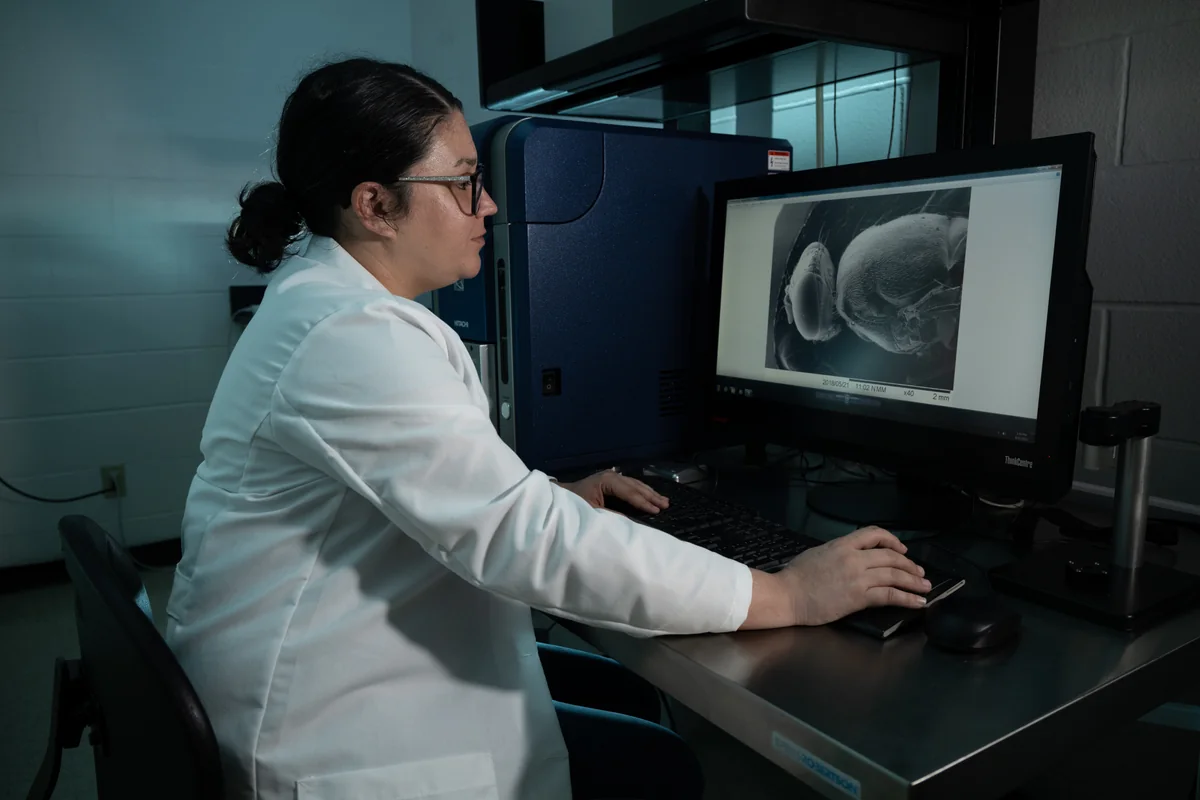

Find where a pipeline broke
When an analysis pipeline crashes, go through its error text to find the stage where the run halted.
Career profile
Bioinformatics technicians help researchers turn life-science data into findings they can use.
Part life science, part computing: you check incoming data, run analyses and record each step so researchers can trace how any result arose.
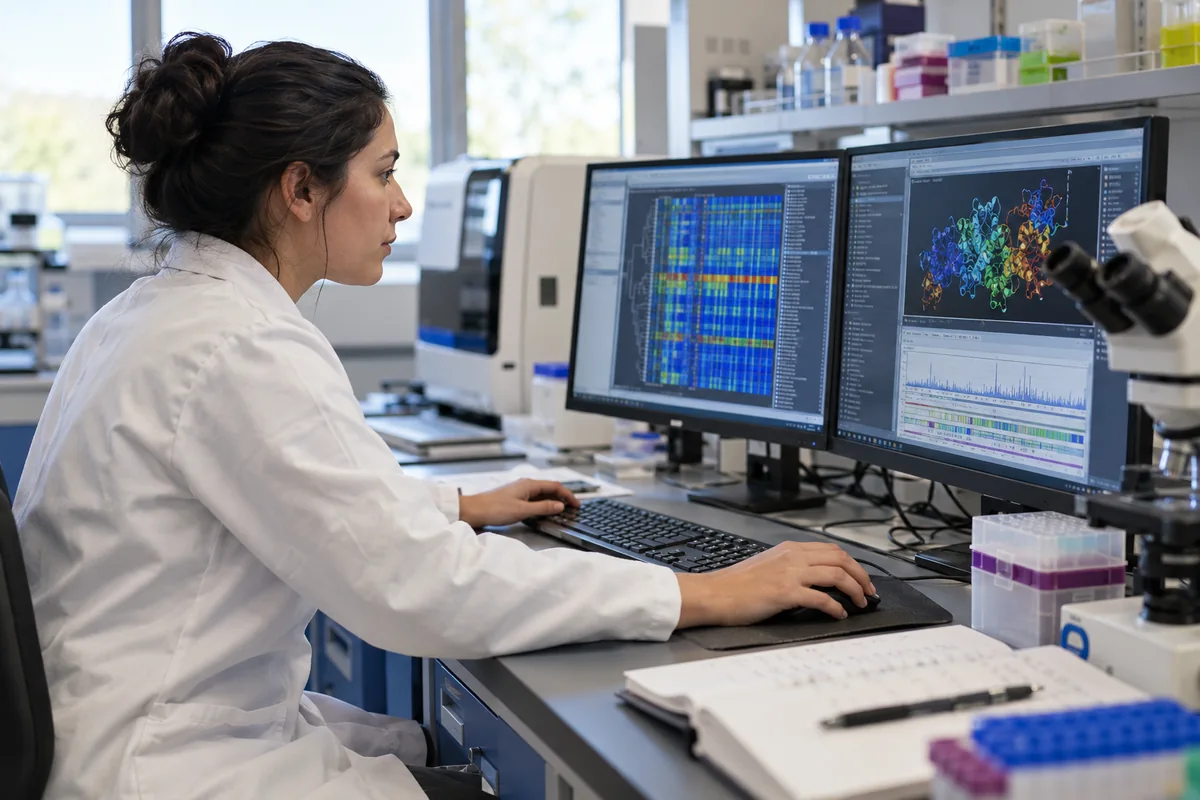
When an analysis pipeline crashes, go through its error text to find the stage where the run halted.

Review the quality report for incoming biological data and flag any batch failing the project's checks.

Write a database query that fetches the right gene or protein records for an analysis.

Store the code version and settings beside your written notes so a teammate can rerun the same steps.

Chart the results in a clear figure, then explain them at lab meeting so the researcher can follow.
Quick orientation
Bring both biology and computing skills; employers differ on the degree and experience they expect.
May 2025 median for Mathematical Science Occupations, All Other—not this title alone.
Projected for Mathematical Science Occupations, All Other, during 2025–2035; technician-only growth is not reported.
Pipelines automate repeated processing. In some research labs, machine learning also helps analyze patterns across individual cells.
You evaluate results, document changes, and discuss what the analysis means with researchers.
How far tools can take over checking and troubleshooting remains uncertain, especially when projects introduce unfamiliar data.
Pay in context
Pay is not reported separately for this title. The nearest official national figures cover the broader group Mathematical Science Occupations, All Other.
The group's May 2025 median was $81,490 a year, with an hourly equivalent of $39.18. This is a midpoint across workers, not an expected starting offer.
The same group's 10th-percentile wage was $47,980 and its 90th-percentile wage was $154,580 annually. These mark positions in the wage distribution, not beginner and senior pay levels.
The broader group is projected to grow 7.1% from 2025 to 2035, with about 200 openings annually from growth and replacement needs. These are not technician-only openings.
Build evidence that you can handle biological data and write working code. A bachelor's degree is a common starting point.
After entry
This starts where the entry routes leave off: early work, growing capability, and advancement or specialization.
Learn the lab's data checks and recordkeeping until colleagues can follow your work without reconstructing missing steps.
Take responsibility for a repeatable analysis and test changes before using them on new data.
With deeper experience, pursue work that includes planning analyses with researchers or specializing in a particular kind of biological data. Research scientist roles can require advanced education and evidence of independent analytical work.
You may work closely with experimental scientists on a focused question, adapting analyses as a study develops and discussing findings in lab meetings.
Work can follow a flow of incoming samples and results. Processing problems may bring you into contact with customer-support staff as well as scientists.
Try it
Make a spreadsheet of ten fictional sample names and short sequences using A, C, G, and T. Deliberately duplicate one name and leave one sequence blank. Create checks that find both problems, then write down how someone else could repeat them. Notice whether you enjoy making biological data orderly and traceable.
Stay safe: Use invented data; this exercise does not interpret real genetic information.
Keep exploring