Speed up a slow query
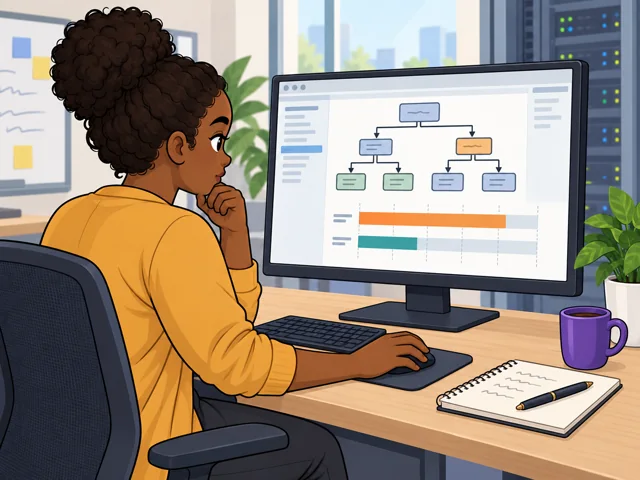
Time one sluggish query before you change it and again after, to see if it really got faster.
Career profile
Database administrators keep databases running, recover lost data and decide who gets access.
An app slows, so you trace database activity to see why, then test a fix. Anyone curious why things break finds plenty to dig into.

Time one sluggish query before you change it and again after, to see if it really got faster.
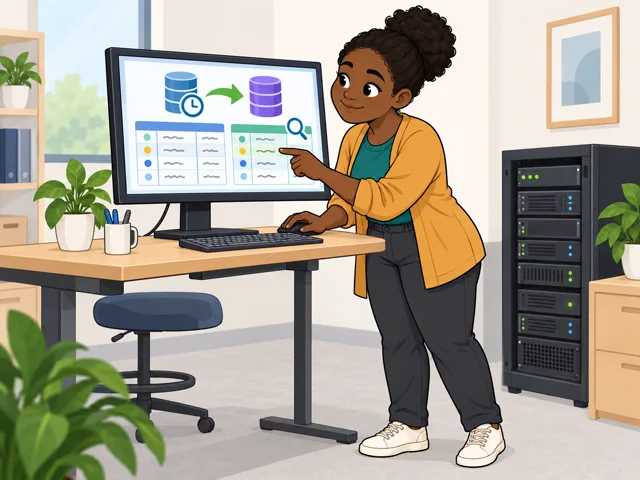
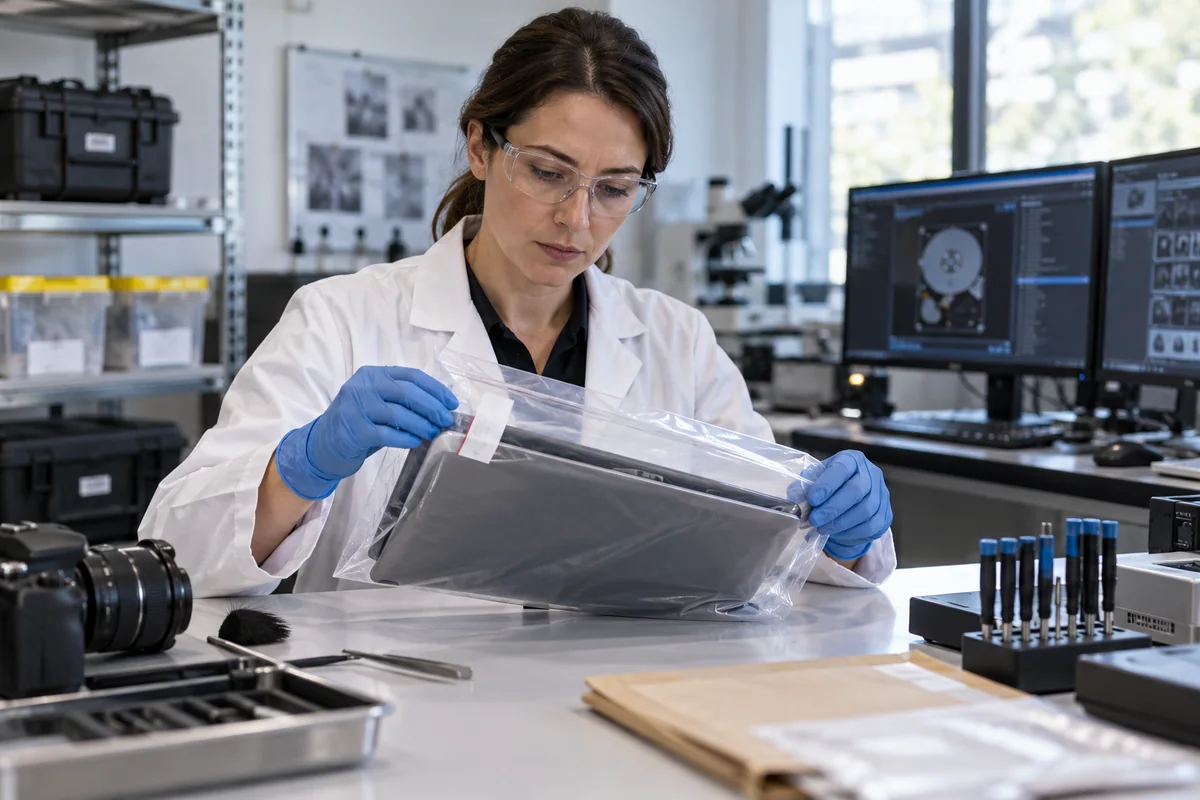
Restore a backup into a separate test database, then inspect its records to prove recovery works.

Learn what work a person does, then grant view or edit rights to the records that work needs.
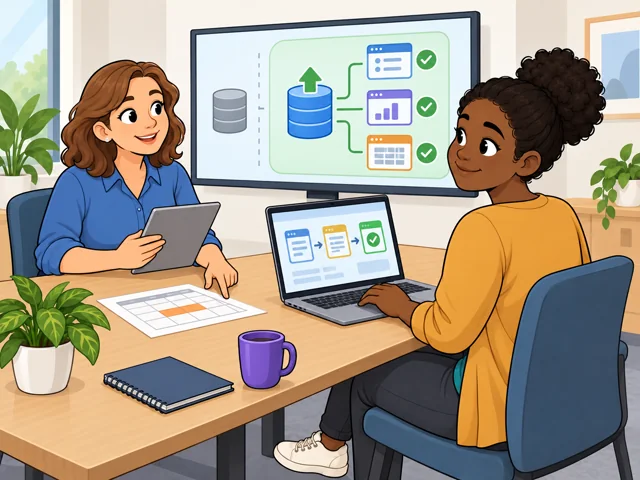
Confirm apps still work on the upgraded test system before you plan the live switch with their owners.
Quick orientation
Employer requirements vary; some consider relevant experience alongside education.
National median, equivalent to $50.30 per hour.
Employment is projected to change by -0.1% from 2025 to 2035.
Managed cloud services can run backups automatically. Amazon Relational Database Service, for example, also provides tools to restore a database to an earlier point.
You still choose access settings and how long to keep backups, matching those choices to the organization’s needs.
Cloud services may let fewer administrators support more organizations. How much hands-on maintenance remains will depend on which systems employers keep and what they automate.
Pay in context
The national median is $104,620 a year, or $50.30 an hour. It describes the middle of the workforce, not a starting salary.
The 10th-percentile annual wage was $60,230; the 90th-percentile wage was $163,320. These are positions in the wage distribution, not beginner and senior pay steps.
Annual median pay was $124,270 in management of companies and enterprises, compared with $86,330 in educational services. These industry medians are not individual offers.
About 3,300 openings are projected each year on average from 2025 to 2035, even with essentially no employment growth. Openings include replacement needs, not just newly created jobs.
Learn Structured Query Language (SQL), which is used to request and change database records, along with the database software an employer uses.
After entry
This starts where the entry routes leave off: early work, growing capability, and advancement or specialization.
Learn the employer’s database routines and change records. Make your work clear enough that another administrator can follow it.
Take on performance problems, security updates, and recovery tests. Learn to check the whole result, including whether applications still work.
With experience, you may move into database architecture or computer and information systems management.
You may support connected applications for registration, financial aid, and finance. Upgrades involve coordinating with campus office staff as well as programmers and system administrators.
Some teams support passenger-processing systems that operate around the clock. Work can include moving databases to cloud platforms and joining an on-call rotation to resolve incidents.
Try it
Simulate a recovery drill with a small table of fictional library loans. Save a backup, change several rows, then restore the saved version. Compare the records and write down which changes disappeared. Did you enjoy proving exactly what could be recovered?
Stay safe: Use only made-up records in your own practice file.
Keep exploring