Career profile

Biostatistician

Biostatisticians use statistics to plan health studies and make sense of their results.

Did the treatment really work, or is the gap between groups just chance? Biostatisticians help build studies that can tell, then examine the data.

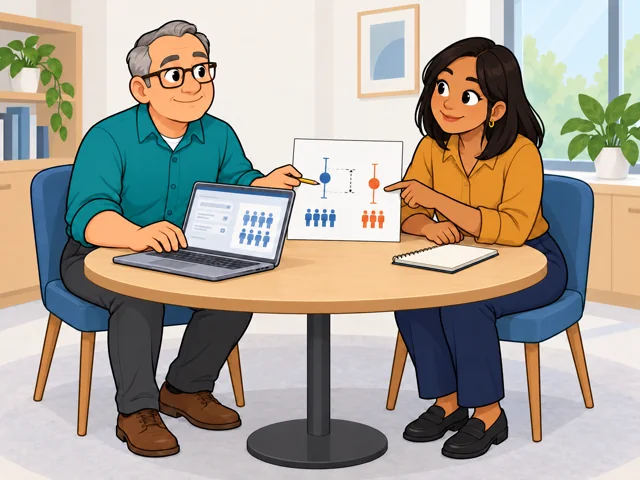
A biostatistician discusses study charts on a laptop with a clinician.

A day in the life

1A biostatistician and a researcher discuss a meaningful treatment difference while he calculates how many study participants are needed.

Work out how many to enroll

Ask the lead scientist what size of treatment effect matters, then calculate how many people to enroll.
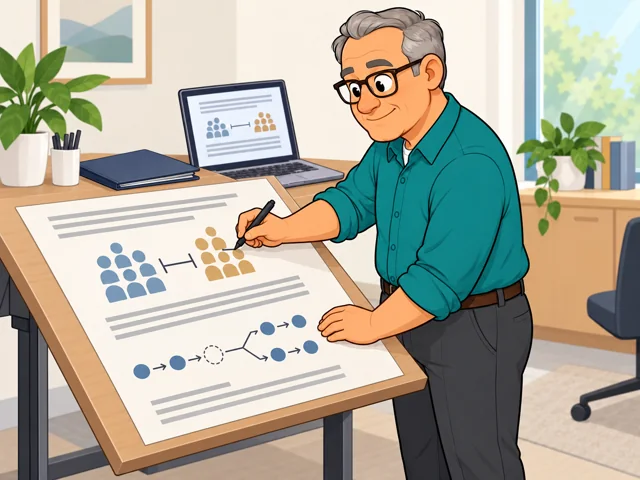
2The biostatistician writes an analysis plan defining the main comparison and how to handle missing measurements while treatment identities remain concealed.

Lock the analysis plan

Pick the main comparison and a missing-data plan, and lock it before any hidden treatment assignments are revealed.
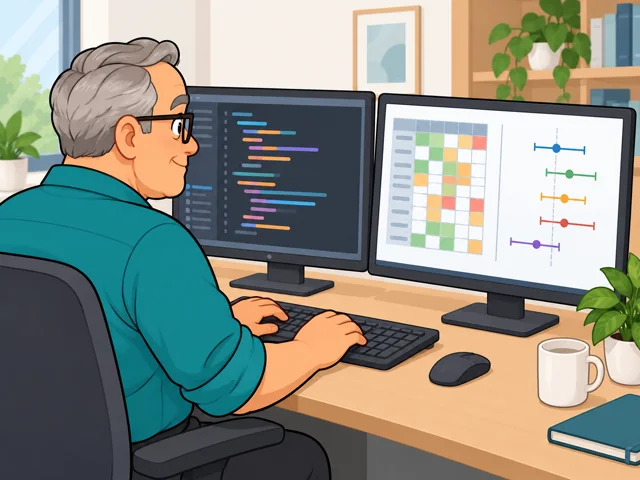
3The biostatistician codes an analysis and compares results under different assumptions about missing follow-up visits.

Test what missing visits change

Code the analysis in R, a statistics language, and see if several assumptions about missing check-ups shift conclusions.
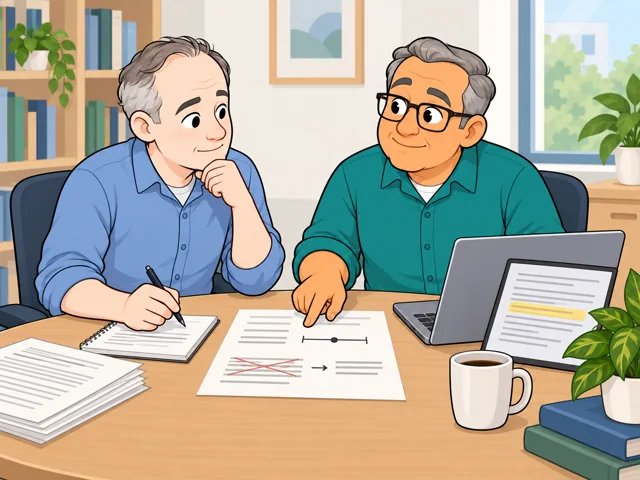
4The biostatistician explains the results while a researcher revises a paper’s wording to avoid claims stronger than the analysis supports.

Rein in overstated claims

Go over the findings together with the researcher and edit paper wording that overstates the analysis.

Quick facts

Pay

Not displayed

National wage figures combine biostatisticians with other statisticians.

Outlook

Not displayed

National projections cover statisticians across specialties.

Preparation

Usually graduate study

Quick orientation

Preparation, pay & outlook

Preparation

Usually graduate study

Plan toward a master's degree; some research roles call for a doctorate.

Geography
United States
Period
Not applicable

Pay

Not displayed

National wage figures combine biostatisticians with other statisticians.

Geography
United States
Period
May 2025

Outlook

Not displayed

National projections cover statisticians across specialties.

Geography
United States
Period
2025–2035

Fit, tradeoffs & changing tools

Things to weigh

  • Much of the work happens sitting at a computer, even when the subject is health or biology.
  • You must keep records that let others reproduce your analysis. Deadlines and late requests can also push work beyond normal hours.

Where AI may help

Software runs calculations and produces graphs. In drug research, artificial intelligence is also being studied as a way to combine different kinds of trial data.

What people still lead

You still examine whether the study design and analysis support the scientific claim, and explain weaknesses to researchers.

What we can’t predict yet

How much analysis newer tools can take over depends partly on whether their results remain reliable when patients, measurements, or settings change.

Pay in context

Earnings

Use these figures as context for the wider statistics field. They include biostatisticians but do not isolate their earnings.

A national reference point

For all statisticians, median pay was $105,650 a year, with a reported hourly equivalent of $50.79. Half earned more and half earned less; this is not a starting salary.

Geography
United States
Period
May 2025
Pay basis
Median annual and hourly wages for all statisticians

The wider pay spread

Across all statisticians, the 10th-percentile wage was $64,000 and the 90th-percentile wage was $174,050 a year. These mark positions in the wage distribution, not beginner and senior pay.

Geography
United States
Period
May 2025
Pay basis
Annual wage percentiles for all statisticians

Workplace makes a difference

For all statisticians, annual medians were $80,680 at state colleges and universities, $100,900 in healthcare and social assistance, and $130,590 in physical, engineering, and life-science research and development. These are broad industry comparisons, not biostatistician pay scales.

Geography
United States
Period
May 2025
Pay basis
Industry median annual wages for all statisticians

The broader hiring outlook

Employment of all statisticians is projected to grow 11%, with about 1,900 openings a year on average. That includes replacement openings and jobs outside biostatistics.

Geography
United States
Period
2025–2035
Pay basis
Employment projection and annual-average openings; not compensation

Getting started

Prepare for applied work through a master's degree

What the route involves
After a bachelor's degree, study biostatistics through courses in probability, statistical inference, regression, and analysis of health investigations.
What it can lead to
This prepares you to pursue applied biostatistics positions, including roles that accept master's graduates in statistical programming or study evaluation.
What to check
Check prerequisites before choosing college courses. Michigan's program, for example, lists calculus, linear algebra, and introductory statistics.

Train to develop methods through a doctorate

What the route involves
Complete advanced coursework and qualifying examinations, conduct original statistical research, and write and defend a dissertation for a Doctor of Philosophy (PhD).
What it can lead to
You build preparation for research centered on developing statistical methods and for positions requiring doctoral training.
What to check
A doctorate is not required for every biostatistics job. Some programs, including Michigan's, consider strong bachelor's graduates as well as applicants with a relevant master's degree.

Build a strong base in mathematics and computing during college. Graduate study is the usual route, with the degree level depending on the work you want to do.

After entry

Career paths

This starts where the entry routes leave off: early work, growing capability, and advancement or specialization.

  1. Get established

    Work with experienced statisticians and build habits for saving code, documenting decisions, and reproducing results.

  2. Own more of an analysis

    Take a study from its research question through an analysis plan to a report, discussing choices directly with investigators.

  3. Lead or specialize

    Move toward a senior statistician role, or deepen your expertise in an area such as clinical-trial design or drug-safety analysis.

Where you can work

Academic medical research teams

You may be embedded in a research group and build a long-term partnership with clinicians. Projects can carry you from an early study question through analysis and a journal paper.

  • Indoors
  • Office

Federal drug-review offices

At the Food and Drug Administration, you examine submitted studies alongside regulatory scientists. The focus is testing whether designs, data, and analyses support the findings claimed for a drug.

  • Indoors
  • Office

Try it

See whether the job clicks before you commit to the path.

Sketch a fictional study comparing two ways to remind people about appointments. Define success, decide how to form comparable groups, and explain what you would do with missing attendance records. Notice whether planning a trustworthy comparison interests you as much as calculating a result.

Stay safe: Keep this a paper exercise; do not collect anyone's health information.

Explore more careers

Sources

  1. O*NET OnLine. Biostatisticians — 15-2041.01. Accessed 2026-10-03.
  2. U.S. Bureau of Labor Statistics. Mathematicians and Statisticians. Accessed 2026-10-03.
  3. O*NET OnLine / U.S. Bureau of Labor Statistics. National Wages: Statisticians. Accessed 2026-10-03.
  4. U.S. Bureau of Labor Statistics. Occupational projections and worker characteristics. Accessed 2026-10-03.
  5. University of Michigan School of Public Health. Master of Science Degree in Biostatistics. Accessed 2026-10-03.
  6. University of Michigan School of Public Health. Biostatistics PhD Program. Accessed 2026-10-03.
  7. Duke University. The 12 Phases of the Biostatistics Collaboration Process. Accessed 2026-10-03.
  8. Duke University. Biostatistics, Epidemiology, and Research Design Methods Core. Accessed 2026-10-03.
  9. U.S. Food and Drug Administration. Office of Biostatistics. Accessed 2026-10-03.
  10. U.S. Food and Drug Administration. Focus Area: Artificial Intelligence. Accessed 2026-10-03.
  11. U.S. Food and Drug Administration. E9 Statistical Principles for Clinical Trials. Accessed 2026-10-03.

Your message goes to the Great Jobs team. How we use your information