

Prep your cooking station
Make sure nothing has spoiled, rotate older stock to use first, chop vegetables and measure out portions.
Career profile
Restaurant cooks turn raw ingredients into finished dishes for diners, one order at a time.
You control heat, seasoning and pace while coworkers handle the meal's other parts. The reward: a complete plate done right just as it goes out.
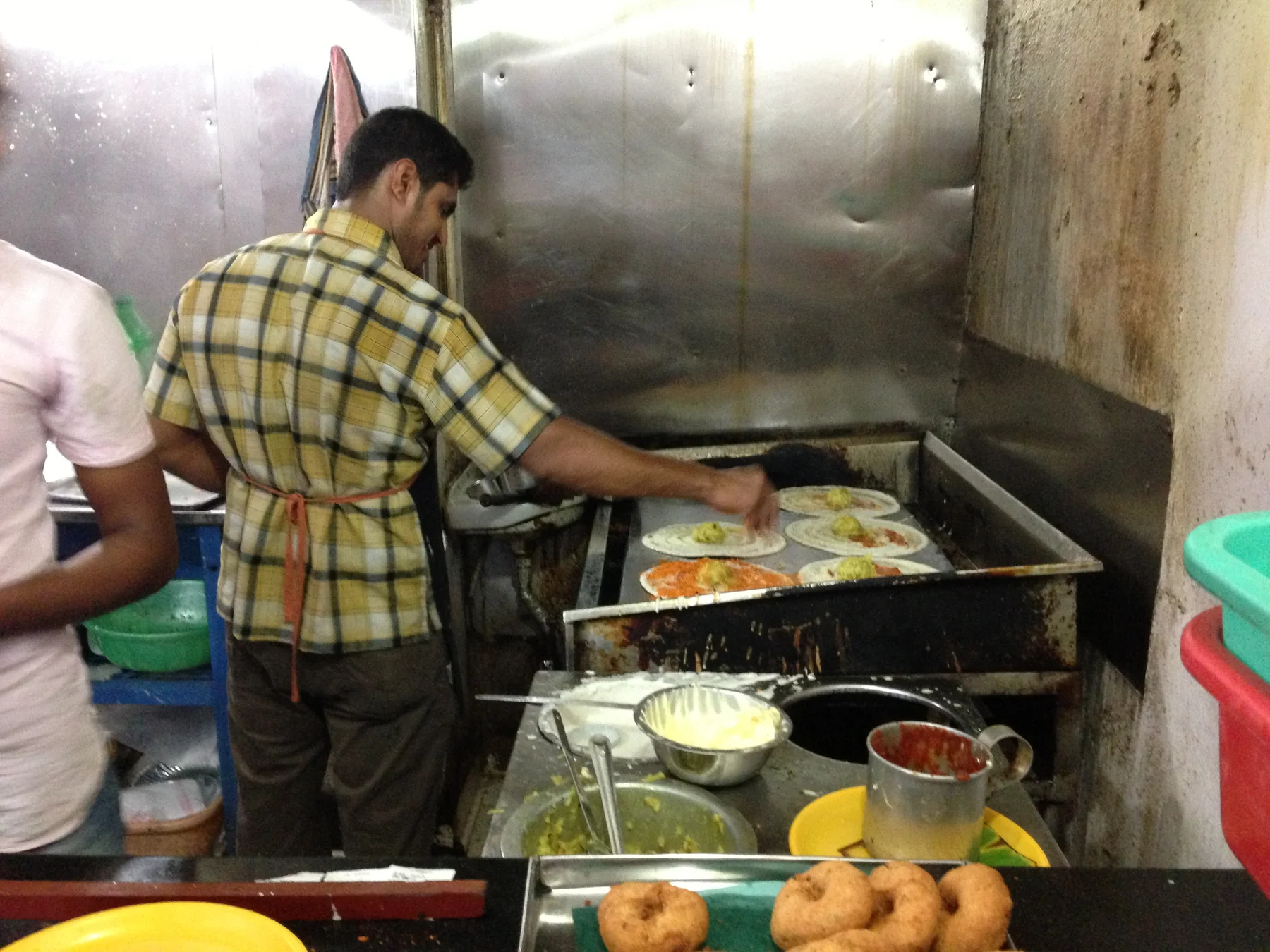
Make sure nothing has spoiled, rotate older stock to use first, chop vegetables and measure out portions.

Flip or turn the food, and if it browns too fast, adjust the flame without getting distracted.

See which orders need your station, tell the other cook when yours is ready, and finish together.

Get the portion sizes right, arrange food neatly and add garnish before you hand it to a server.

Wash your tools and counters, store ingredients and date each container so the next shift knows what's usable.
United States · 2025–2035 classification
United States · May 2025
United States · 2025–2035
Quick orientation
A formal educational credential is not typically required. Related kitchen experience and training on the job are common.
National median for restaurant cooks in May 2025; $37,390 on an annualized basis.
Restaurant-cook employment is projected to grow from 2025 to 2035, with about 218,600 openings a year on average.
Software can help create food labels and calculate recipe costs, reducing some recordkeeping and arithmetic.
You still check ingredients, judge how food is cooking, and coordinate with people sharing the kitchen.
How much hands-on cooking future tools will take over remains uncertain, especially when ingredients or orders need adjustments.
Pay in context
Compare the hourly rate and expected hours together. The employer, location, and whether you work full time all affect what you take home.
Restaurant cooks had a median wage of $17.98 an hour in May 2025, or $37,390 annualized. Half earned more and half earned less. Annualized pay assumes 2,080 working hours; part-time work brings in less.
In May 2025, the 10th-percentile wage was $13.80 an hour and the 90th-percentile wage was $23.03. These are wage percentiles, not starting and experienced pay rates.
In May 2023, restaurant cooks averaged $17.07 an hour in restaurants and other eating places, compared with $20.29 in traveler accommodation, such as hotels. These historical averages describe different groups of jobs; they do not guarantee a higher offer at a hotel.
About 218,600 restaurant-cook openings are projected annually during 2025–35. That includes replacing people who leave the occupation, alongside the projected 12.1% employment growth.
You can build experience in a kitchen or study cooking first. Some employers require or prefer a high school diploma. Before starting, check local food-handler requirements.
After entry
This starts where the entry routes leave off: early work, growing capability, and advancement or specialization.
Learn your station's setup and recipes until portions and cooking results stay consistent through a shift.
Build more cooking techniques and tackle complex dishes so you can handle a wider share of the menu.
With experience, you may train newer cooks or supervise kitchen staff. Head-cook or chef roles are possible next steps.
You may work a grill, fry, or other station within a larger cooking team. Individual orders set the pace, and your timing has to fit the food coming from neighboring stations.
Some roles combine restaurant meals with event cooking. You may follow an event order, keep buffet food stocked, and work a schedule shaped by the hotel's functions.
Try it
On paper, choose two familiar dishes that should reach the table together. Work backward from serving time: list preparation, cooking, and plating steps, then mark when each starts. Notice whether you enjoy organizing overlapping tasks and spotting timing conflicts.