
Career profile

Correspondence Clerk

Correspondence clerks write clear, accurate replies to letters and messages carrying questions or complaints.

You dig into the facts of the situation before you choose words to describe them. The work blends writing with checking files.
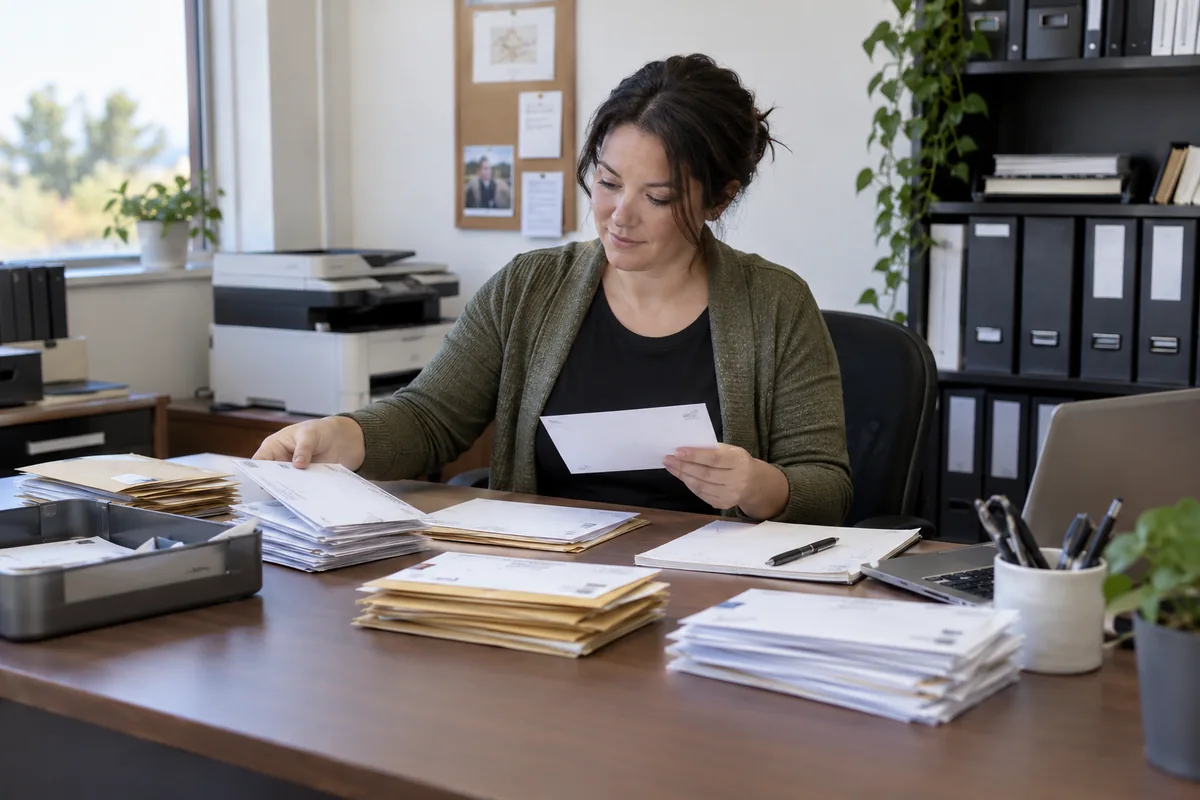
A correspondence clerk sorting incoming letters and preparing written responses at an office desk, no readable text.

A day in the life

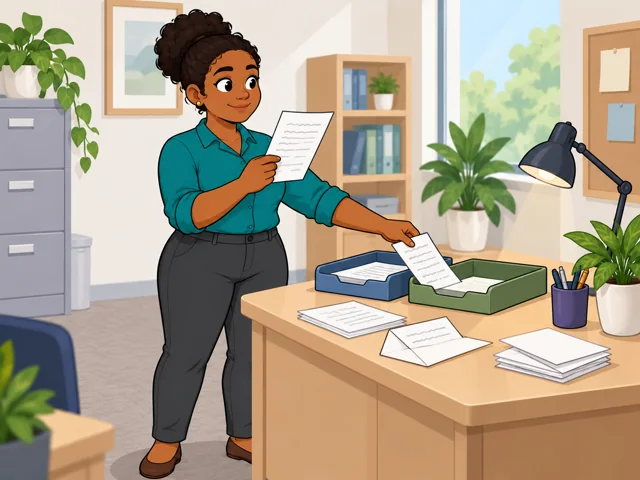
1A correspondence clerk reads a letter while placing another request into a departmental routing tray.

Sort out what's being asked

Read each letter to learn what the writer wants, and send items for another department over to them.
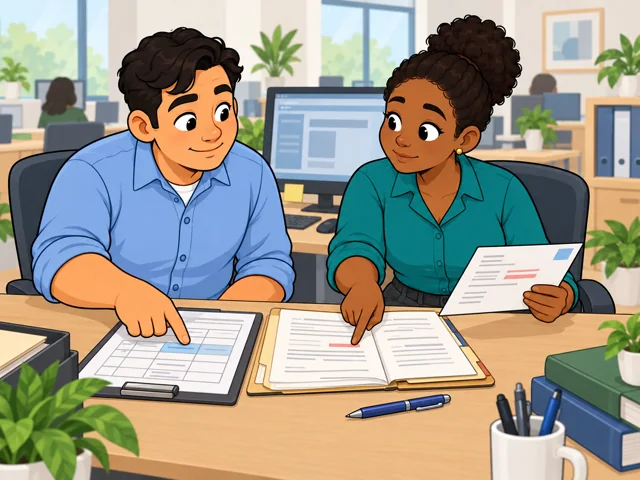
2The clerk compares a letter with its file as a coworker points out missing facts in a supporting record.

Fill gaps with a coworker

Contact a coworker for missing facts whenever a letter clashes with the file, before you start drafting.
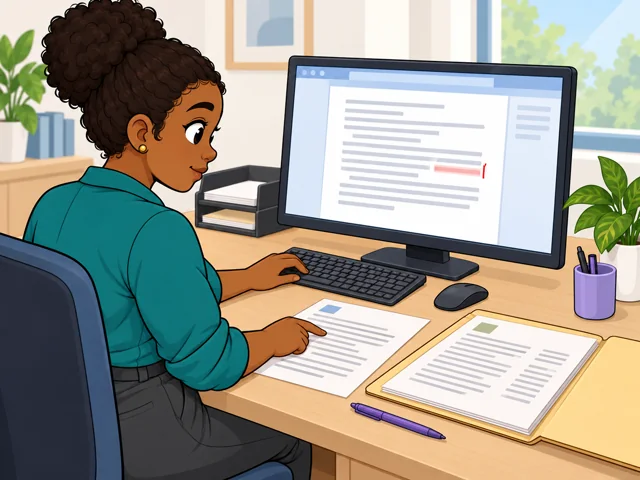
3The clerk checks a drafted reply against the original request and verified records, correcting the answer at her computer.

Lay out facts, then reread

Set out the relevant facts, then reread your reply for accuracy, fitting tone and any unanswered question.
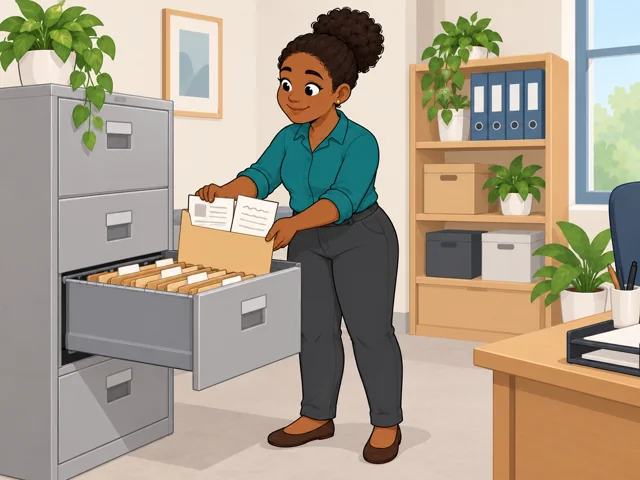
4The clerk files the incoming request and outgoing reply together so their correspondence can be tracked.

File the letter and reply

Store the incoming message and your reply so the office has a trail of what happened.

Quick facts

Preparation

High school diploma or equivalent

United States · 2025–2035

Pay

$46,800 a year

United States · May 2025

Outlook

5.6% decline

United States · 2025–2035

Quick orientation

Preparation, pay & outlook

Preparation

High school diploma or equivalent

Typical entry education; individual employers set their requirements.

Geography
United States
Period
2025–2035

Pay

$46,800 a year

National median for correspondence clerks, equivalent to $22.50 an hour.

Geography
United States
Period
May 2025

Outlook

5.6% decline

Employment is projected to shrink, with about 500 openings a year on average.

Geography
United States
Period
2025–2035

Fit, tradeoffs & changing tools

Things to weigh

  • Repeated requests and long stretches sitting at a computer can feel monotonous.
  • Answering dissatisfied customers can be stressful, even when your reply is accurate.

Where AI may help

Email, searchable files, and reusable letter templates help you find information and prepare replies.

What people still lead

You judge whether the answer fits the question and whether the records support it.

What we can’t predict yet

How much routine replying becomes automatic—and how much checking remains with clerks—will vary as employers change their systems.

Pay in context

Earnings

The national median is $46,800 a year, or $22.50 an hour. Half of correspondence clerks earn less and half earn more.

The national spread

The 10th-percentile wage is $33,300 a year and the 90th-percentile wage is $64,510. These mark the lower and upper ends of the middle 80% of wages, not starting and senior salaries.

Geography
United States
Period
May 2025
Pay basis
Annual employee wages for correspondence clerks, SOC 43-4021; excludes benefits.

Openings despite a smaller occupation

Employment is projected to decline 5.6% from 2025 to 2035. About 500 openings are projected each year on average as workers leave or move to other occupations.

Geography
United States
Period
2025–2035
Pay basis
Employment projection and annual average openings for SOC 43-4021; not a wage measure.

Getting started

Enter a job with workplace training

What the route involves
Apply to roles whose requirements you meet, then learn their computer applications and correspondence procedures on the job.
What it can lead to
Training prepares you to handle the office’s routine requests and records.
What to check
In federal correspondence work, you explain decisions made by program staff; writing the reply does not give you authority to make those decisions.

Build your preparation in school

What the route involves
Complete high school or an equivalent qualification. Add word processing and spreadsheet courses to practice useful office skills.
What it can lead to
This meets the typical education baseline and prepares you for applications, although employers may ask for additional experience.

A high school diploma or equivalent is the usual starting point. You can prepare through school and learn the office’s procedures after hiring.

After entry

Career paths

This starts where the entry routes leave off: early work, growing capability, and advancement or specialization.

  1. Get established

    Learn the office’s filing system, computer applications, and procedures for handling requests.

  2. Handle harder questions

    Build skill in reconciling incomplete records and explaining several related issues in one reply.

  3. Move into broader office work

    Administrative assistant work can be a next step, with wider responsibilities for keeping an office running.

Where you can work

Government correspondence offices

You explain program rules or the status of a claim. Replies draw on official records and information from program staff.

  • Indoors
  • Office

Hospital billing offices

The work can focus on returned mail, patient address information, and insurance correspondence. You use several computer systems and communicate with billing coworkers, patients, and insurers.

  • Indoors
  • Office

Try it

See whether the job clicks before you commit to the path.

Invent a message asking why a bill shows two charges. Make a small record with two dates and amounts, leaving one detail unclear. Draft a short reply that explains what you can confirm and asks for the missing information. Notice whether you enjoy both checking the facts and choosing clear words.

Stay safe: Use made-up names and account details.

Explore more careers

Sources

  1. O*NET OnLine. Correspondence Clerks — 43-4021.00. Accessed 2026-10-10.
  2. U.S. Bureau of Labor Statistics. Occupational Employment and Wage Statistics, May 2025 national estimates — pinned SOC 43-4021 binding. Accessed 2026-09-29.
  3. U.S. Bureau of Labor Statistics. Employment Projections, Table 1.2, 2025–2035 — pinned SOC 43-4021 binding. Accessed 2026-09-29.
  4. U.S. Bureau of Labor Statistics. Information Clerks — applicable preparation, training, working conditions, and advancement. Accessed 2026-10-10.
  5. U.S. Office of Personnel Management. Position Classification Standard for Correspondence Clerk Series, GS-0309. Accessed 2026-10-10.
  6. Universal Health Services. Research and Correspondence Clerk — Atlantic Region Central Billing Office. Accessed 2026-10-10.

Your message goes to the Great Jobs team. How we use your information