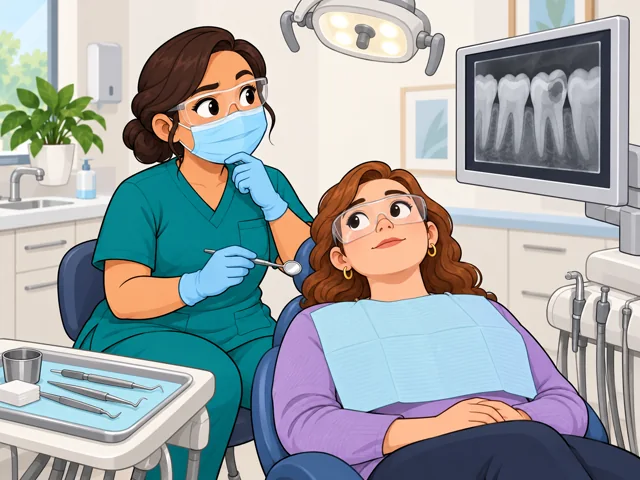
Track down a toothache's cause
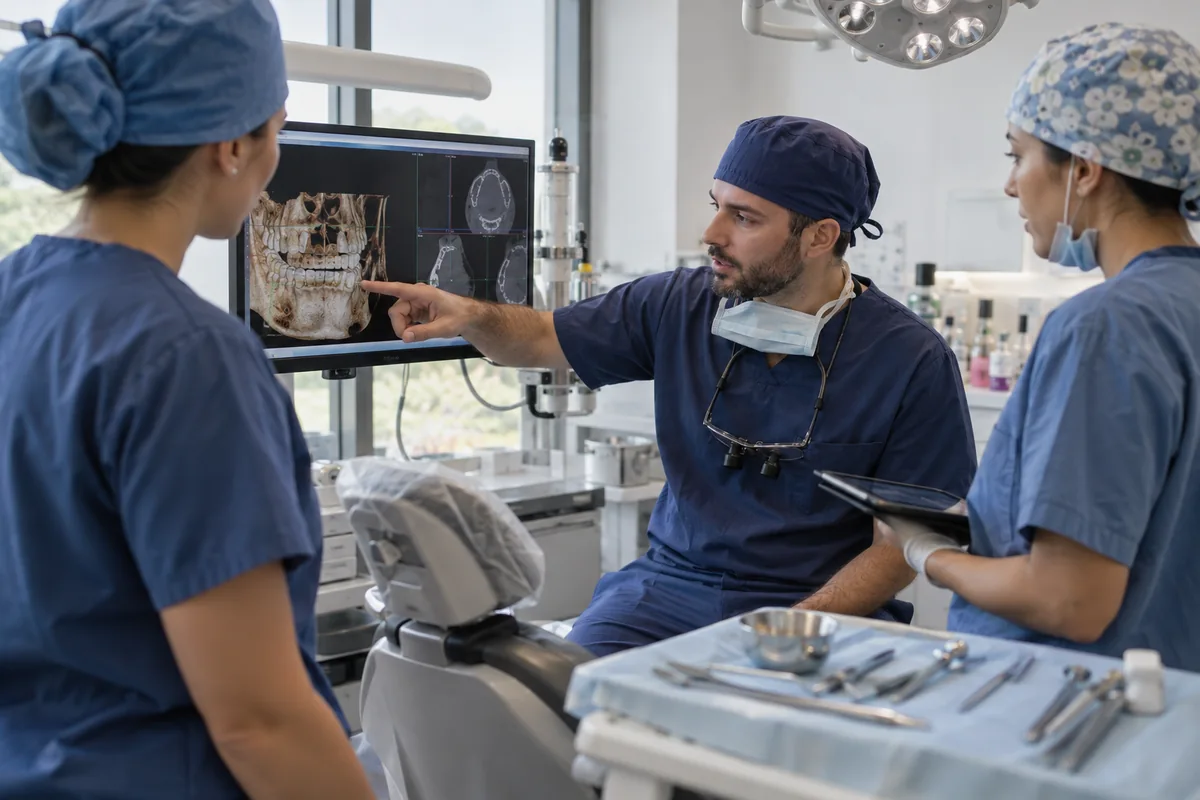
Examine the patient's mouth and weigh their description of the pain against dental x-rays.
Career profile
Dentists find what's wrong in a tooth, explain the choices to patients, then fix it.
General dentistry combines science-based judgment with skilled hand work. The patient in your chair counts on you to make every choice understandable.
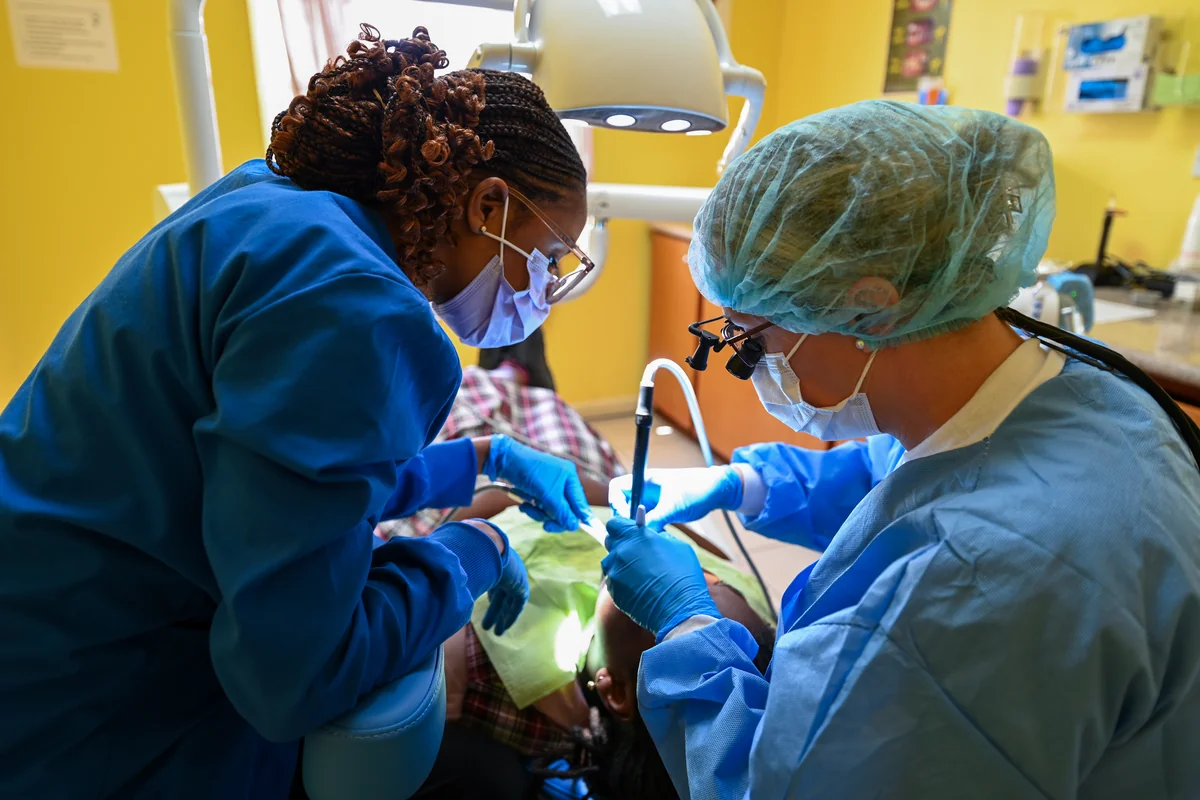
Examine the patient's mouth and weigh their description of the pain against dental x-rays.
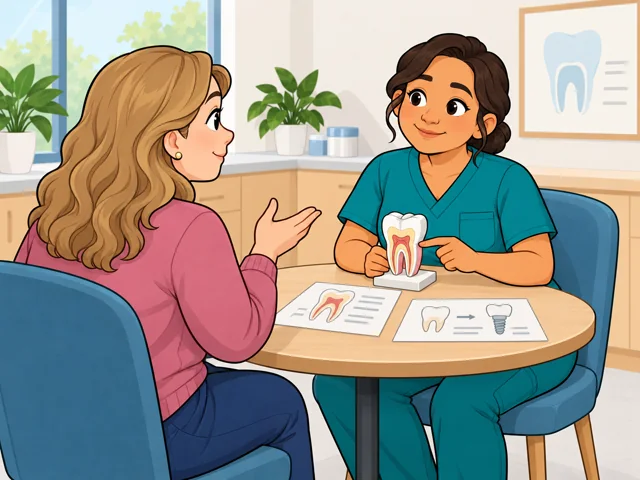
Explain your findings and the options, then answer the patient's questions before agreeing on a plan with them.
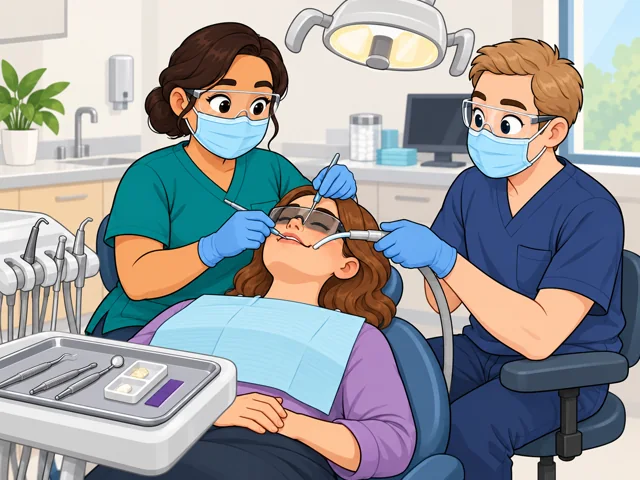
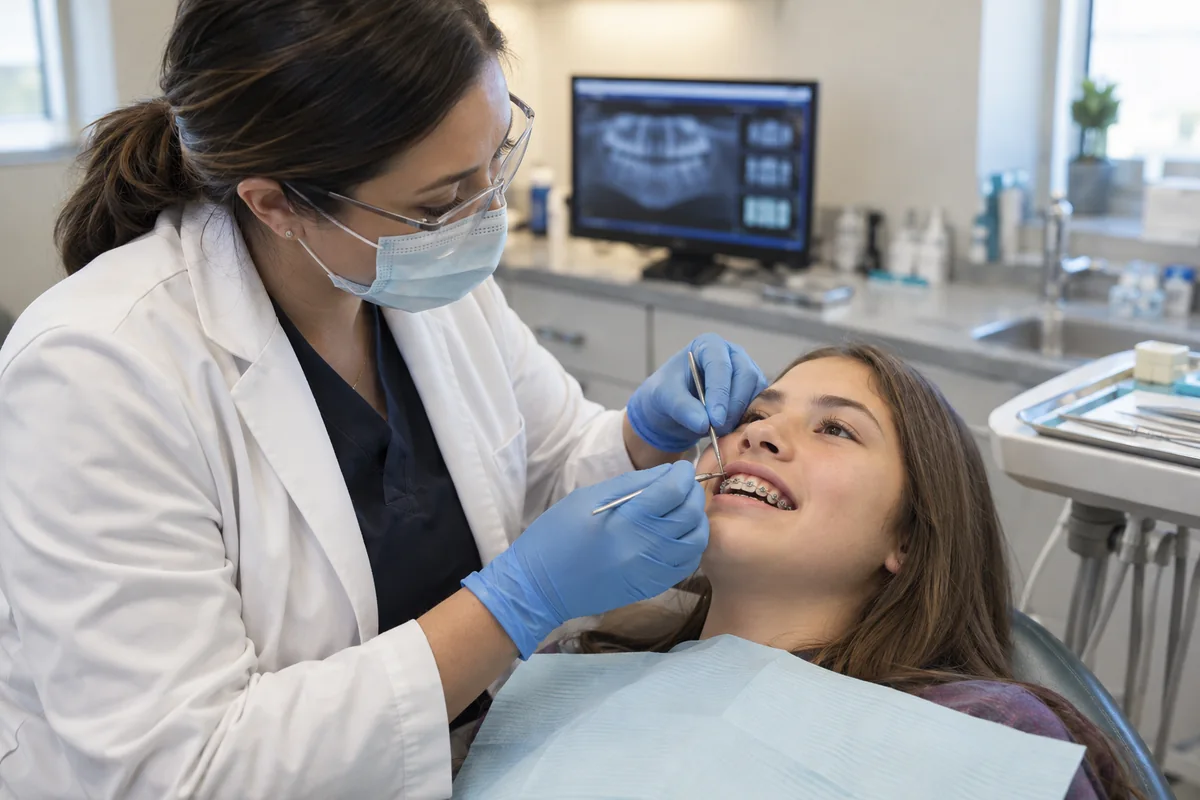
Remove decay with instruments, fill the cavity, then shape the filling so upper and lower teeth meet correctly.
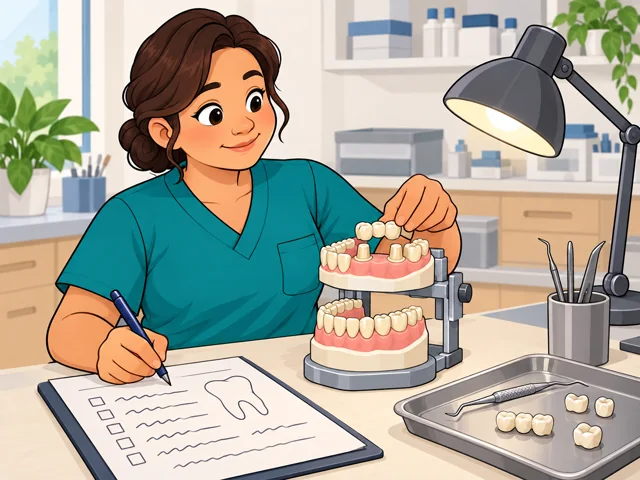
Write directions for the dental laboratory building the bridge, then check how it sits and adjust it.
Quick orientation
The usual route includes college preparation and four years of dental school, followed by meeting state licensing requirements.
Annual employee wage for general dentists; about $82.19 an hour.
General dentistry is projected to have about 4,200 openings a year nationwide.
Some artificial intelligence software marks possible problems on dental x-rays for a second look after the clinician's initial reading.
You connect the image with the examination, discuss treatment choices, and carry out care.
How much image review these tools will take over remains uncertain; handling an unclear finding still involves deciding what it means for this patient.
Pay in context
For general dentists, the national employee median was $170,950 in 2025—about $82.19 an hour. That is a midpoint, not a starting offer.
The 10th-percentile annual wage was $86,250; the 90th percentile was $319,630. These describe the wage distribution, not beginner and experienced pay grades.
Location, hours worked, and years in practice affect earnings. These employee figures exclude self-employed dentists, so they do not tell you what a practice owner takes home.
The projection is 5.7% employment growth and about 4,200 openings annually for general dentists. Openings include replacements as well as growth; they are not a count of jobs currently advertised.
Both routes require a state license before independent practice. You must pass the Integrated National Board Dental Examination and satisfy the board's education, clinical-assessment, and other requirements. Check your intended state's rules before choosing a program.
After entry
This starts where the entry routes leave off: early work, growing capability, and advancement or specialization.
In your first practice, build a reliable appointment routine and seek experienced colleagues' input on difficult treatment plans.
Develop your skill with larger restorations and patients whose health complicates treatment. An advanced general dentistry residency is one structured option.
Ownership adds business decisions to clinical care. Specialties such as orthodontics require additional formal training.
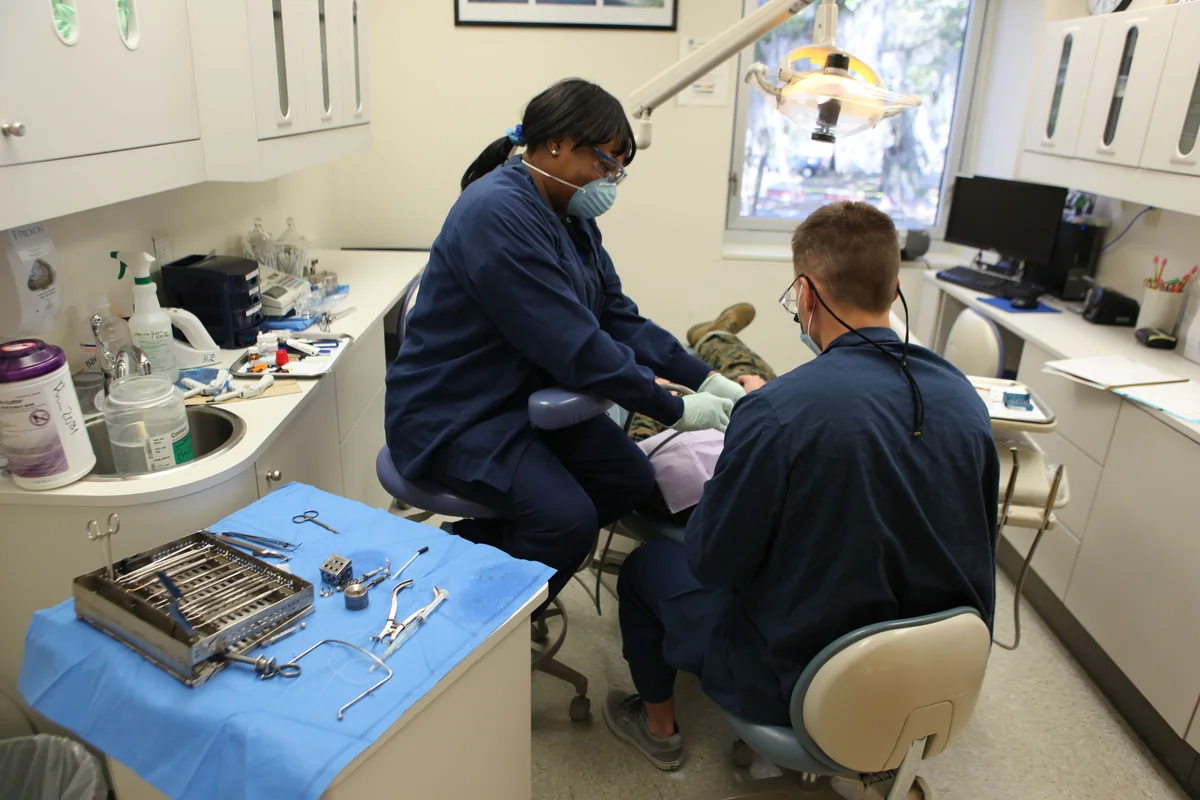
Work as an associate or owner with a dental staff. Ownership adds hiring, supplies, and business paperwork to patient appointments.
In hospital programs, patients may have complex medical conditions. You coordinate dental plans with other clinicians and arrange consultations or referrals.
Try it
Ask a general dentist for a brief conversation about an anonymized treatment decision: what did they find, what options did they weigh, and why did they choose one? Notice whether that reasoning interests you as much as the hands-on repair.
Stay safe: Keep patient names and records out of the conversation; do not try dental procedures.
Keep exploring